Trees — History & Facts
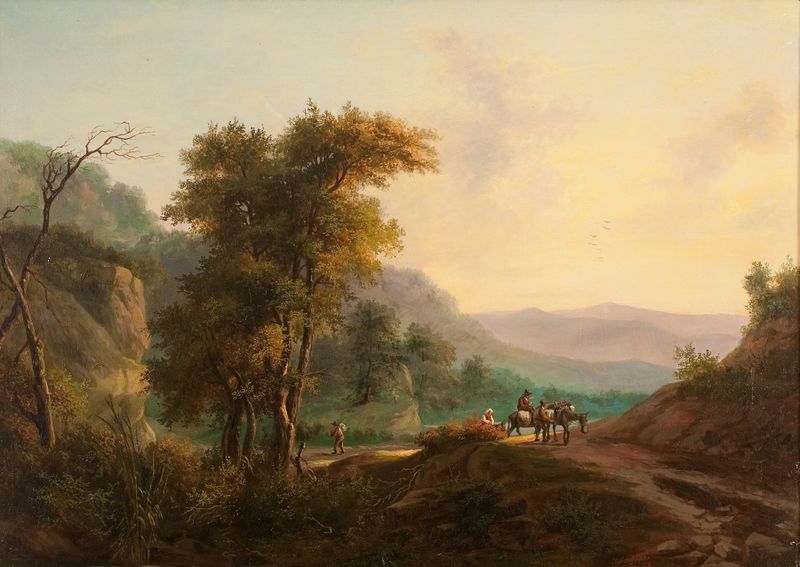
What if beauty was never meant to be finished? In the delicate embrace of nature, decay becomes a haunting partner to life, revealing the poignant cycle of existence. Focus on the swirling hues and textures that fill the canvas. Observe the interplay of browns and greens, where trees stand as sentinels, their bark etched with stories of time. The brushstrokes, both vigorous and gentle, coax out the complexities of the trees' forms, inviting the viewer to explore the depths of each crevice and knot.
Light dances across the foliage, giving life to the notion that even in decay, there is an extraordinary vibrancy. Beneath the surface, the artwork whispers of contradictions; the strong trunks juxtaposed with flaking bark hint at resilience intertwined with fragility. The viewer may feel a sense of nostalgia, as the trees evoke memories of childhood woods or forgotten trails. Each leaf and branch carries the weight of transformation, illustrating how decay can foster new beginnings.
The piece becomes a reflection on the beauty inherent in impermanence, urging an appreciation for the transient moments that define life. Julius Schoppe created this piece during a time when the art world was embracing modernist influences, yet he maintained a deep connection to the natural world. Although the exact date of Trees remains unknown, Schoppe's work was influenced by the evolving philosophies of art in the late 19th to early 20th centuries, where the exploration of landscape was not just about representation, but a deeper meditation on existence and change.