Trenčín — History & Facts
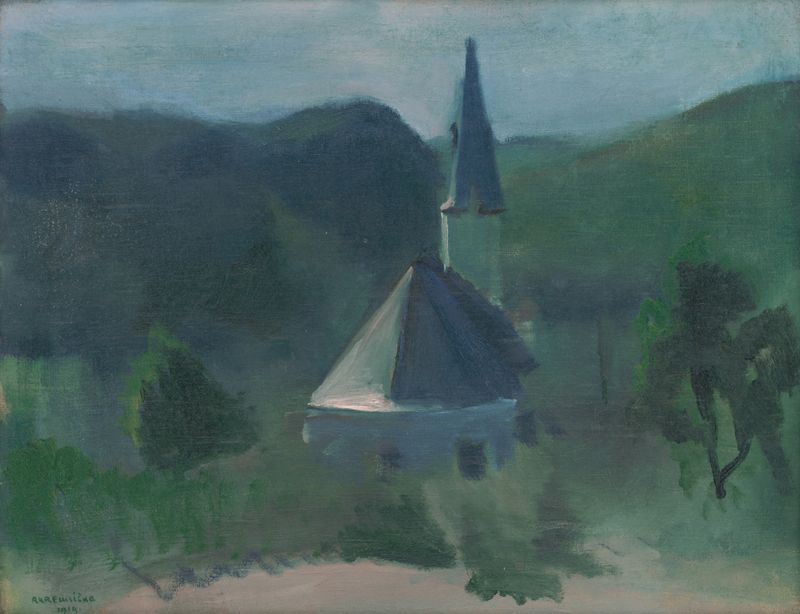
In the world of art, decay can be a profound statement of existence, echoing the transience of life itself. Focus on the muted palette that envelops the landscape, where soft greens and browns weave together, suggesting a symphony of fading memories. Notice how the brushstrokes create a textured surface that invites you to explore the scene's depth — a town cradled by the gentle embrace of nature, yet marked by signs of wear. The delicate play of light across the ruins speaks of stories long forgotten, drawing your gaze to the remnants of a once vibrant community. As you immerse yourself, consider the tension between the vibrant life that once flourished and the present stillness, where time has taken its toll.
The juxtaposition of the lively natural elements against the crumbling architecture speaks to the bittersweet nature of existence — beauty intertwined with decay. The shadows that slink across the canvas evoke a sense of nostalgia, while the light hints at the resilience of life amidst the ravages of time. In 1926, Rudolf Kremlička painted this work during a period of personal and artistic exploration in Czechoslovakia. The post-war landscape was shifting, and he sought to capture the essence of place and memory through his evocative representations of towns and their histories.
This moment in his life marked a transition, as he delved deeper into the emotional narratives that landscapes can tell, embracing decay as a poignant symbol of ephemeral beauty.