Troll Wall (Norway) — History & Facts
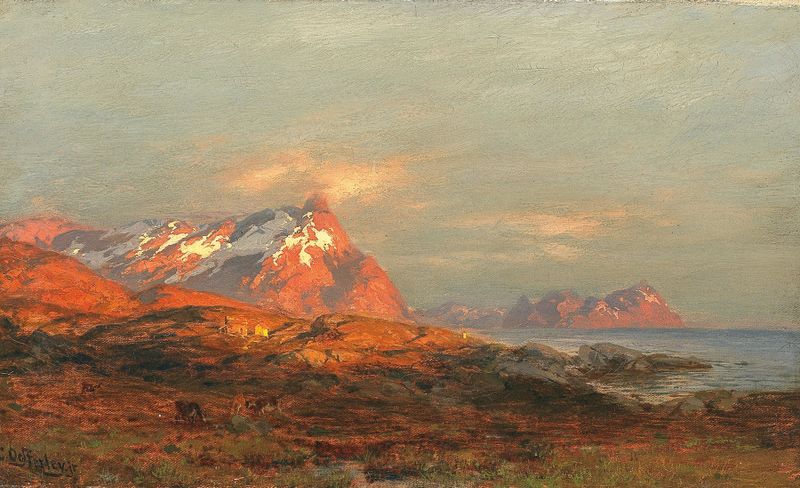
Could beauty survive in a century of chaos? In Troll Wall, the viewer is invited into a realm where nature’s grandeur meets the madness of human ambition. Focus on the dramatic cliffs that rise sharply against the sky, a testament to both the rugged Norwegian landscape and the tenuous connection between man and nature. The bold colors, with deep greens contrasting against the stark grays and whites of the rock face, draw the eye upward. Notice how the swirling clouds above seem to echo the tumult below, encapsulating a moment caught between serenity and turmoil.
Every brushstroke suggests the chaos lurking just beneath the surface. As you contemplate the scene, consider the tension between the cliffs’ imposing presence and the delicate strokes that hint at the land's inherent beauty. The subtle play of light across the rock face captures fleeting moments, reflecting the inner struggles of those who dare to conquer such heights. This tension mirrors the tumultuous aftermath of World War I, with whispers of human madness resonating through the landscape’s silence. Carl August Heinrich Ferdinand Oesterley painted Troll Wall in 1919, a time when the world was grappling with the fallout of conflict.
Living in Norway during this period, Oesterley sought to portray both the majesty of his homeland and the chaos that accompanied the changing socio-political landscape. Emerging from the war’s shadows, he found inspiration in the powerful Norwegian vistas that would define his work, capturing a moment where beauty and madness coexist.