Two hares in a landscape — History & Facts
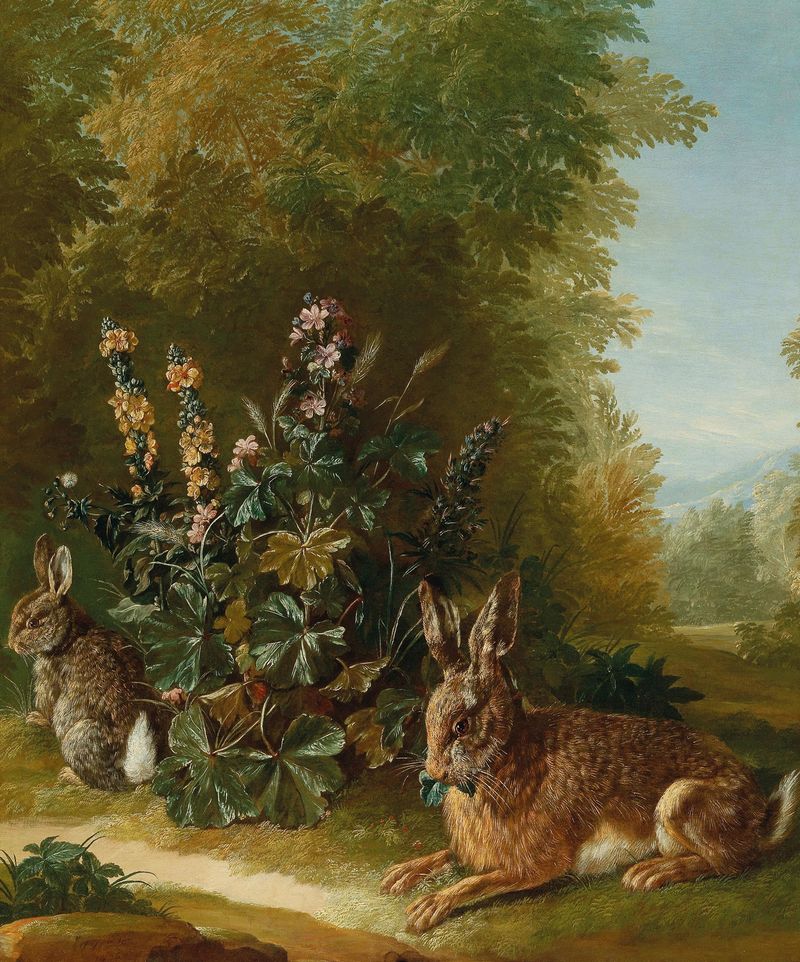
Did the painter know this moment would outlive them? In the stillness of a serene landscape, chaos whispers beneath the surface, reminding us of the fragility of existence. Look to the center of the canvas, where two hares crouch in quiet intensity. Their elongated ears poised as if listening to unseen threats. Notice how the subtle brushwork captures the tension in their bodies, every muscle coiled with potential energy.
The lush greens and browns of the background provide a tranquil contrast, framing the hares in vibrant detail. The light filters softly through this pastoral scene, imbuing the moment with a dreamy quality that invites contemplation. Beneath the apparent tranquility lies a deeper narrative of survival and instinct. The hares, symbols of fertility and the fleeting nature of life, seem caught in a delicate dance between predator and prey.
The chaotic energy of the natural world, often overlooked, hums just beyond the painted boundaries, urging the viewer to recognize the tumult that coexists with beauty. This duality reflects the delicate balance in nature, hinting at the struggles that are always present, even in moments of stillness. Jean Jacques Spoede created this work during a time when art was grappling with new ideas surrounding nature and representation. The absence of a specific date hints at a more timeless quality, as the artist sought to capture the essence of life itself rather than a moment frozen in time.
The broader art world was shifting towards realism, and Spoede’s focus on these two hares reflects a desire to explore the intimate relationship between the observer and the observed within the chaotic tapestry of existence.