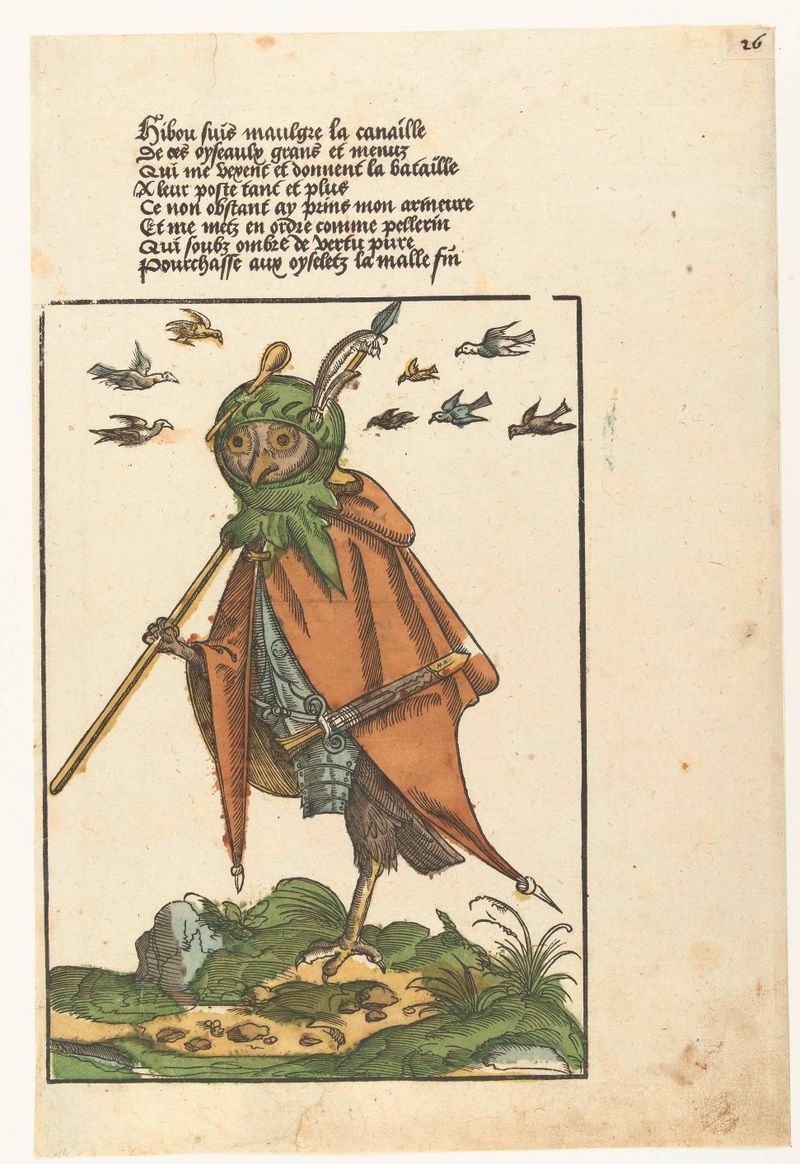
Uil uitgedost als pelgrim — History & Facts
Did the painter know this moment would outlive them? The ethereal blend of past and present captured in this intricate engraving beckons us to ponder the fragility of existence and the essence of rebirth. Look closely at the center of the composition, where the figure of the pilgrim stands adorned in elaborate garments. The meticulous details of the fabric, with delicate crosshatching, create a texture that seems to ripple off the surface. Observe how the light plays upon the pilgrim's attire, illuminating the fine lines and casting gentle shadows that enhance the figure's three-dimensionality.
The surrounding elements, perhaps symbols of spiritual journeys, frame this character, inviting the viewer to explore the narrative layered within the design. As you delve deeper, notice the juxtaposition of the pilgrim's ornate clothing against a background that appears almost abstract, suggesting a world both familiar and unknown. This contrast evokes a sense of longing and the human desire for redemption. The choice of intricate lines and soft shading not only showcases the technical prowess of the engraver but also represents the complex interplay between earthly existence and spiritual aspiration, hinting at the transformative power of pilgrimage. Created between 1500 and 1549, this engraving emerged during a time of significant change in Europe, marked by the rise of individualism and exploration.
The artist, known only as Monogrammist MH, was part of a flourishing artistic community that began to embrace both classical and emerging themes. This work reflects the era's yearning for spiritual connection and the pursuit of enlightenment, capturing a moment that resonates through the ages.