Ungarischer Bauernhof — History & Facts
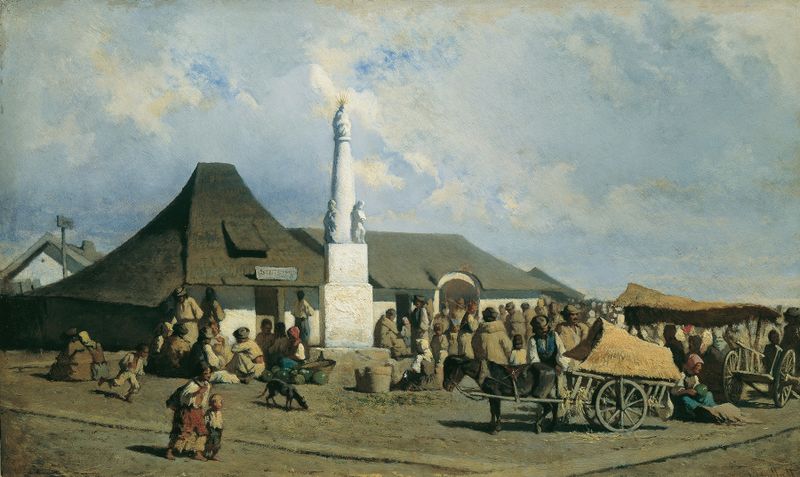
In the quietude of a rural landscape, a sense of fear lingers beneath the surface, a tension that suggests stories untold. This is not merely a depiction of a farm; it is a poignant reflection on the human condition, where each element carries the weight of unspoken anxieties. Look to the left, where the dilapidated barn looms, its weathered wood imbued with a melancholic hue. The muted greens and browns of the surrounding fields create a somber palette, emphasizing the starkness of the farm’s isolation.
Notice the sparse figures of peasants, their postures conveying weariness as they toil beneath an overcast sky, the brushwork capturing the heaviness of their labor. The composition draws the eye inward, suggesting both the intimacy and the desolation of their daily lives. Embedded in this rural tableau are contrasts that speak to an underlying fear—a fear of loss, of uncertainty. The juxtaposition of the vibrant life in the fields against the decaying structure of the barn hints at transience and despair.
Shadows stretch across the landscape, evoking a sense of foreboding, as if nature itself is aware of the fragility of existence. Each detail, from the textured clouds to the forlorn gaze of a worker, amplifies the emotional resonance with which the artist imbues the scene. Raffalt painted this work during a time when the Austrian countryside was grappling with social and economic changes. The late 19th century was marked by upheaval, and rural life was increasingly threatened by industrialization.
As Raffalt captured the essence of peasant life, he transformed his observations into a haunting reminder of vulnerability amid a world in flux.