
Ungarisches Bauernhaus — History & Facts
What if silence could speak through light? In moments of stillness, the soft glow of dawn might whisper secrets of innocence and simplicity long forgotten. Look to the left at the subtle hues of ochre and olive that envelop the rustic farmhouse, drawing you into its embrace. The structure stands resolute, its weathered walls telling tales of years lived and labored. Notice how the light falls upon the thatched roof, casting gentle shadows that hint at the passage of time.
The palette resonates with earthiness, invoking a sense of place and belonging that contrasts sharply with the transient nature of life. At the forefront, the simplicity of the farmhouse serves as a symbol of resilience, embodying the innocence of rural life untouched by the complexities of modernity. The delicate interplay of light and shadow evokes an emotional tension—between nostalgia for the past and a longing for simplicity. Each element, from the rustic wood to the meticulously rendered textures, speaks to a harmony with nature that can sometimes feel elusive in a world dominated by chaos. Ágoston Ács created this work at an undetermined time, likely during a period of introspection in his artistic journey.
His exploration of rural life reflects a growing disillusionment with the rapid industrial changes sweeping through Hungary. In this artwork, he captures the essence of a way of life that is disappearing, presenting a poignant commentary on the relationship between humanity and the land it inhabits.
More Artworks by Ágoston Ács
Browse all →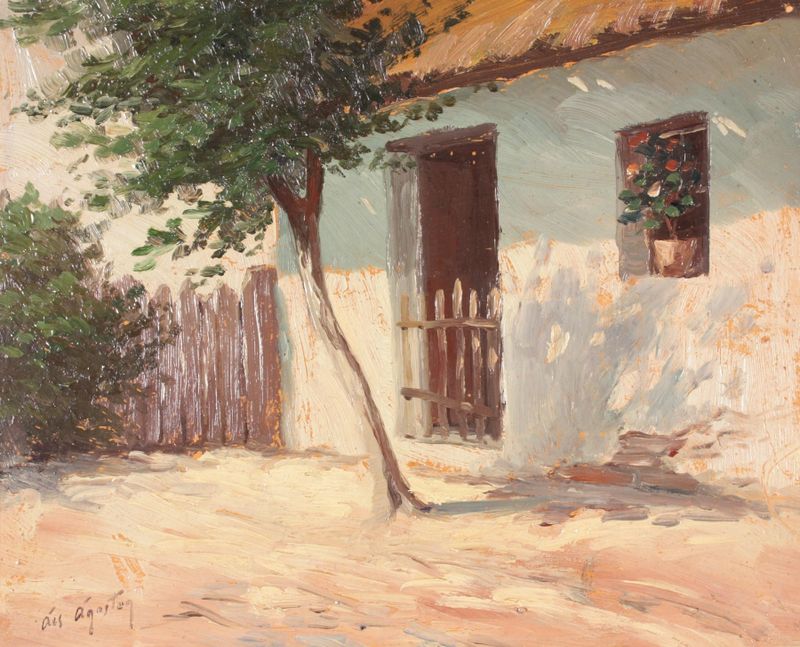
More Architecture Art
Browse all →
The statue of Liberty
Frédéric Auguste Bartholdi

View of Houses in Delft, Known as ‘The Little Street’
Johannes Vermeer

View of Houses in Delft, Known as ‘The Little Street’
Johannes Vermeer

The Cathedral in Rouen. The portal, Grey Weather
Claude Monet

The yellow house
Vincent van Gogh

The Church in Auvers-sur-Oise, View from the Chevet
Vincent van Gogh