Vanitas Still Life — History & Facts
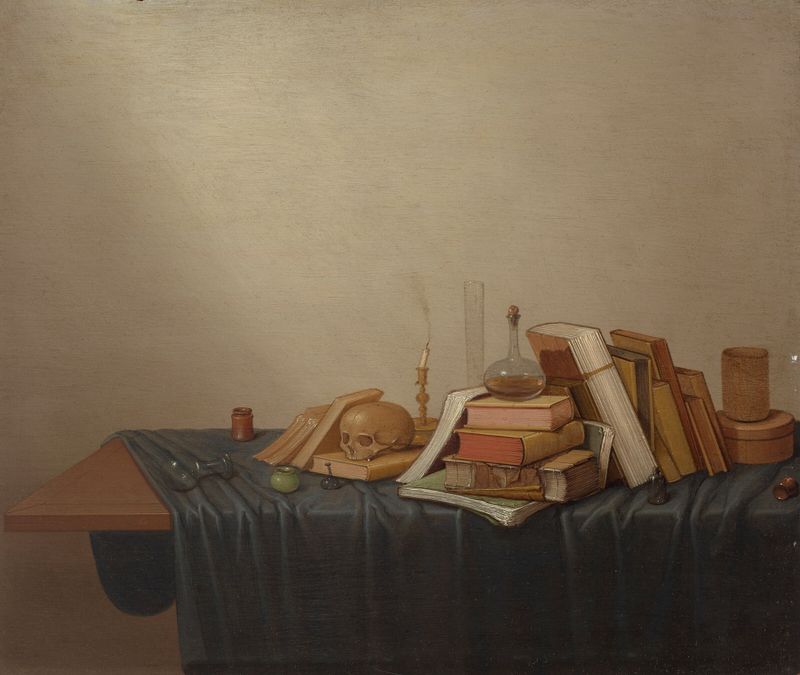
What if silence could speak through light? In the delicate interplay of shadow and luminescence, a still life emerges, inviting contemplation of the transient nature of existence. Look to the right at the gleaming glass of wine, its surface catching the light, creating a dance of reflections that rise and fall with its curves. Notice how the dark background intensifies the vibrancy of the fruits and flowers, drawing the eye to their rich colors. The composition is meticulously arranged, each object placed with intention, conveying a sense of harmony yet underscoring an inevitable decay. Within this serene tableau, deeper meanings flicker like candlelight.
The rotting fruit signals the fleeting pleasure of life, while the hourglass serves as a stark reminder of time’s relentless march. Each element whispers secrets of mortality, prompting viewers to confront both beauty and loss. It's a poignant balance of awe and melancholy, where life's vibrancy is forever entwined with its fragility. Created between 1658 and 1697, during the Dutch Golden Age, the artist was immersed in a world flourishing with trade and artistic innovation.
As he painted this work, he was part of a movement that valued the intricate details of everyday life, reflecting both the abundance and the ephemeral nature of human experience. The still life genre served as a vehicle for deeper philosophical reflections on existence, allowing his audience to engage with the profound themes of mortality and beauty.