Vase of Flowers — History & Facts
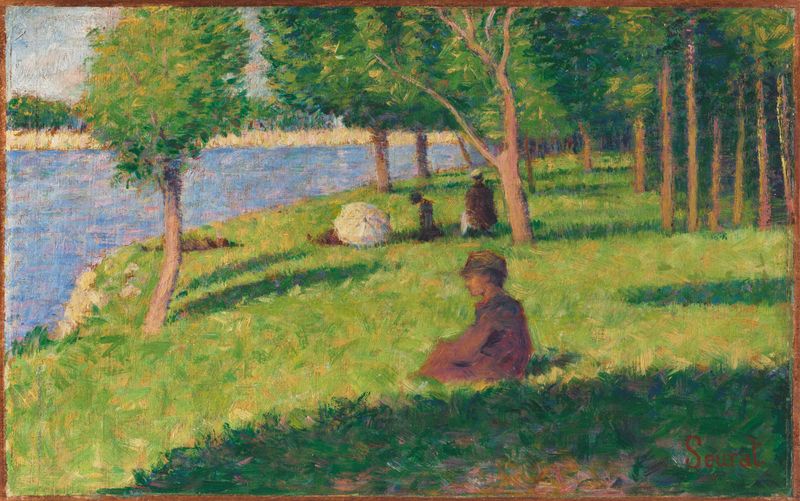
What if beauty was never meant to be finished? The ephemeral nature of a vase filled with flowers invites contemplation of life’s fleeting moments—each petal, a testament to both vibrancy and inevitable decay. Focus on the interplay of color in Vase of Flowers. The lush greens and rich reds draw the eye first, inviting a sense of life that seems to pulse with energy. Notice how Seurat employs pointillism, meticulously dotting the surface to create depth, which gives the arrangement a textured vibrancy.
The light appears to dance across the blossoms, illuminating their delicate forms while casting shadows that hint at their fragility. Each stroke breathes life into the composition, echoing the paradox of beauty—stunning yet transient. As you delve deeper, subtle contrasts emerge: the juxtaposition of the vibrant blooms against the muted background echoes the tension between vitality and decay. The wilted edges of some petals serve as poignant reminders of the passage of time, transforming what is typically joyous into something poignant.
This duality captures the viewer's attention, evoking a sense of melancholy amidst the beauty—a celebration of life that carries an undercurrent of loss. Georges Pierre Seurat painted Vase of Flowers between 1879 and 1881, during a period of artistic innovation in France. This was a time when Impressionism was flourishing, yet Seurat sought a distinct path, aiming for a systematic approach to color and composition. His work emerged from a blend of scientific study and artistic practice, reflecting his commitment to exploring the emotional resonance of visual experiences while grappling with the complexities of life and nature.