Venedig in Wien — History & Facts
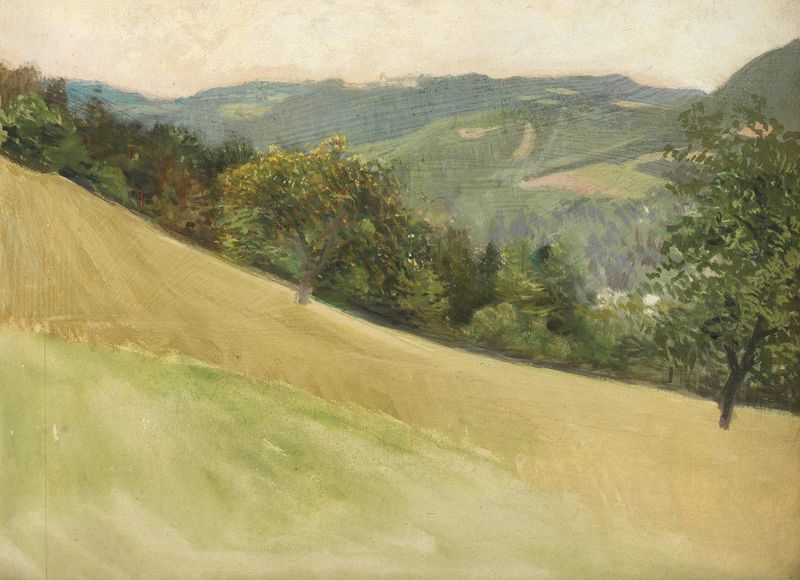
Did the painter know this moment would outlive them? In Venedig in Wien, the essence of melancholy is palpable, evoking a longing for the past that transcends time and space. Focus on the shimmering waters that dance across the canvas; they are the first thing that captivates the eye. The artist's brushstrokes, fluid and deliberate, create a mesmerizing reflection of the architecture that lines the canal. Look closely at the soft hues of blue and gold—an exquisite interplay of light that speaks to the romance of Venice as it finds a new home in Vienna.
The deliberate composition invites you to wander through the scene, moving toward the distant horizon, where the sky meets the water in a gentle, warm embrace. Yet, beneath the beauty lies a deeper tension. The stillness of the waters contrasts sharply with the bustling city life hinted at by the shadowy figures in the foreground; one can almost hear the whispers of their stories, intertwined with longing and nostalgia. The idyllic reflection feels like a fleeting memory, a reminder of what once was, and what might never be again, capturing a universal ache for connection and lost moments.
The palette, rich yet subdued, resonates with the weight of sentimentality, drawing the viewer into an intimate experience of yearning. In 1899, Hampel painted this piece in Vienna, a city on the cusp of modernity, where the echoes of the past lingered in the air. The late 19th century was a transformative period in art, marked by the rise of the Secessionist movement, which sought to break free from historical constraints. Hampel, influenced by this cultural shift, imbued Venedig in Wien with a profound sense of nostalgia, reflecting not just his surroundings but also the heart of an era caught between tradition and innovation.