
Venetian Scene — History & Facts
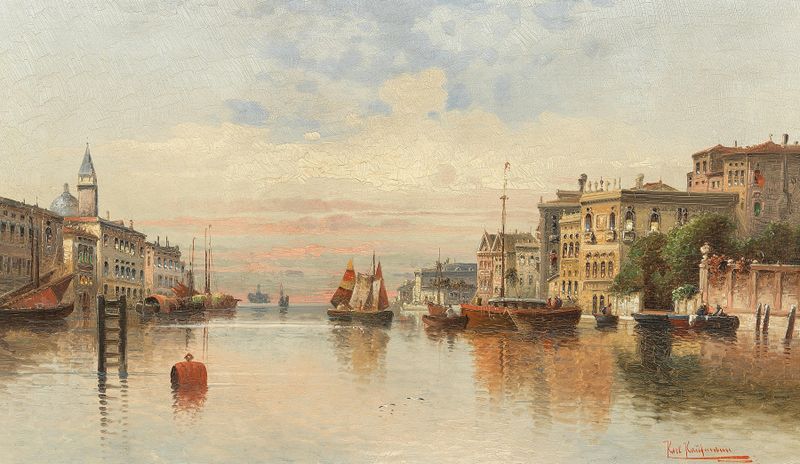
Can beauty exist without sorrow? In the heart of Venice, where the canals weave through stone and light dances on water, there lies a paradox—a breathtaking stillness enveloped in a silent void. Look to the left at the gentle ripples that break the surface of a serene canal, reflecting the soft hues of dawn. The artist employs a delicate palette of blues and pinks, creating a sense of tranquility that invites the viewer into the scene. Notice how the architecture—crumbling yet regal—stands as a testament to time, casting elongated shadows that stretch like fingers over the water, hinting at stories untold.
Each brushstroke captures the fleeting moment before daybreak, where the world holds its breath in anticipation. Yet, beneath this facade of beauty lies a deeper narrative. The juxtaposition of light and shadow reveals a melancholic tension; the brilliant colors stir nostalgia while the looming darkness suggests loss. Look closely at the small boats anchored idly, symbols of lives paused in the stillness, evoking thoughts of longing or abandonment.
The contrast between the vibrancy of the scene and the quiet void surrounding it speaks to a deeper human experience—the coexistence of joy and sorrow, of presence and absence. The work, created by Karl Kaufmann, remains undated, yet it reflects a time when the artist was exploring themes of solitude and beauty. Living in a world that oscillated between the sublime and the tragic, Kaufmann captured Venice not just as a place, but as a state of being—eternally beautiful, yet tinged with an inescapable sense of loss. His canvases resonate with the complexities of the human condition, inviting contemplation of the void that often lies beneath the surface of our most cherished moments.
More Artworks by Karl Kaufmann
Browse all →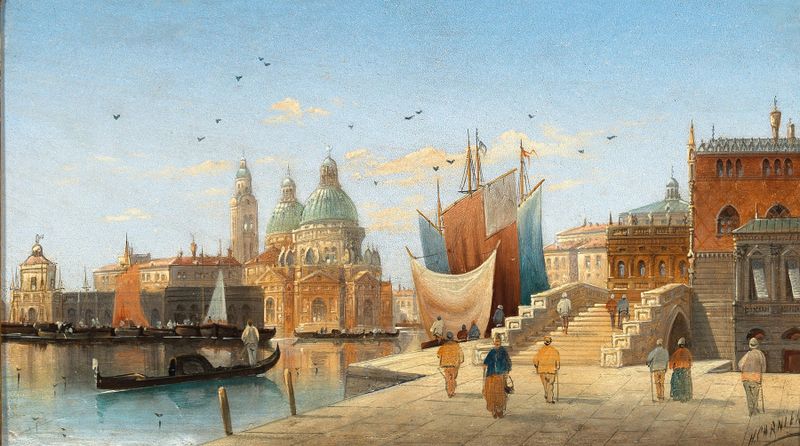
Venice, a View of Santa Maria della Salute
Karl Kaufmann
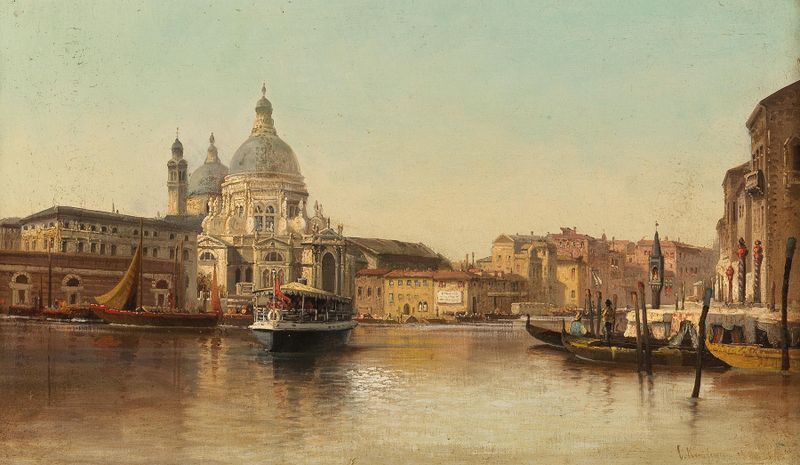
Venedig, Kanal Grande mit Blick auf Santa Maria della Salute
Karl Kaufmann
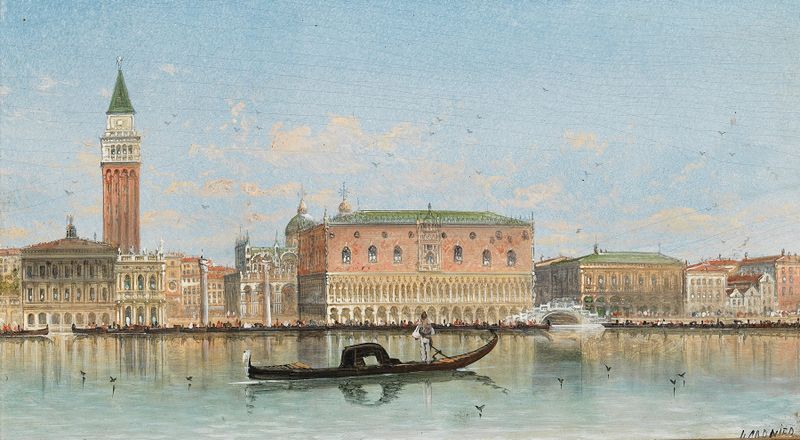
Venice, a View of St Mark’s Colum
Karl Kaufmann

Venedig Mit Santa Maria Della Salute
Karl Kaufmann
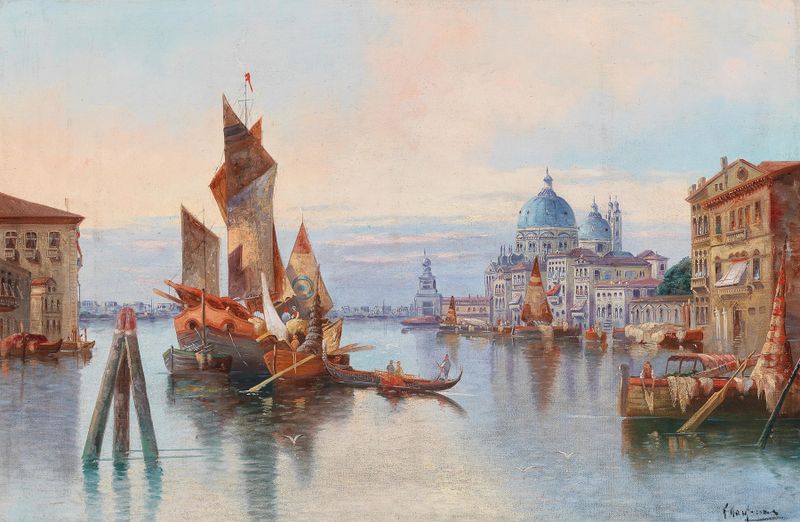
Venice, A View of Santa Maria della Salute
Karl Kaufmann
Venice, a View of a Canal
Karl Kaufmann

Fishermen By The Coast
Karl Kaufmann

Venice, Canal Scene
Karl Kaufmann
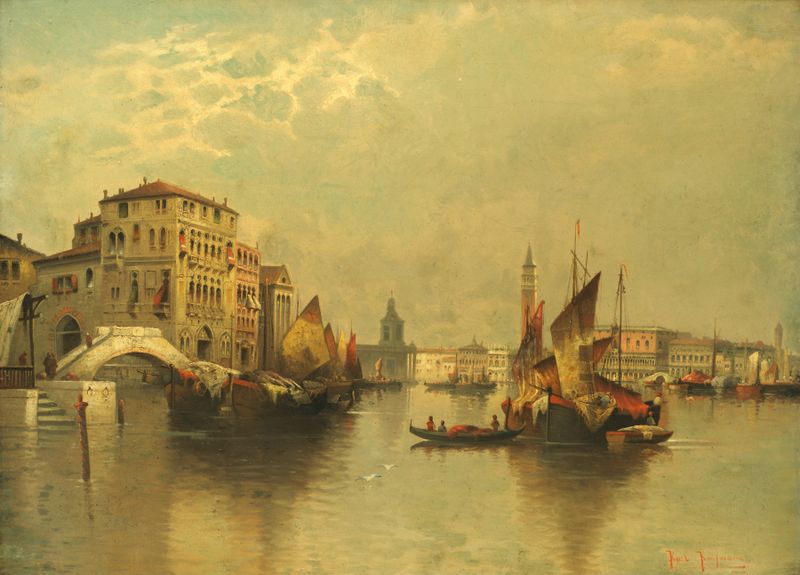
View of Venice
Karl Kaufmann
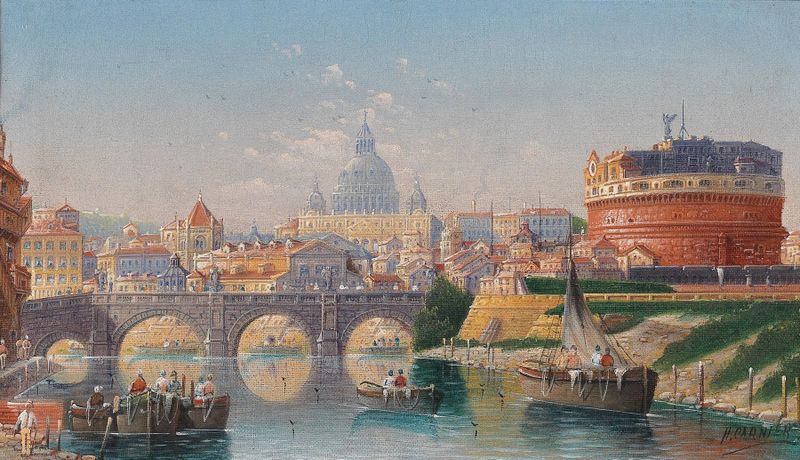
Rome, View Of The Castel Sant’angelo
Karl Kaufmann





