Venice — History & Facts
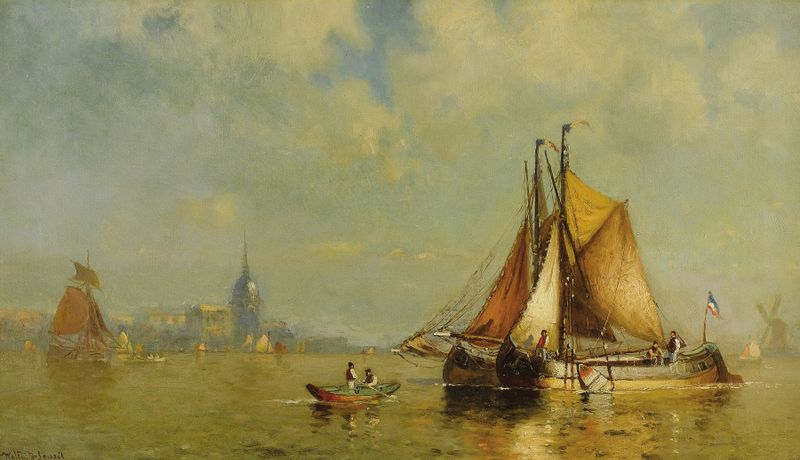
Could beauty survive in a century of chaos? In the delicate strokes of light and shadow, a poignant narrative of loss unfolds, inviting us to reflect on the transience of splendor. Focus on the soft hues of blue and gold that envelop the canvas. The viewer’s gaze is drawn to the shimmering reflections on the water, where the ethereal glow of the Venice skyline dances gently upon the surface. Notice how the artist captures the intricate details of the architecture, each building standing as a testament to history, yet softened by time and the passage of light.
The composition balances serene water with a horizon that feels both infinite and intimate, as if whispering secrets of nostalgia. The interplay of warmth and coolness evokes the melancholic beauty of a city caught between its glorious past and an uncertain future. Small boats drift silently, suggesting a link between the present moment and the memories held within the waters. The subtle shadows speak of absence, while the vibrancy of the colors reminds us of what once was—a delicate tension between celebration and sorrow that reverberates through the scene. Walter Franklin Lansil painted this piece in 1877, during a period marked by artistic experimentation and the rise of Impressionism.
Living in a time when the world was rapidly changing due to industrialization, Lansil sought to capture the timeless allure of Venice, a city he cherished. This painting stands as a poignant reflection of both his personal experiences and the broader artistic movements shaping the late 19th century.