
Venice, a View of the Palazzo Ducale and St Mark’s Column — History & Facts
In the tranquil embrace of Venice, every brushstroke breathes life into a destiny unfolding in vivid hues. The operatic beauty of this city reflects the fleeting nature of time, a reminder of what has been and what may come. Focus on the intricate details of the Palazzo Ducale, where delicate arches and ornate carvings draw your eyes along the façade. Notice how the light catches the limestone, creating a golden glow that dances through the cool blues of the canal waters.
Look to the left and observe St. Mark’s Column, steadfast and proud against a backdrop of vibrant ochres, inviting contemplation of its storied history. The careful composition invites a sense of harmony, where each element exists in a delicate balance, inviting the viewer into a moment suspended between the past and future. Yet, beneath this serene exterior lies an emotional tension.
The contrast between the solid architecture and the ephemeral reflections in the water suggests the inevitable passage of time and the fleeting nature of existence. The artist captures Venice not just as a city, but as a living testament to the dreams and destinies that have passed through its streets. Hidden figures in the boats, perhaps waiting or rushing, echo the human longing for connection and purpose amid the city’s grandeur. During an undetermined time in his career, Duvieux painted this work amidst the evolving landscape of 19th-century art, where Romanticism began to intertwine with Realism.
His immersion in the world of Venice and its historical significance illustrates a moment where personal and collective narratives converged. It reflects his desire to capture not only the aesthetic beauty but also the soul of a city steeped in history and destiny.
More Artworks by Henri Duvieux
Browse all →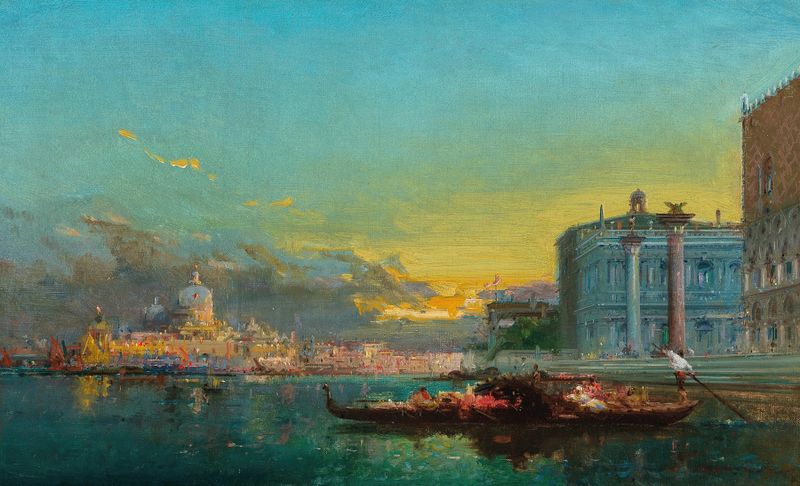
Venice, Scene at Dusk before Santa Maria della Salute
Henri Duvieux
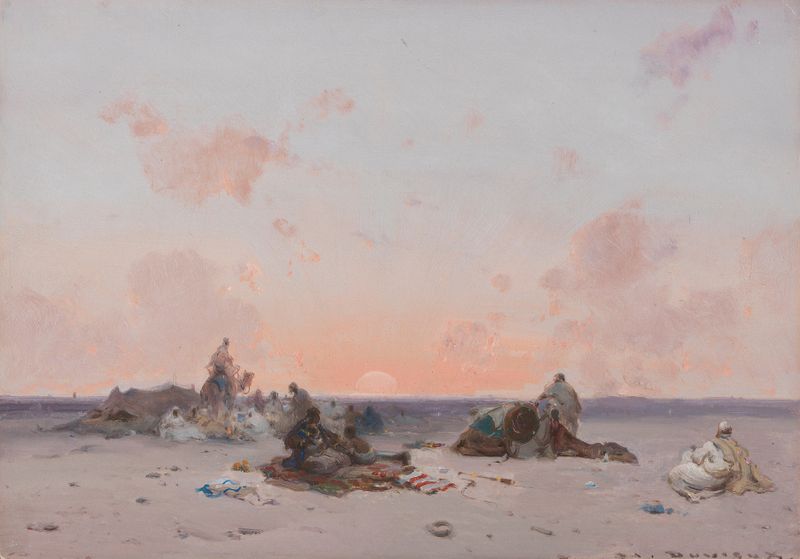
Sunset in the desert over a Bedouin camp
Henri Duvieux
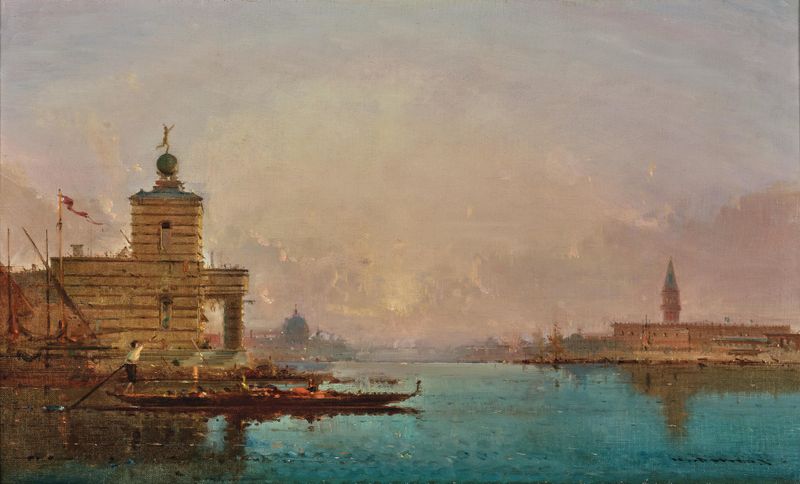
Venice, a View of the Grand Canal
Henri Duvieux
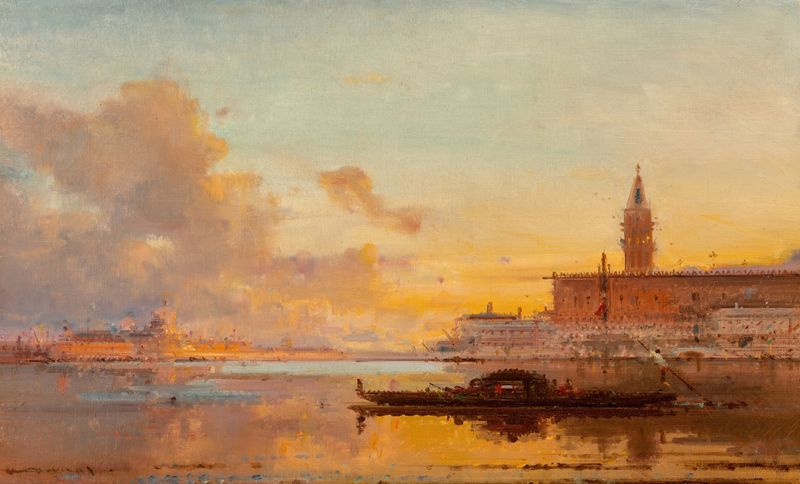
A view of the Doge’s Palace at sunset
Henri Duvieux
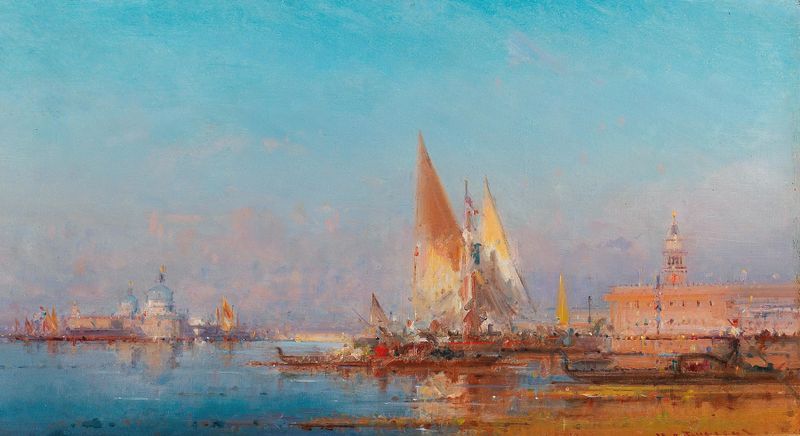
Venice, a view of Santa Maria della Salute at sunset,
Henri Duvieux
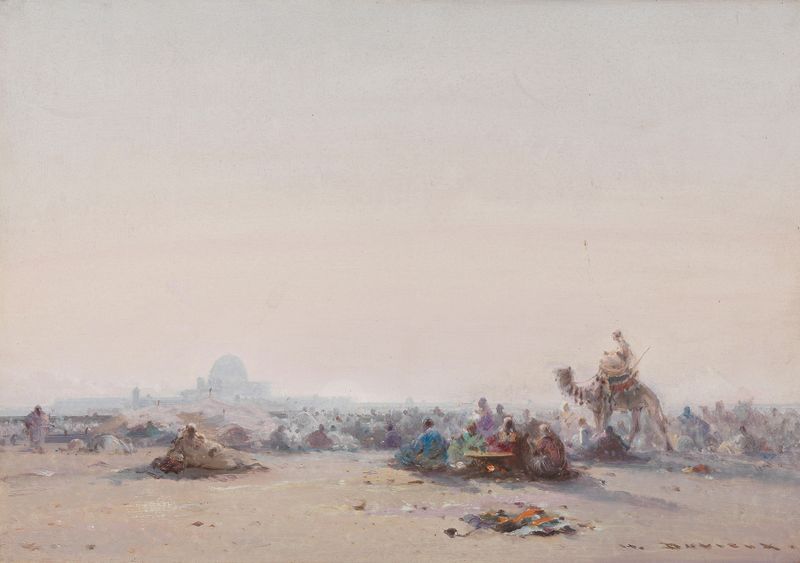
Sunrise in the desert at the gates of a city
Henri Duvieux
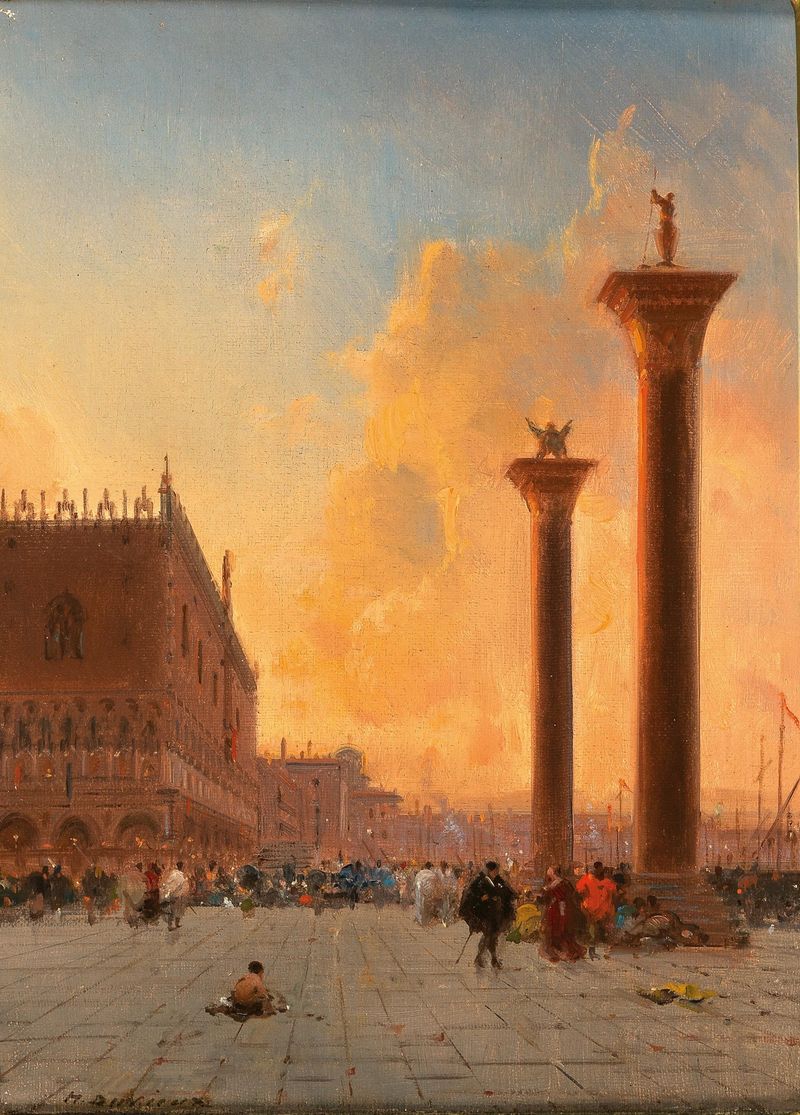
Venice, St Mark’s Square
Henri Duvieux
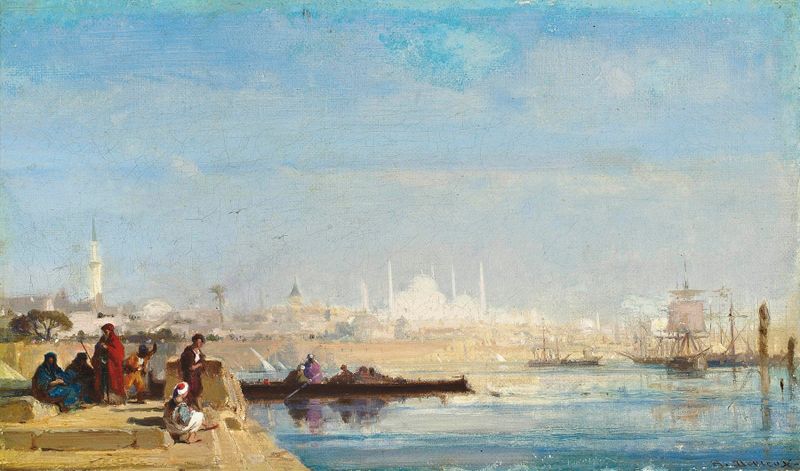
Turks waiting at a quay on the Bosphourus, Istanbul
Henri Duvieux
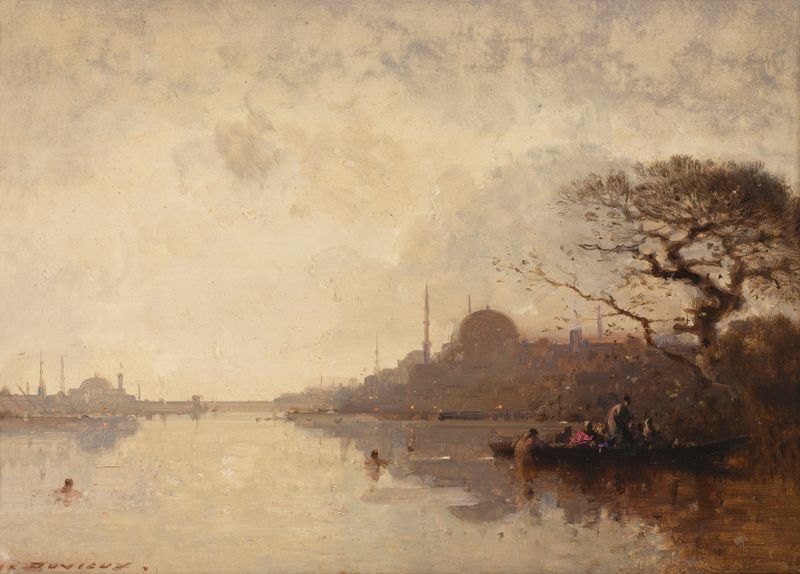
A view of the Bosphorus with Hagia Sophia, Constantinople
Henri Duvieux
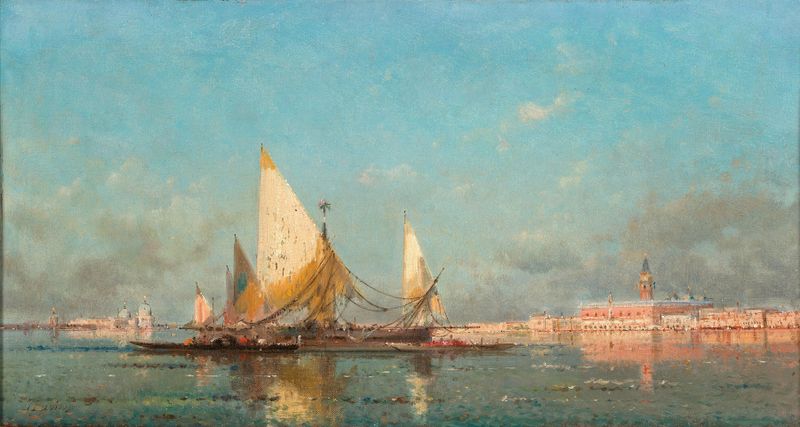
Venice, Sailors in the Bacino
Henri Duvieux
More Architecture Art
Browse all →
The statue of Liberty
Frédéric Auguste Bartholdi

View of Houses in Delft, Known as ‘The Little Street’
Johannes Vermeer

View of Houses in Delft, Known as ‘The Little Street’
Johannes Vermeer

The Cathedral in Rouen. The portal, Grey Weather
Claude Monet

The yellow house
Vincent van Gogh

The Church in Auvers-sur-Oise, View from the Chevet
Vincent van Gogh