
Venice, Campo Santi Giovanni e Paolo — History & Facts
A stillness pervades the scene, yet beneath its tranquil surface lies a profound melancholy. Each stroke transforms the bustling life of Venice into a haunting elegy, capturing the fleeting beauty of a world on the cusp of change. Look to the center of the canvas, where the grand church of Santi Giovanni e Paolo rises majestically. The warm ochres and gentle blues weave together in delicate harmony, pulling the viewer’s gaze toward the intricately detailed facade.
Notice how the dappled sunlight plays across the cobblestones, illuminating the figures that meander through the square — their soft outlines whisper stories of lives intertwined with the city's history. The juxtaposition of light and shadow speaks to a deeper emotional landscape. The lively activity of the townsfolk contrasts sharply with the solemn presence of the church, suggesting a longing for connection amidst the backdrop of life’s transience. The figures are rendered with a certain delicacy, as if they might dissolve into the air, echoing the impermanence that lingers in the artist’s palette.
Here, the beauty of Venice becomes a poignant reminder of both joy and sorrow, a fleeting memory suspended in time. Luigi Querena painted this work in 1863, during a period when the art world was embracing realism and impressionism. Residing in Venice, he was immersed in the vibrant life of the city, yet he also faced the challenges brought on by political turmoil and change. This painting encapsulates that duality, reflecting a moment when the past and present coalesce into a breathtaking view of a beloved city, forever caught between beauty and loss.
More Artworks by Luigi Querena
Browse all →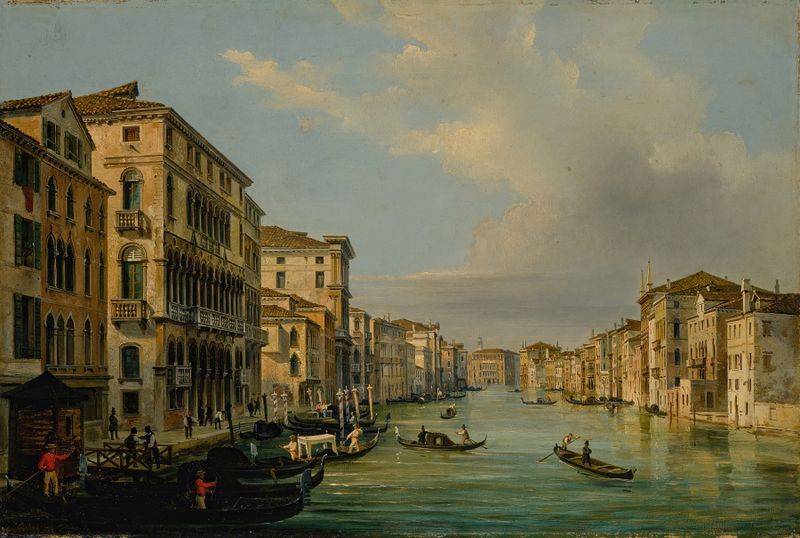
Venice, a view of the Grand Canal
Luigi Querena
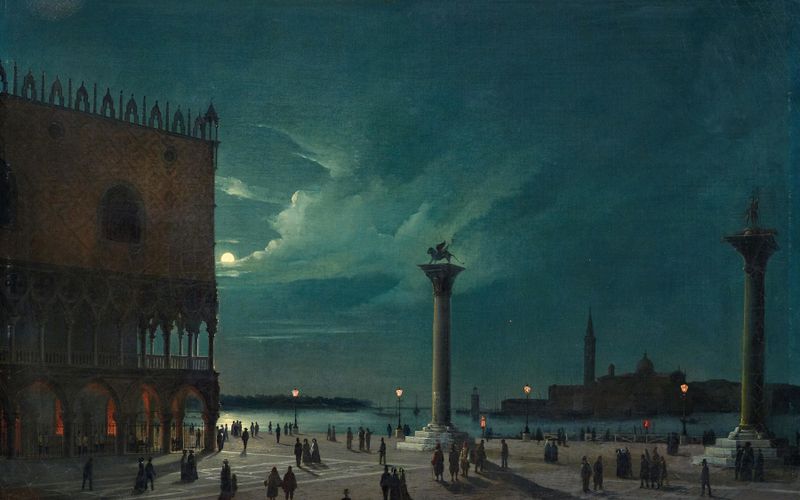
Venice the Piazzetta in the moonlight
Luigi Querena
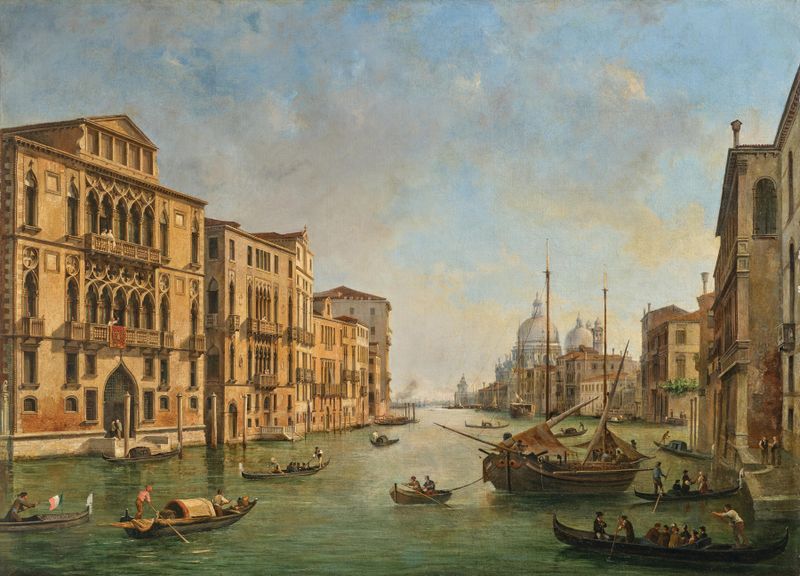
Venice, View of the Grand Canal from Palazzo Cavalli-Franchetti with Santa Maria della Salute in the Distance
Luigi Querena

Gondolas and Boats on the Molo, Looking West Towards Santa Maria Della Salute
Luigi Querena
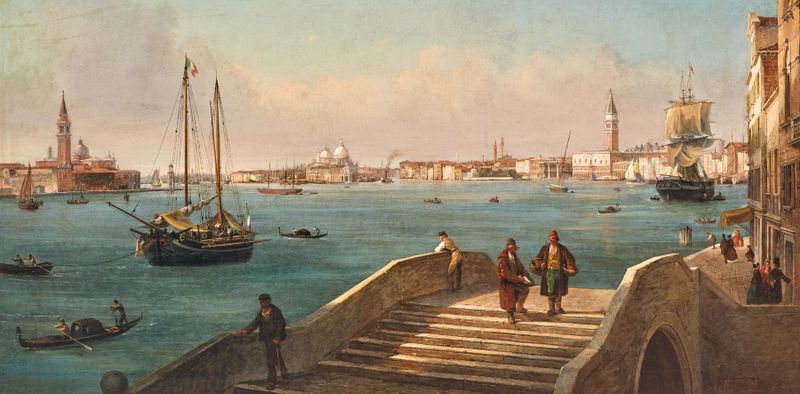
Venice, the Riva degli Schiavoni
Luigi Querena

Venice, the Riva degli Schiavoni
Luigi Querena
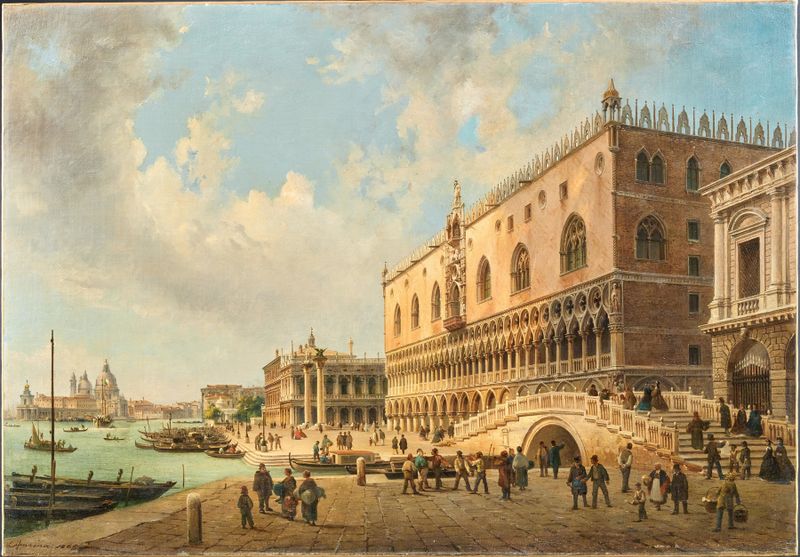
The Doge’s Palace, the Piazzetta and the Biblioteca in Venice, with Santa Maria della Salute beyond
Luigi Querena
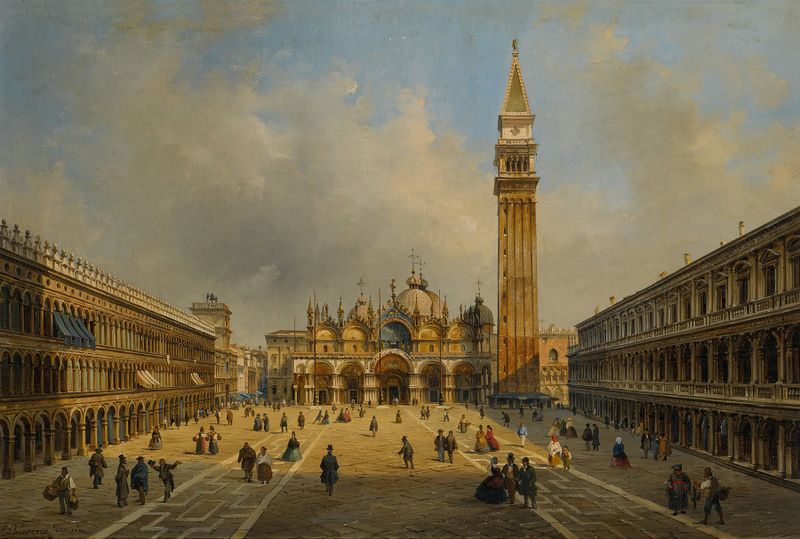
Venice, a view of St. Mark’s Square
Luigi Querena
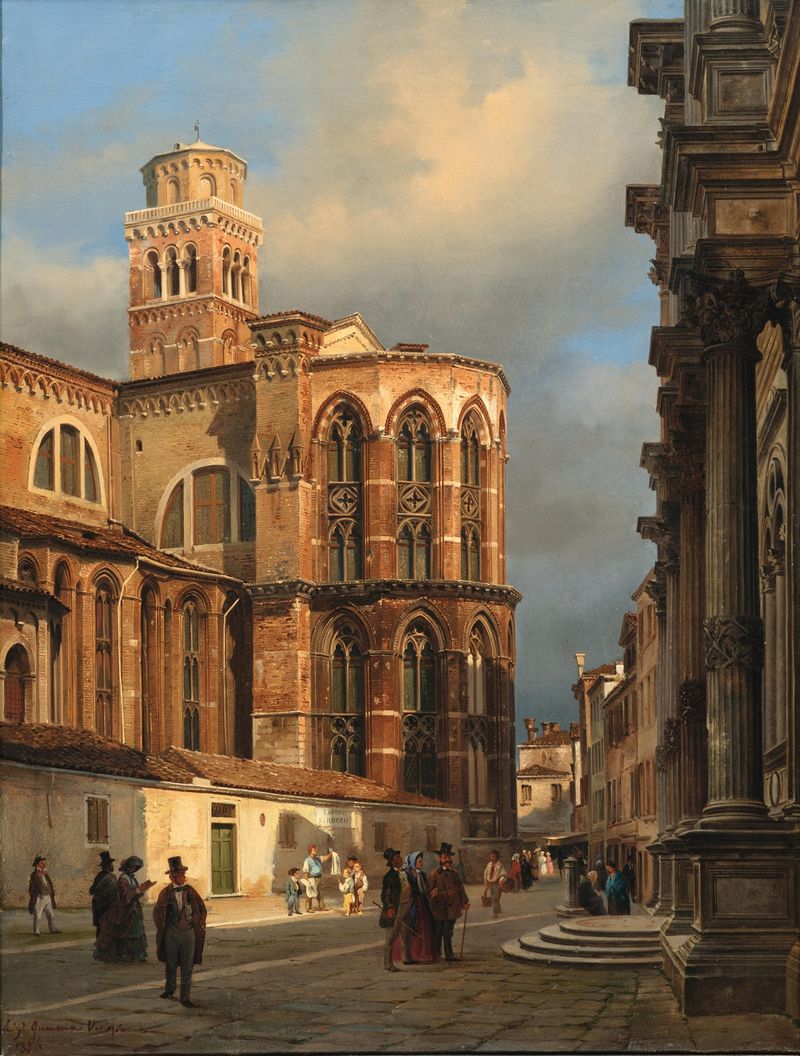
Venice, a View of the Church of San Rocco
Luigi Querena
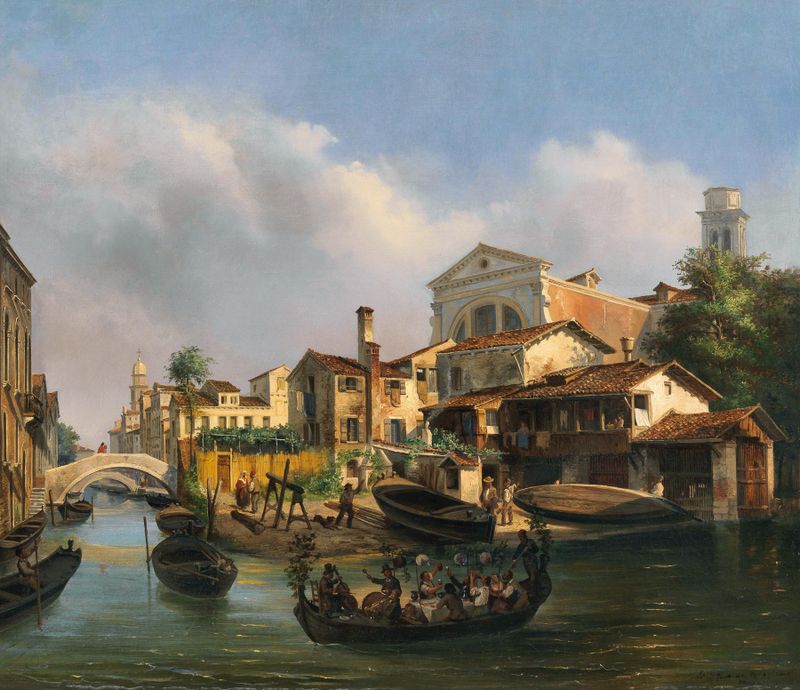
Squero di San Trovaso
Luigi Querena
More Architecture Art
Browse all →
The statue of Liberty
Frédéric Auguste Bartholdi

View of Houses in Delft, Known as ‘The Little Street’
Johannes Vermeer

View of Houses in Delft, Known as ‘The Little Street’
Johannes Vermeer

The Cathedral in Rouen. The portal, Grey Weather
Claude Monet

The yellow house
Vincent van Gogh

The Church in Auvers-sur-Oise, View from the Chevet
Vincent van Gogh