
Venice, View of the Rialto Bridge — History & Facts
When did color learn to lie? In the vibrant interplay of hues, reality sometimes bends, whispering secrets beneath a façade. Look to the left at the striking blue waters that cradle the arching Rialto Bridge, reflecting the golden tones of the buildings above. Notice how the brushwork creates a soft rippling effect, breathing life into the scene, while the warm sunlight bathes the canvas, illuminating the scene with an inviting glow. The composition draws your gaze along the canal, guiding you through the bustling marketplace and the pedestrians going about their day, each figure rendered with a delicate touch. Yet beneath this picturesque charm lies a tension between the tranquil beauty and the underlying currents of change.
The vivid colors can evoke both joy and nostalgia, hinting at the transient nature of time in this iconic city. The juxtaposition of the sturdy bridge against the fluid water symbolizes the stability of tradition amidst the ebb and flow of modernity, urging viewers to ponder what is preserved and what is lost. Ferrazzi created this piece in 1875 while navigating the vibrant art scene of Venice, a city steeped in tradition yet embracing the influences of Impressionism. This period saw a growing fascination with capturing the ephemeral effects of light and color, reflecting the artist’s commitment to portraying the essence of his surroundings as both an homage and a renewal of the city's identity.
More Artworks by Luigi Ferrazzi
Browse all →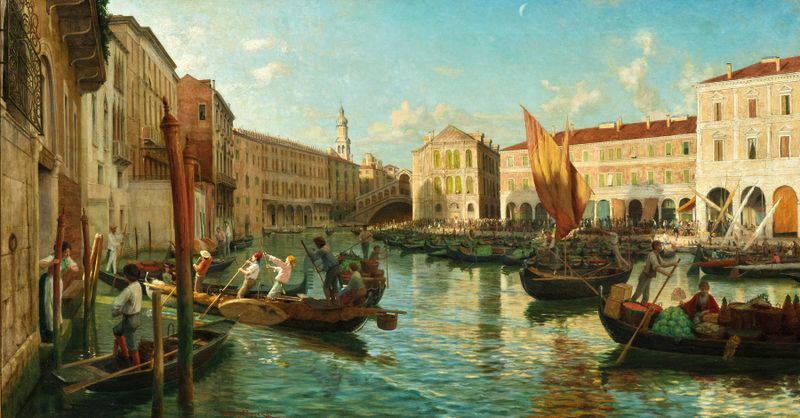
More Architecture Art
Browse all →
The statue of Liberty
Frédéric Auguste Bartholdi

View of Houses in Delft, Known as ‘The Little Street’
Johannes Vermeer

View of Houses in Delft, Known as ‘The Little Street’
Johannes Vermeer

The Cathedral in Rouen. The portal, Grey Weather
Claude Monet

The yellow house
Vincent van Gogh

The Church in Auvers-sur-Oise, View from the Chevet
Vincent van Gogh