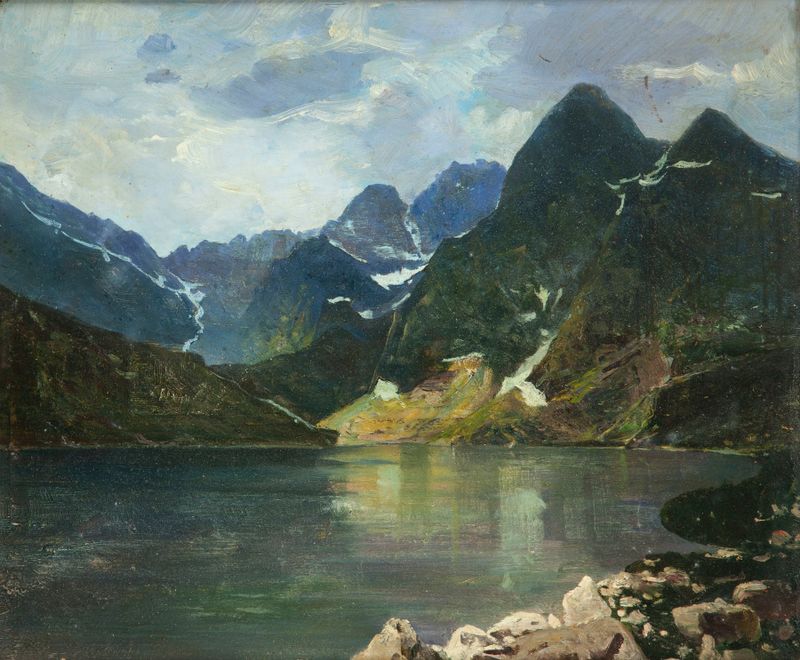
View from Kalwaria Zebrzydowska — History & Facts
What if silence could speak through light? In the quiet of dawn, the world hangs suspended between night and day, where the gentle brush of sunlight begins to illuminate unseen sorrows. Look towards the horizon, where soft hues of lavender and gold blend seamlessly, beckoning the viewer’s gaze. Notice how the riverside reflects these tender colors, creating a shimmering pathway that leads into an expansive sky. Shadows linger in the valleys, hinting at isolation, while the delicate brushstrokes evoke a sense of fluidity, as if the landscape breathes with the weight of unspoken grief. In this composition, contrasts emerge between light and darkness, echoing the bittersweet nature of life itself.
The tranquil waters offer an illusion of peace, yet they also conceal depths that resonate with longing. The trees, arranged with a deliberate asymmetry, appear to reach out, stretching toward the light while hinting at their own struggle against the inevitable passage of time. Antoni Gramatyka painted this work in 1872, a period marked by a burgeoning awareness of national identity within the Polish artistic community. While grappling with personal turmoil, he sought solace in landscapes that spoke to both the beauty and melancholy of his homeland.
This painting captures the essence of that time, reflecting a delicate interplay between nature’s serenity and the raw emotions of human experience.