
View from the Feldberg (Taunus) to Reifenberg — History & Facts
Where does light end, and longing begin? In this mesmerizing expanse, the horizon blurs the line between the seen and the felt, evoking the tender ache of memory. Look to the left at the soft curve of the hills, their gentle undulations painted in muted greens and browns. The artist’s brush strokes capture the quietude of the landscape, while the golden light spills across the canvas, illuminating patches of grass and hinting at the distant Reifenberg. Notice how the clouds, delicately rendered, weave a narrative above the horizon — a promise of change and movement, beckoning the viewer to pause and reflect on the beauty of the world below. Yet, within this tranquil vista, one can sense an underlying tension.
The interplay of light and shadow creates a dialogue between presence and absence, whispering of memories that linger. The distant mountains stand as silent witnesses, embodying both familiarity and distance, while the gentle gradient of the sky suggests an eternal longing for connection, a bridge between the past and present. Each brushstroke serves as a reminder that landscapes are not merely viewed; they are felt, remembered, and integrated into our very being. In 1808, Christian Georg Schütz the Younger painted this work during a time of burgeoning Romanticism in Europe, which sought to evoke profound emotional responses through nature.
Living in the shadow of the Taunus mountains, he was influenced by the desire to capture the sublime beauty of the German landscape, reflecting both personal and collective sentiments of his era. The painting stands as a testament to a moment where art and emotion converged, inviting viewers to explore their own memories and yearnings.
More Artworks by Christian Georg Schütz the Younger
Browse all →
An extensive river landscape with wanderers
Christian Georg Schütz the Younger
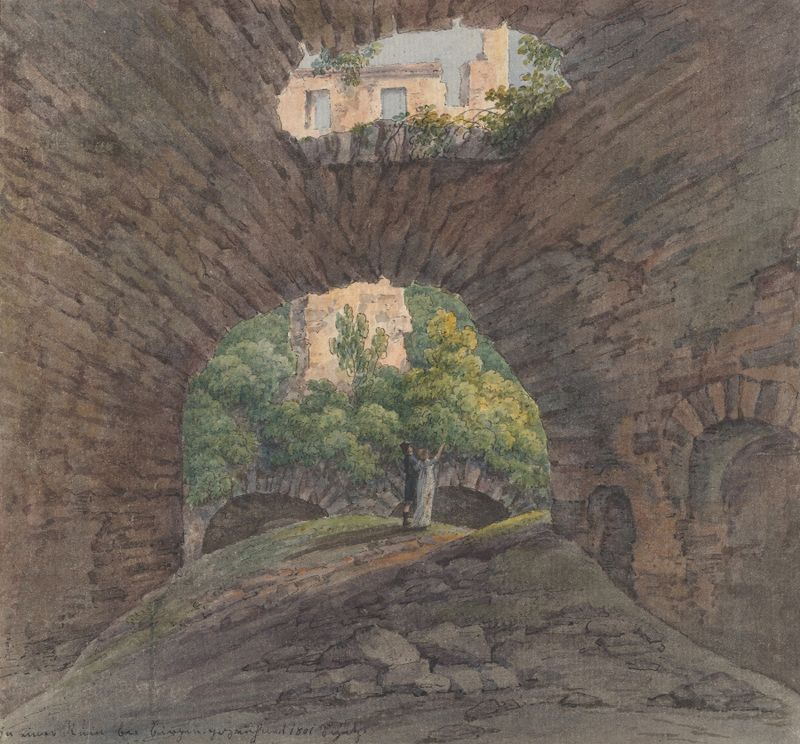
A Young Couple Viewing Ruins near Bingen
Christian Georg Schütz the Younger

Eine gotische Kirchenruine, im Hintergrund eine Burg, vorne bei einer Hütte Schafe, eine Ziege und ein Kind, das Hühner füttert, links ein Mann mit einem Korb
Christian Georg Schütz the Younger
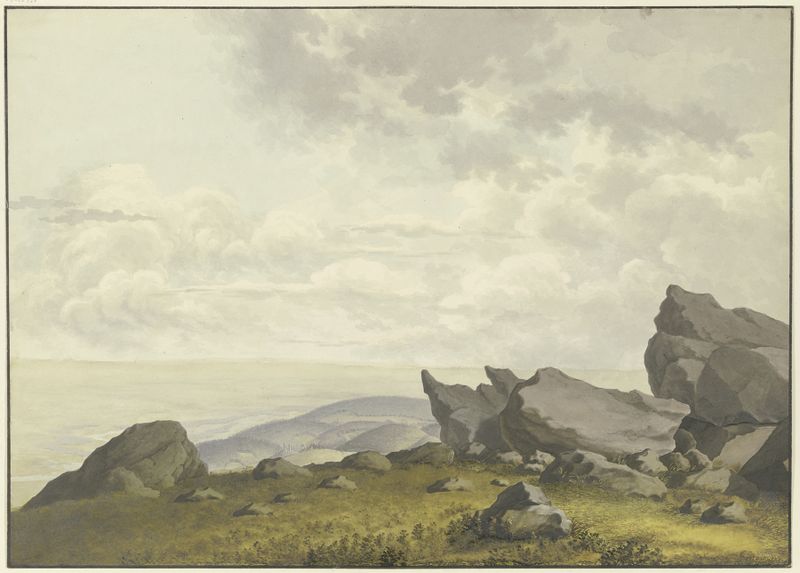
Blick durch Felsen auf dem Feldberg im Taunus nach Reifenberg und in die Mainebene
Christian Georg Schütz the Younger
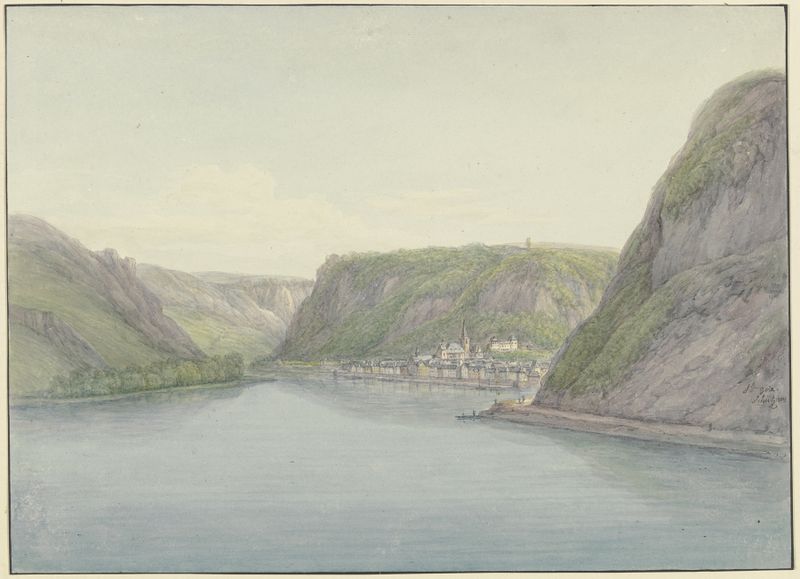
Blick in das Rheintal, rechts Sankt Goar
Christian Georg Schütz the Younger
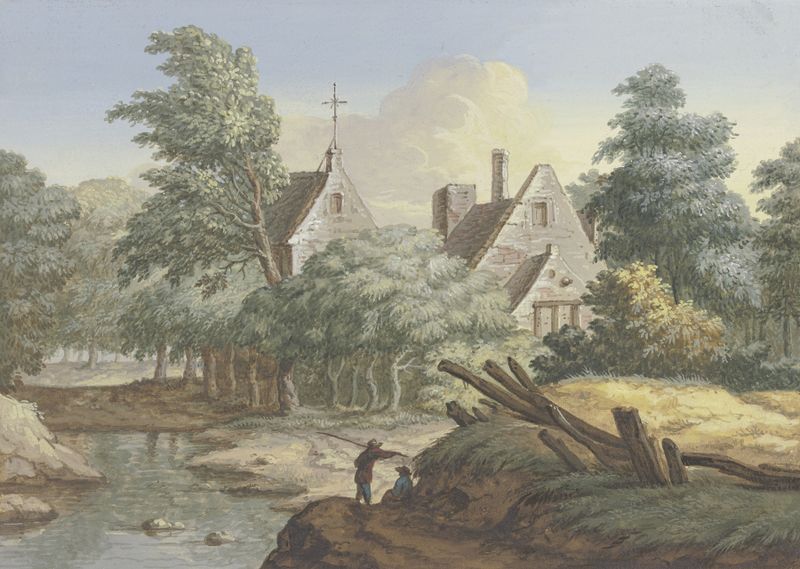
Dörfchen zwischen Bäumen an einem Bach, im Vordergrund zwei Figuren
Christian Georg Schütz the Younger





