View near Barbizon — History & Facts
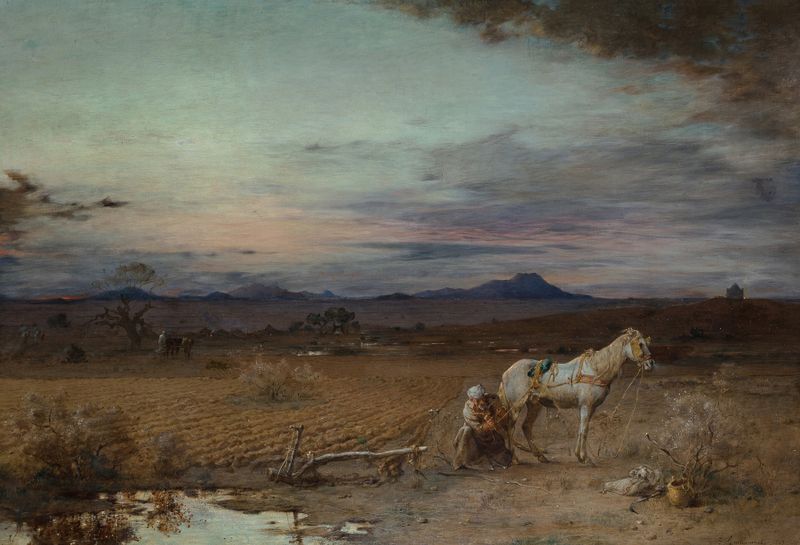
What if beauty was never meant to be finished? In View near Barbizon, the essence of fragility is captured, revealing nature’s delicate balance that dances between permanence and transience. Focus first on the horizon, where subtle hues of lavender and gold collide, painting a timeless dialogue between earth and sky. The soft brushwork invites the eye to explore the lush greenery that frames the scene, each stroke whispering tales of growth and decay. Notice how the light bathes the landscape in a warm embrace, highlighting the ephemeral beauty found in the gentle bends of the trees and the flowing contours of the land. In this portrayal, emotional tensions arise from the interplay between light and shadow, suggesting a fleeting moment poised on the edge of time.
The tranquil scene belies an underlying vulnerability; the colors seem to attenuate, hinting at the gradual erosion of nature’s majesty. The juxtaposition of vibrant greens against the ethereal sky evokes a sense of nostalgia, reminding us that all things, no matter how beautiful, are ultimately transient. During the late 1870s, Guillaumet painted View near Barbizon while immersed in the Barbizon school, a movement characterized by its focus on naturalism and rural landscapes. This period saw him draw inspiration from the surrounding countryside and the works of contemporary artists, reflecting a growing appreciation for the beauty found in everyday life.
Amidst this artistic evolution, he sought to immortalize fleeting moments that resonate with the heart, capturing both the serenity and fragility of nature.