View of Blackfriars Bridge — History & Facts
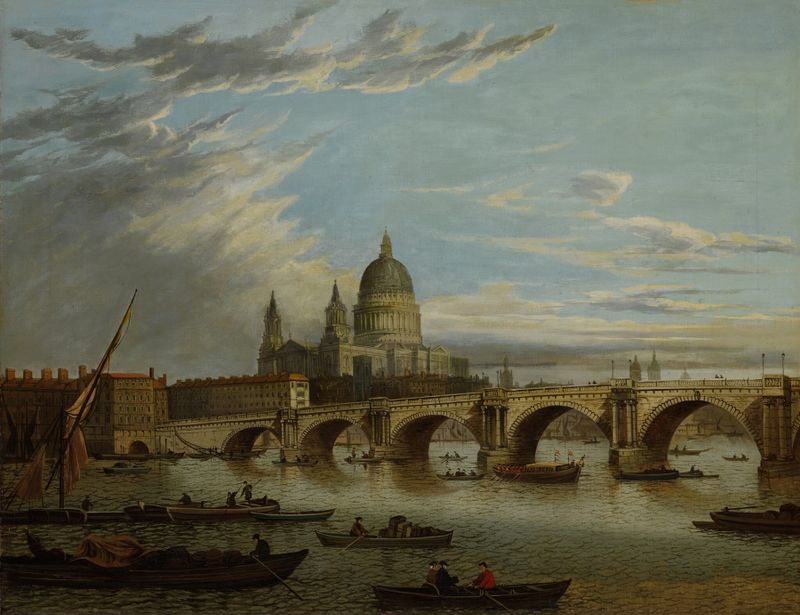
Could a single brushstroke hold eternity? The question lingers as one gazes upon a scene that awakens the senses, inviting reflection on the delicate interplay between humanity and nature. Look to the horizon, where the ethereal blend of blues and soft whites captures the river's glistening surface, dotted with vibrant hues of boats lazily drifting by. Focus on the arches of Blackfriars Bridge, their sturdy forms grounding the composition while the delicate textures of the clouds dance above, casting shadows that hint at the day's transient nature. Each stroke is deliberate yet fluid, conveying a sense of movement that contrasts with the stillness of the water, offering an invitation to ponder the passage of time. The juxtaposition between the bustling life of the city and the serene embrace of the river speaks to a universal truth: life moves forward relentlessly, yet moments of calm are found within the chaos.
The soft, muted colors reflect an awakening, a transition from night to day, symbolizing hope and renewal amidst the routine of city life. The viewer is reminded that even in bustling environments, there are pockets of stillness that allow for introspection and renewal. Painted during a time when John Paul was deeply engaged in exploring the relationship between urban landscapes and natural elements, this artwork emerged from his experiences in London in the late 19th century. The period saw a growing fascination with capturing the essence of the city, as artists sought to document both its industrial developments and its inherent beauty.
Paul’s work aligns with this movement, as he sought to portray not just the physical dimensions of Blackfriars Bridge but the emotional resonance of its surroundings.