View of Charleston — History & Facts
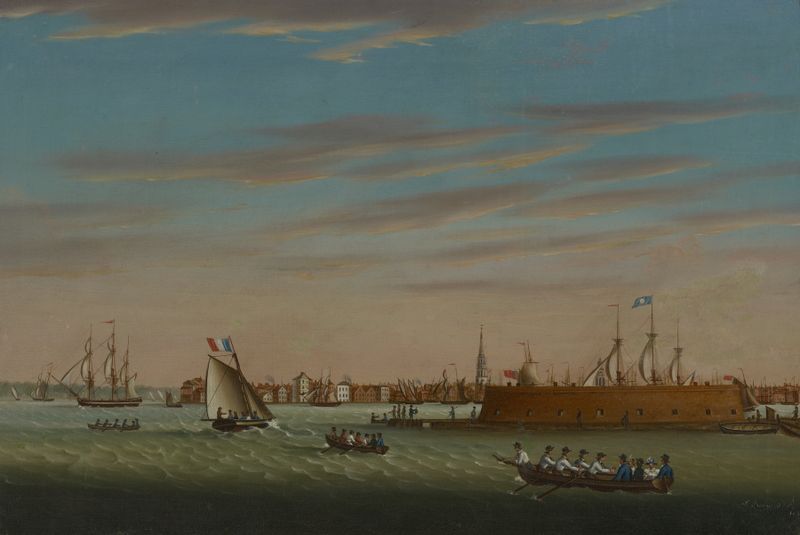
Did the painter know this moment would outlive them? The stillness of the scene suggests a haunting awareness, a bittersweet recognition of time's relentless passage and the beauty in the ephemeral. Look to the horizon where the sun dips low, casting a warm, golden hue over the tranquil waters of Charleston. The foreground holds a cluster of trees, their branches swaying gently, while in the distance, the silhouette of the city rises majestically against the fading light. The artist's brushstrokes create a harmonious blend of soft blues and ochres, inviting your gaze toward the delicate interplay of light and shadow that envelops the landscape. Within this serene vista lies a profound tension between the serene beauty of the harbor and an underlying sense of loss.
The calm waters reflect not just the vibrancy of the sky but also the echoes of a past shaping the future. Barnard’s careful attention to the intricate details—the sails of distant ships and the outlines of architecture—invites viewers to ponder the stories held within this fleeting moment, blending nostalgia with hope. In 1831, Samuel Barnard painted View of Charleston during a transformative period for American art, marked by the emergence of regionalism. Barnard, influenced by the romantic spirit of the time, captured the essence of a Southern city on the brink of change, reflecting both its splendor and the complexities of its social dynamics.
As Charleston faced the echoes of impending civil strife, this artwork preserves a snapshot of a world in transition, forever suspended in the twilight.