
View Of Durham Cathedral — History & Facts
In the world of creation, every brushstroke whispers stories waiting to be uncovered. Look to the center of the canvas, where the majestic Durham Cathedral rises against a backdrop of muted earth tones and sky blues. The intricate details of the gothic architecture, from the soaring arches to the imposing towers, draw the eye upward, inviting contemplation. Notice how the light softly contours the stone, illuminating the facades and casting gentle shadows that evoke both strength and fragility. Hidden within the cathedral's grandeur lies a tension between the permanence of stone and the ephemeral nature of life.
The surrounding landscape, lush yet subdued, creates a mirror for the viewer's introspection, suggesting that even the most monumental achievements are fleeting. The color palette, anchored by earthy browns and grays, juxtaposes the vibrancy of life outside the cathedral, hinting at the quiet reverence of faith amid the chaos of existence. Created in 1883, View of Durham Cathedral emerged during a time of artistic transition in Britain, as artists began to explore realism and impressionism. Brunner, deeply influenced by his studies in Italy and the rise of the Pre-Raphaelite Brotherhood, sought to capture the profound relationship between man-made structures and nature.
This work reflects not only his personal journey but also a broader cultural movement that emphasized emotional depth and authenticity in art.
More Artworks by Arnold William Brunner
Browse all →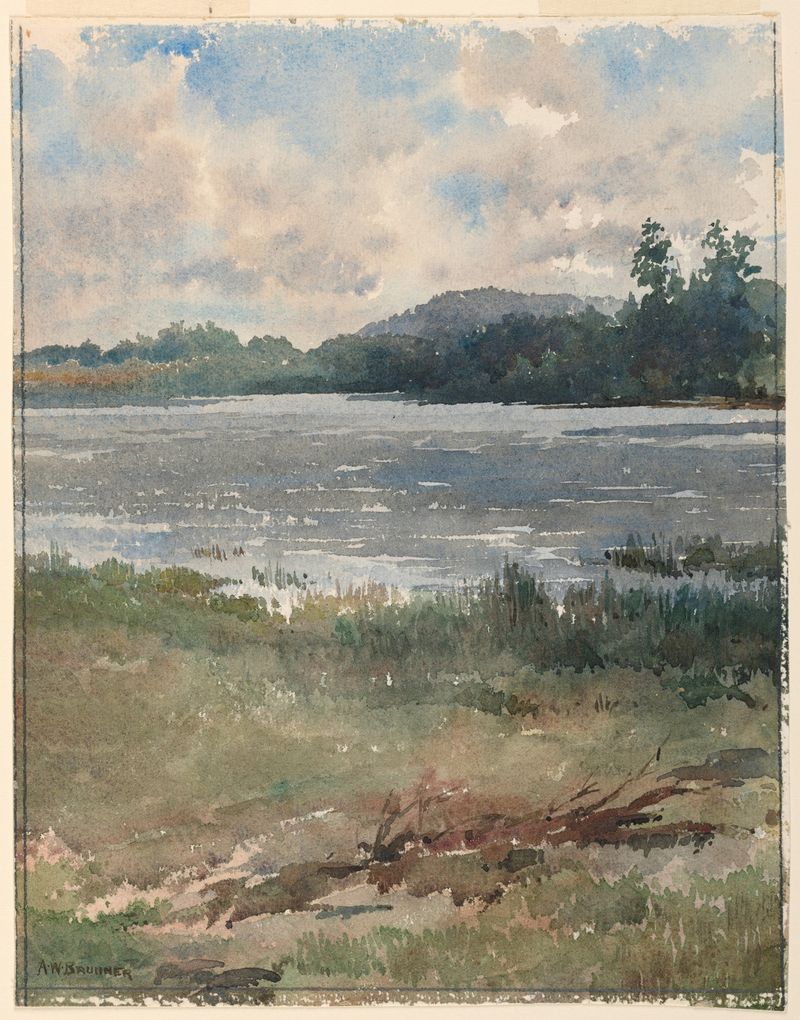
More Architecture Art
Browse all →
The statue of Liberty
Frédéric Auguste Bartholdi

View of Houses in Delft, Known as ‘The Little Street’
Johannes Vermeer

View of Houses in Delft, Known as ‘The Little Street’
Johannes Vermeer

The Cathedral in Rouen. The portal, Grey Weather
Claude Monet

The yellow house
Vincent van Gogh

The Church in Auvers-sur-Oise, View from the Chevet
Vincent van Gogh