View of Hobart Town — History & Facts
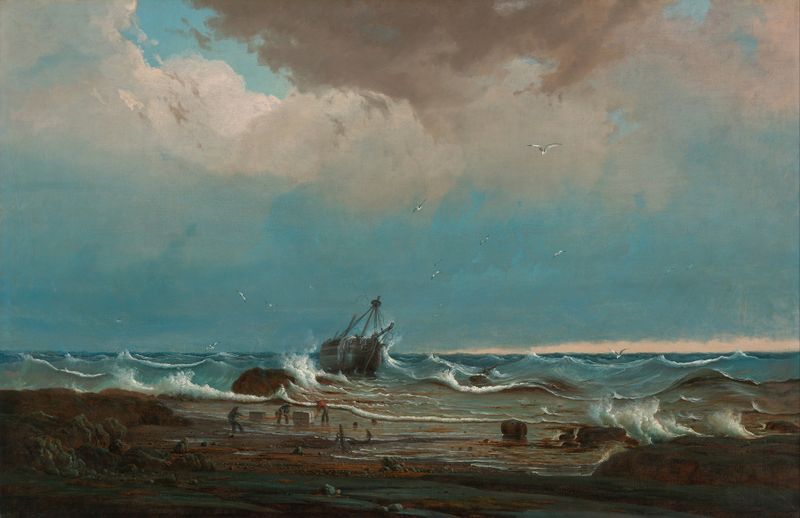
What if silence could speak through light? In View of Hobart Town, the stillness of the landscape whispers of lives intertwined with nature’s grandeur and the inevitable passage of time. Look to the horizon where the sun dips low, casting a warm golden hue over the tranquil waters. The foreground is a delicate balance of earth and sky, drawing your gaze toward the distant mountains that cradle the town in a gentle embrace. Notice how the soft blues and greens blend seamlessly, punctuated by the vibrant touches of ochre and white in the buildings, hinting at the human presence amidst the overwhelming beauty of the natural world.
The composition invites you to linger, as if the very air hums with unspoken stories. Yet, within the serenity lies a poignant reminder of mortality. The fleeting light signifies not just the end of day, but the transience of existence itself. The distant hills stand as silent witnesses to the passage of time, while the calm waters reflect both the eternal and the ephemeral, urging us to contemplate our own impermanence.
Small details, like a solitary boat gently rocking, evoke a sense of solitude, inviting viewers to reflect on both the isolation and connection found in life’s journey. In 1853, Knut Bull created this work during a period of personal transition after settling in Tasmania, where he would capture the essence of its landscapes. This was a time when the world of art was becoming increasingly influenced by Romanticism, emphasizing the sublime beauty of nature and humanity’s relationship to it. Bull’s exploration of Hobart Town reflects not only his artistic evolution but also the broader cultural shifts occurring in the colonies at that time.