
View of part of Realesco de abasco from the road to la Cruz Santa — History & Facts
The interplay of illusion and reality invites the viewer into a world where nature's raw beauty is tamed by the artist’s hand. How do we reconcile what is seen with what is felt? This question reverberates through the vivid landscape captured on the canvas. Look to the left of the painting, where the warm, sun-kissed hills roll gently against the horizon. Notice how the artist captures the delicate interplay of light and shadow, emphasizing the contours of the landscape with soft brushstrokes.
The palette sings with earthy greens and ochres, while wisps of clouds dance above, inviting the eye to wander through the winding path that beckons deeper into the scene. Each stroke builds a dreamlike quality that feels both immediate and distant, a moment suspended in time. Yet, within this pastoral serenity lies a tension; the illusion of tranquility is underscored by the absence of human presence. The verdant hills stand as silent witnesses to the world, perhaps echoing a longing for connection that feels just out of reach.
The winding road hints at journeys yet taken, while the subtle brushwork suggests the fleeting nature of beauty itself — a reminder that perfection is often but a momentary illusion, as ephemeral as the clouds that float above. In 1818, Alfred Diston created this piece while living in an era of burgeoning Romanticism, where artists sought to express the sublime and the emotional landscape of their surroundings. The natural world was undergoing a transformation, with the rise of industrialization prompting many to turn back to nature for inspiration. This painting reflects both a personal longing for connection and a broader cultural shift towards appreciating the untouched beauty of the landscape, solidifying Diston’s place in the evolving dialogue of 19th-century art.
More Artworks by Alfred Diston
Browse all →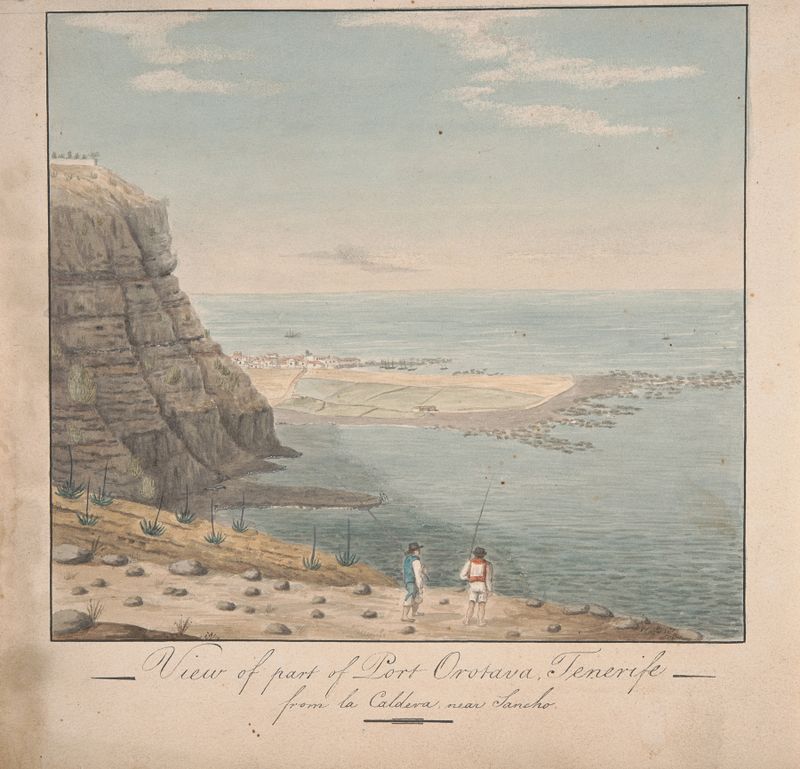
View from part of Port Orotava, Tenerife from La Caldeva, near Sancho
Alfred Diston

View from Port Orotava, Tenerife
Alfred Diston
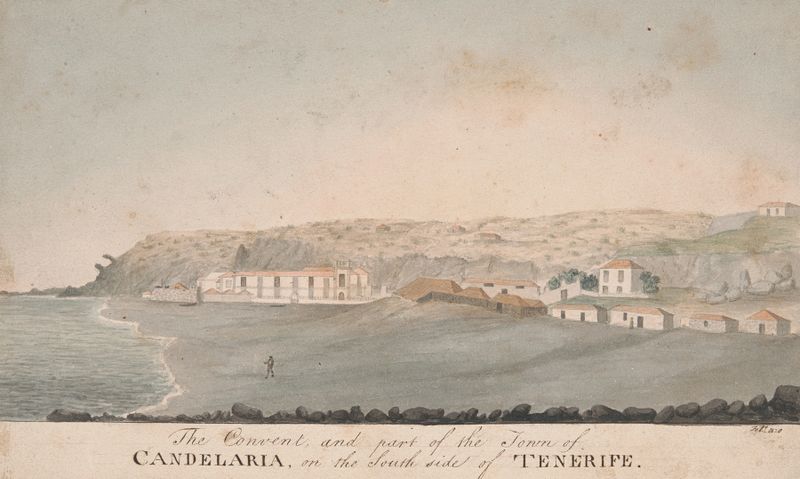
The Convent and Part of the Town of Candelaria, on the south side of Tenerife
Alfred Diston
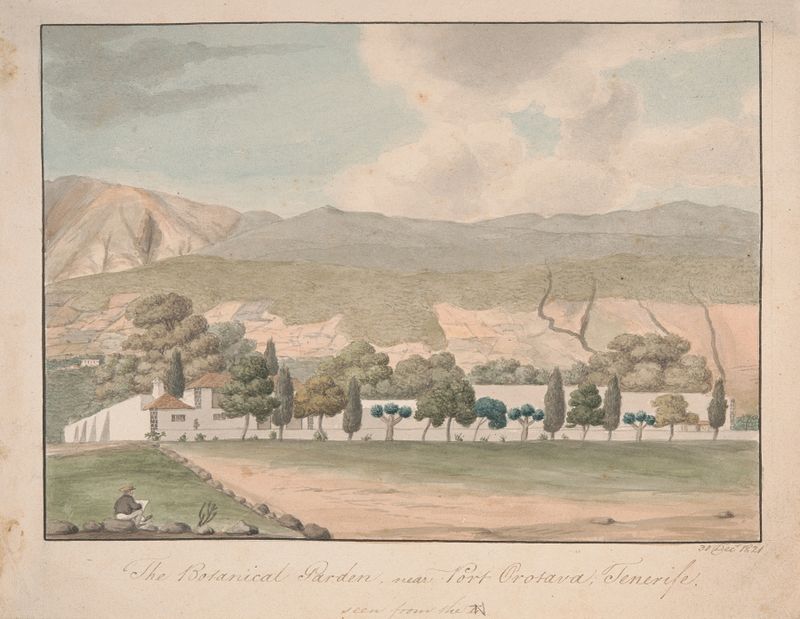
The Botanical Garden near Port Orotava, Tenerife
Alfred Diston
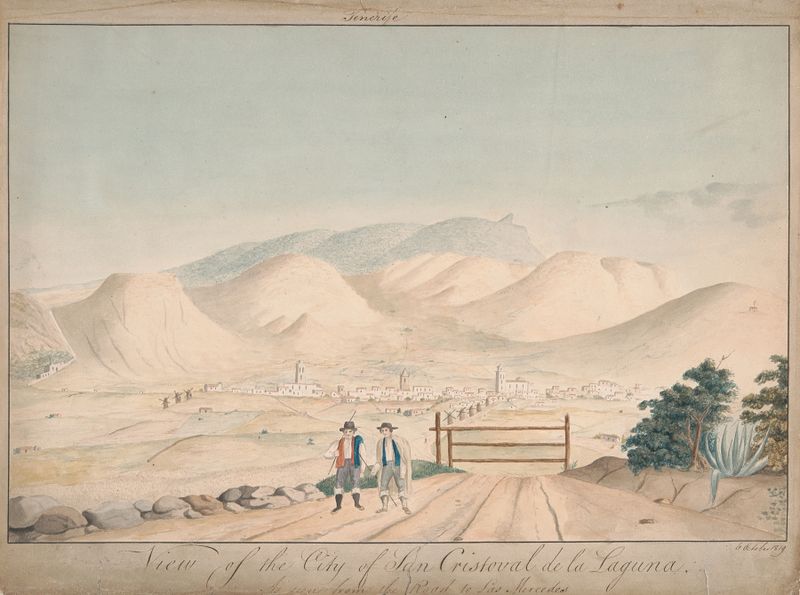
View of the City of San Cristoval de la Laguna as Seen from the Road to Las Mercedes
Alfred Diston
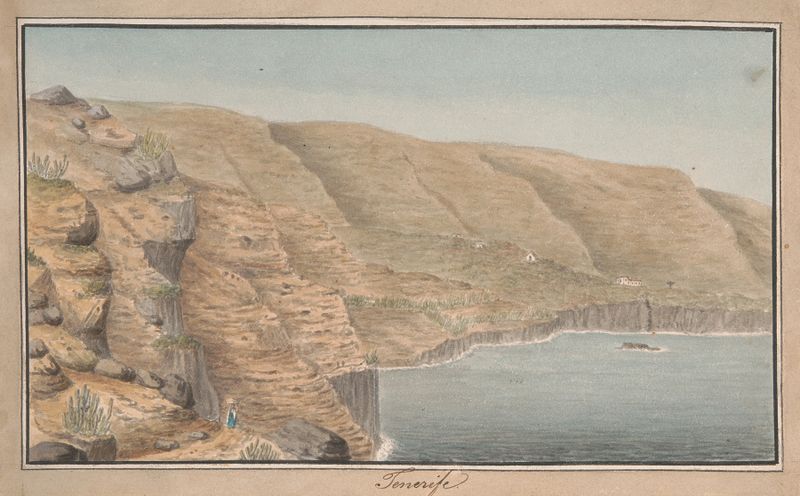
View of La Rambla de Castro near Port Orotava, Tenerife
Alfred Diston
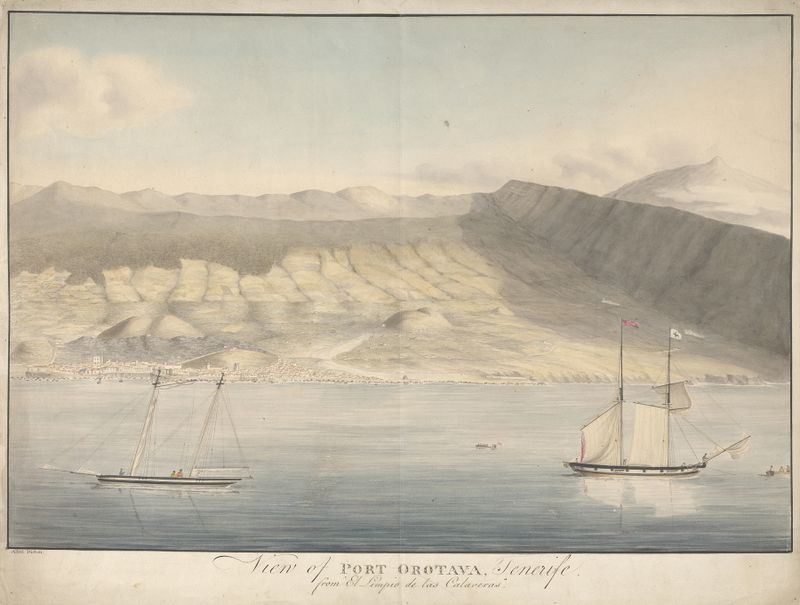
View of Port Orotava, Tenerife, from El Limpio de Las Calaveras
Alfred Diston

View from Martianez, Port Orotava, Tenerife
Alfred Diston
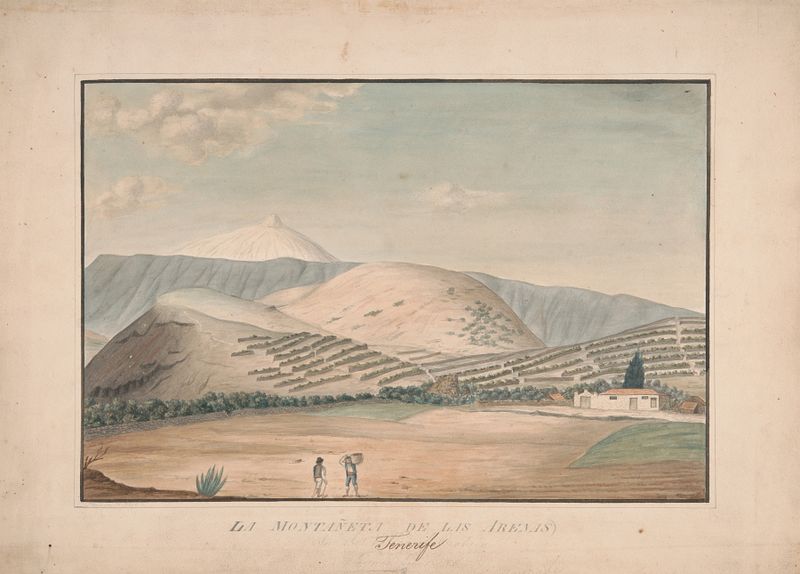
La Montaneta de Las Arenas
Alfred Diston

Square in the Village of Los Silos, Tenerife
Alfred Diston





