View of Saint-Cloud, Near the Seine — History & Facts
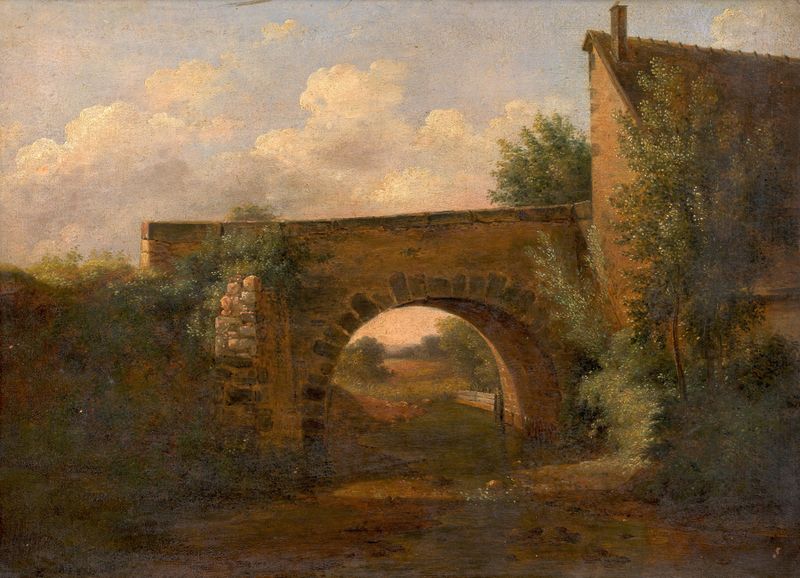
When did color learn to lie? The landscape reveals an illusion of tranquility, yet beneath its surface, a whisper of fragility lingers. Focus on the vibrant hues of green and blue that weave together in this lush scene, pulling your eyes toward the gently flowing Seine. Notice how the soft brushstrokes create an ethereal quality, blurring the line between reality and dream. The interplay of light and shadow reveals a world suspended in time, where the trees sway lightly, and the distant sky holds a promise of change. Within this serene depiction lies a contrast between image and emotion.
The luminous colors evoke a sense of calmness, yet the subtle variations in shade suggest an underlying tension—a moment teetering on the brink of transformation. The reflections in the water mirror not only the landscape but also the shifting tides of human experience, hinting at the fragility of beauty and existence itself. In 1809, Alexandre Pau de Saint-Martin painted this work while navigating a tumultuous period in France, marked by political upheaval and evolving artistic currents. Living in a time when Romanticism began to flourish, he sought to capture the delicate balance between nature and emotion, reflecting both the idyllic landscape of Saint-Cloud and the innermost struggles of a society in flux.