View of Siena — History & Facts
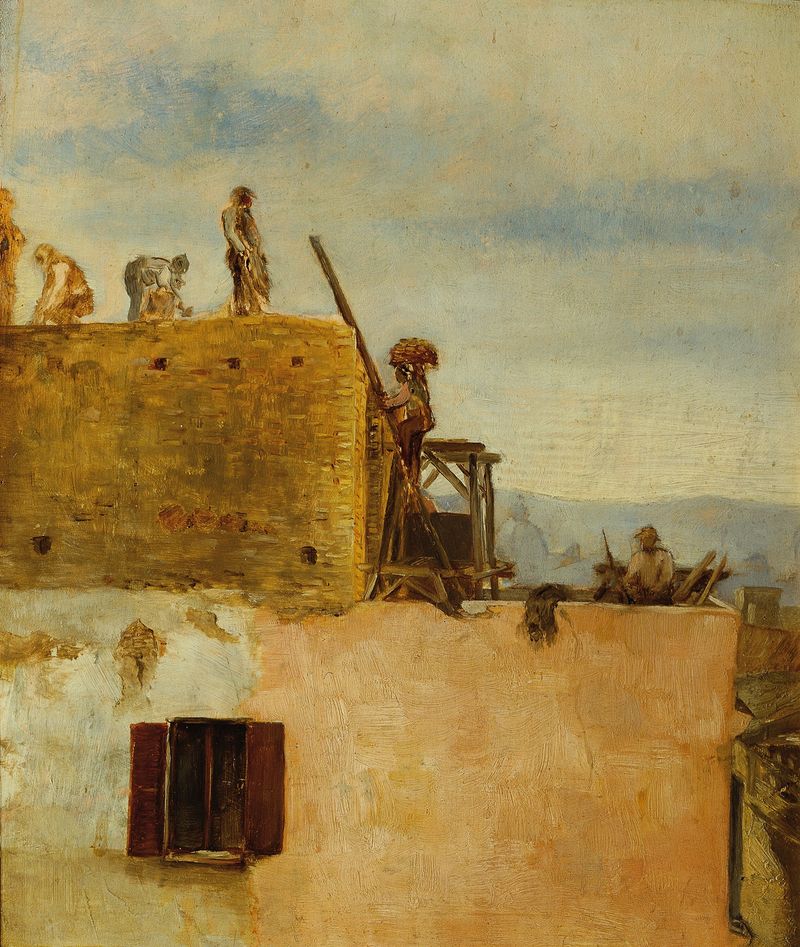
Where does light end, and longing begin? In the nuances of quietude, View of Siena captures the essence of both, inviting viewers into a realm where silence speaks volumes. Look to the left at the soft, golden light that washes over the ancient cityscape, its warm hues contrasting with the cool shadows that cling to the corners of the composition. The intricate details of Siena’s architecture beckon, as each building, rendered with meticulous brushstrokes, stands as a testament to time. Notice how the sky transitions from a radiant glow to a deeper blue, encapsulating the moment just before twilight—a fleeting pause that heightens the emotional landscape of the scene. At first glance, the painting evokes a sense of calm nostalgia, yet there’s an underlying tension in the stillness.
The sky’s deepening colors hint at an impending night, symbolizing the impermanence of beauty and the inevitable passage of time. Klinger’s choice of muted tones juxtaposes the vibrant life of the city below with a haunting quietude above, suggesting a longing for connection that transcends the physical space depicted. Created in 1889 while Klinger was in Germany, View of Siena emerges during a period marked by the rise of Symbolism, where artists sought deeper emotional truths. This period coincides with Klinger’s exploration of the interplay between light and shadow, reflecting both personal and cultural transitions.
The painting resonates with the artist's introspective journey, mirroring a world simultaneously captivated by the promise of modernity and the echoes of tradition.