View of the Abbey of Egmond-Binnen — History & Facts
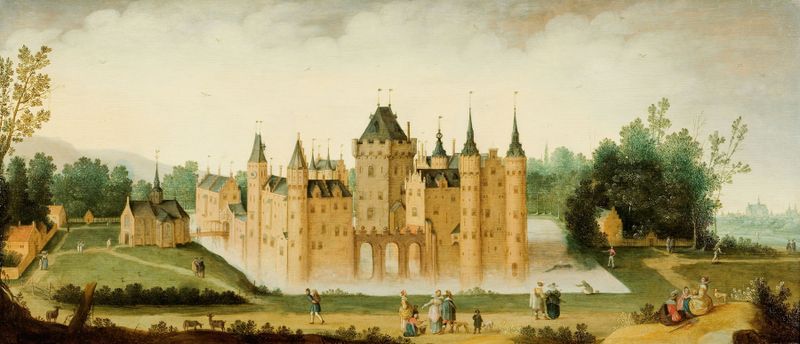
When did color learn to lie? In this captivating landscape, hues of green and gold dance across the canvas, inviting viewers into a serene yet haunting exploration of mortality and time. Look to the foreground, where a tranquil river meanders softly, reflecting the clear blue sky and the delicate architecture of the abbey beyond. Notice how the light falls upon the golden fields, creating an illusion of warmth and life, while the darkened shadows hint at the inevitable passage of time. The balanced composition and meticulous attention to detail guide the eye towards the abbey, where stone and nature converge in a moment frozen yet fleeting. Delve deeper into the painting's striking contrasts; the vitality of the blooming flora juxtaposes the austere presence of the abbey, symbolizing the transient beauty of life against a backdrop of permanence and decay.
The soft brushwork captures an ethereal quality, suggesting the whispers of history that echo through the landscape, urging us to contemplate what lies beyond the physical realm. Each element, from the rippling water to the distant horizon, carries a weight that speaks to human mortality and the fleeting moments we cherish. Created in 1638, during a period of significant artistic development in the Dutch Golden Age, the artist found inspiration in the quiet landscapes and historical sites that dotted his homeland. This particular work reflects not only a mastery of light and nature but also a personal introspection amidst a society grappling with its values and beliefs.
In this time of transition, the painting stands as a testament to the enduring connection between life, art, and the passage of time.