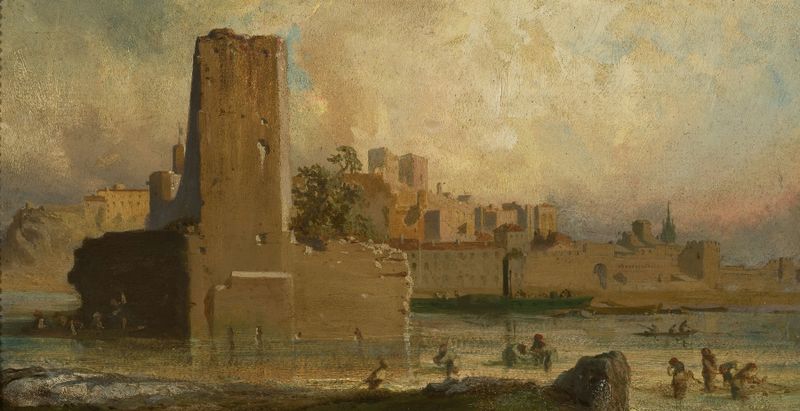
View of the Avignon port — History & Facts
Could a single brushstroke hold eternity? In View of the Avignon port, shadows stretch and deepen, bringing forth the essence of a sunlit afternoon that lingers in the viewer's memory. Look to the left at the rich interplay of blues and greens, where the shimmering water reflects the ethereal glow of the afternoon sky. The meticulous brushwork captures the rippling surface, creating an almost tactile sensation. Notice how the shadows of the moored boats seem to dance beneath the light, their forms both solid and ephemeral, a reminder of the transient nature of both life and landscape. Delving deeper, one can sense the contrast between the vibrancy of the boats and the brooding shadows that envelop the port.
These elements evoke a harmony between hope and melancholy, suggesting that every moment of beauty is underscored by an awareness of its fleeting existence. The distant mountains, cloaked in muted tones, symbolize both the steadfastness of nature and the ephemerality of human endeavors. Teofil Kwiatkowski painted this work between 1840 and 1845 in Avignon, a period marked by a burgeoning interest in realism and landscape painting. While navigating the artistic influences of the time, Kwiatkowski was inspired by the interplay of light and shadow, capturing the essence of the changing world around him in a manner that resonated with the Romantic zeitgeist.