View of the Country near Mount Edgecumbe, England — History & Facts
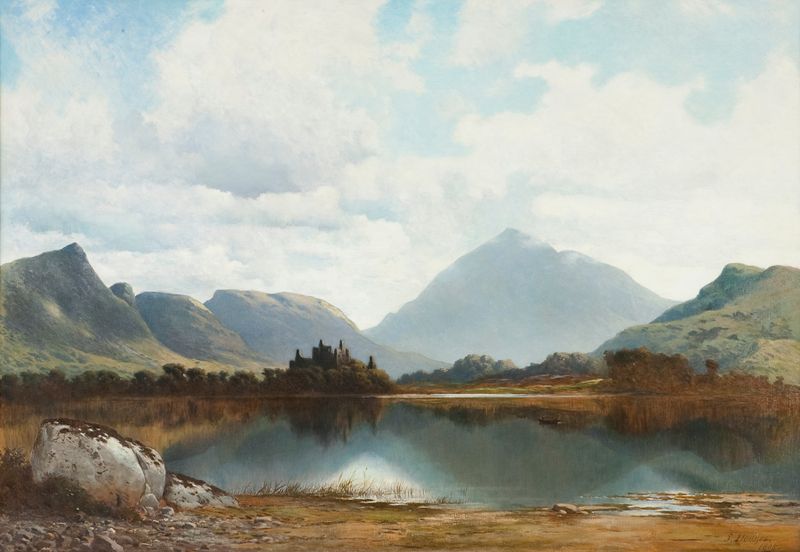
What if silence could speak through light? In View of the Country near Mount Edgecumbe, England, a quiet madness unfolds, where the pastoral landscape seems to echo whispers of nature’s untamed spirit. Look to the center, where the rolling hills stretch out beneath a pale sky. The gentle undulations of the land are painted with strokes of green and golden hues, inviting you to wander through the expanse. Notice how the light falls upon the grass, illuminating patches of wildflowers that dance with a life of their own.
The soft blending of colors showcases Hodges' mastery of oil paint, capturing the essence of a tranquil yet charged atmosphere. Within this serene landscape, tension brews beneath the surface. The juxtaposition of the idyllic scenery against the encroaching shadows hints at an underlying turbulence, perhaps an echo of human turmoil. The solitary figure in the distance, dwarfed by the grandeur of nature, evokes both loneliness and a sense of insignificance, as if the world itself is indifferent to individual struggles.
This contrast speaks to the madness that can arise from solitude, inviting viewers to reflect on their own place within the vastness. In 1862, Sydney Hodges painted this work while residing in Plymouth, England. At this time, the world was experiencing transformative shifts, marked by industrialization and social upheaval. Hodges was at the forefront of the English landscape school, aiming to capture the sublime beauty of nature.
This painting not only reflects his artistic ambition but also serves as a poignant commentary on the fragility of human existence in the face of nature’s overwhelming presence.