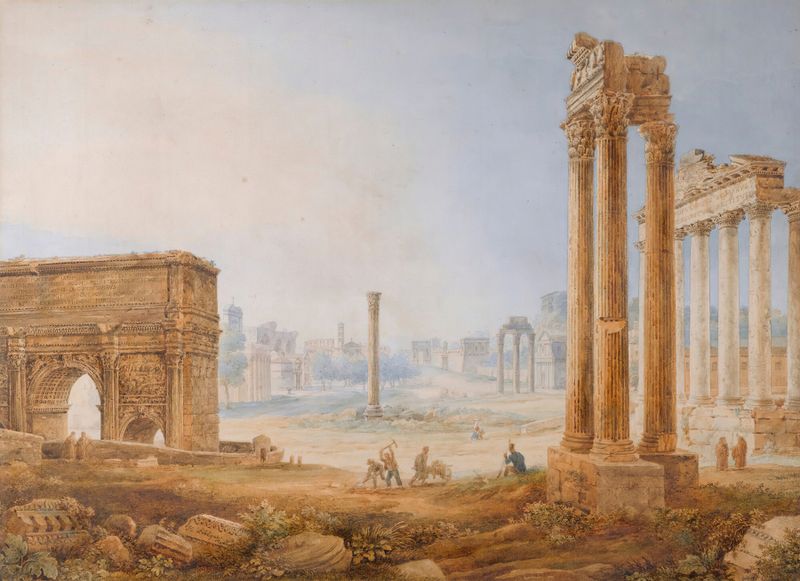
View Of The Forum, Rome — History & Facts
What if beauty was never meant to be finished? This question lingers in the mind as one gazes upon the extraordinary view captured in the presence of ancient splendor. Look to the left at the crumbling columns, their weathered façades a testament to time's relentless march. The soft glow of sunlight bathes the scene, illuminating the intricate details that speak of lives once lived among those ruins. The vibrant greens of the surrounding landscape juxtapose with the muted earth tones of the stone, inviting viewers to wander through the remnants of history.
Notice how the composition draws the eye toward the distant horizon, where gentle hills rise, suggesting both a conclusion and an endless journey. Diving deeper, one can appreciate the contrasts woven throughout the artwork. The innocence of nature, flourishing around the ancient remnants, stands in stark opposition to the ruins that tell tales of ambition and human endeavor. This tension between permanence and decay evokes a sense of nostalgia, hinting at the fleeting nature of beauty and the human experience.
Each brushstroke conveys a longing for a connection to the past, leaving viewers reflecting on what remains and what is lost. Henri Lévêque created this piece during a period when artists were increasingly drawn to the classical themes of antiquity, even as the avant-garde movement began to reshape the artistic landscape of the late 19th century. While the exact date of this work remains unknown, it embodies the spirit of an era that sought to honor the beauty of the past while grappling with the emerging modern world. Lévêque's portrayal of Rome serves as a bridge between these two sentiments, capturing both the innocence of nature and the weight of history.