View of the Houthaven — History & Facts
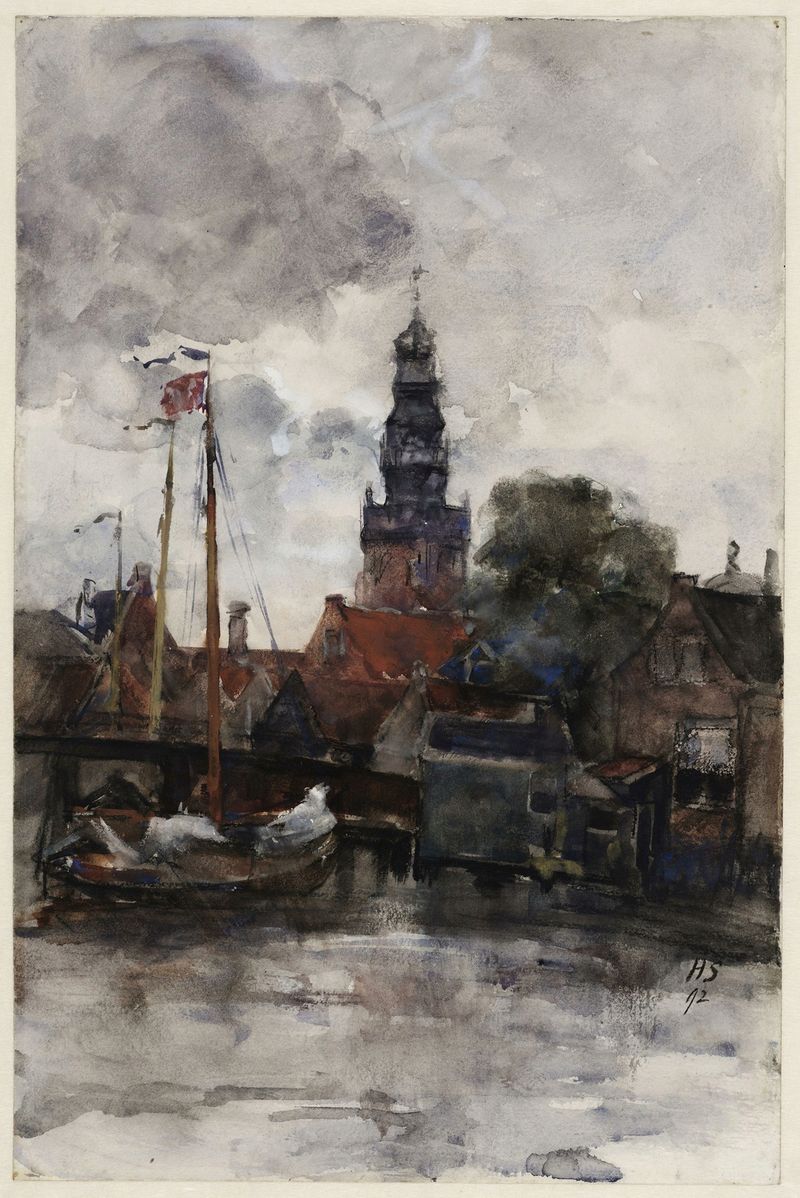
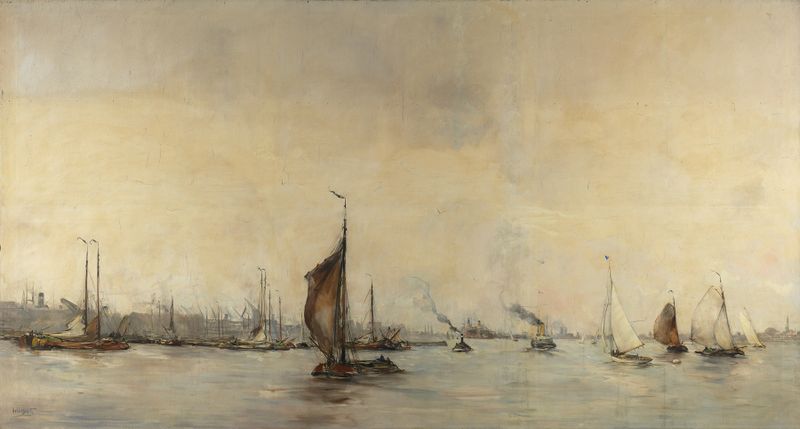
Can paint confess what words never could? The canvas before us captures an ethereal moment, where the restless tides of memory lap at the shores of longing, revealing unspoken truths hidden within the heart. Look to the left where the soft curves of the shoreline blend seamlessly with the gentle brushstrokes of sky, evoking a serene atmosphere. The artist's palette dances in shades of blue and gray, creating a harmonious balance between reflection and reality. Notice how the light weaves through the clouds, illuminating the water's surface like scattered diamonds, drawing your gaze to the horizon that seems to stretch infinitely.
Each brushstroke is deliberate, yet fluid, capturing a fleeting glimpse of tranquility amid the complexities of life. Beneath this picturesque scene lies a tension between serenity and nostalgia. The quiet lapping of the water suggests a moment of pause, yet the restless energy of the clouds hints at an underlying yearning. The boats, moored yet unanchored, symbolize both stability and the desire for adventure, mirroring the human soul's struggle between comfort and the call of the unknown.
These contrasts reflect a deeper longing for connection, both to place and to one another. In 1913, Hobbe Smith painted this work in Amsterdam, a city steeped in history and artistry. It marked a period when the world was on the brink of change, with the impending storm of World War I looming overhead. Smith, a member of the Dutch Impressionist movement, was deeply influenced by both the natural beauty of his surroundings and the evolving artistic landscape.
This piece illustrates his response to the profound questions of identity and belonging, resonating with the viewer's own search for meaning in an uncertain world.