
View Of The Pantheon, Rome — History & Facts
What secret hides in the quiet of the canvas? Beneath its tranquil surface, an echo of time pulses through the stillness, inviting contemplation of both the past and the void it occupies. Focus first on the majestic structure at the center, the Pantheon, its grand dome a testament to architectural brilliance. Notice how the light caresses its columns, casting shadows that create a dance between presence and absence. The warm ochres and cool blues meld seamlessly, conjuring a moment suspended in time, while the surrounding landscape frames this iconic building, grounding it within the realm of both history and memory. Look closely at the subtle juxtaposition of urban life and the eternal; tiny figures wander the piazza, their scale emphasizing the Pantheon's monumental nature.
Each stroke reveals not just a building, but a symbol of human aspiration, a void filled with the echoes of ancient footsteps. The calmness of the scene belies the weight of history, provoking a sense of longing amidst the stillness, as if the artist captures the breath between the past and the present. Jacopo Fabris painted this piece during a period marked by a revival of classical themes in art. Though the exact date remains unknown, the reverence for Rome's architectural legacy resonates with the broader cultural movements of the time.
As artists explored the interplay of light and human experience, Fabris carved his niche, utilizing his unique perspective to bridge the chasm between history and artistic interpretation.
More Artworks by Jacopo Fabris
Browse all →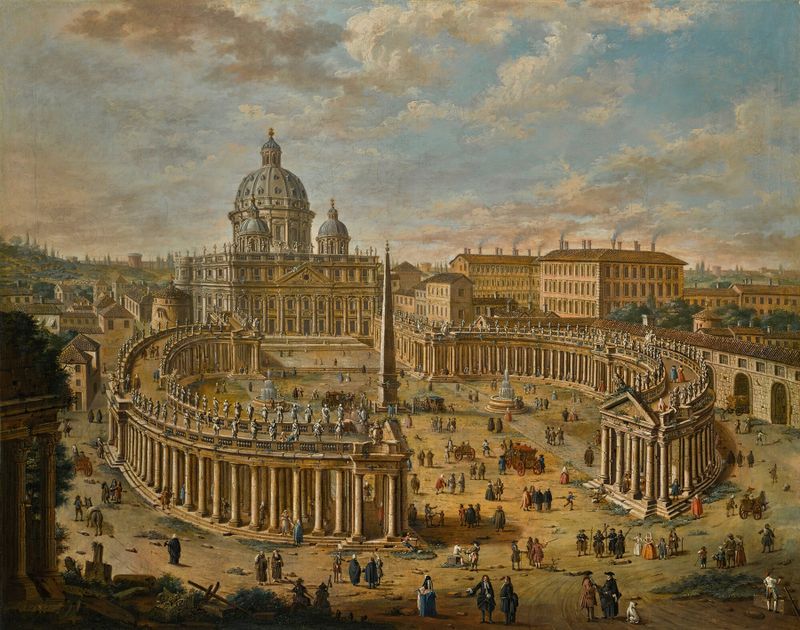
More Architecture Art
Browse all →
The statue of Liberty
Frédéric Auguste Bartholdi

View of Houses in Delft, Known as ‘The Little Street’
Johannes Vermeer

View of Houses in Delft, Known as ‘The Little Street’
Johannes Vermeer

The Cathedral in Rouen. The portal, Grey Weather
Claude Monet

The yellow house
Vincent van Gogh

The Church in Auvers-sur-Oise, View from the Chevet
Vincent van Gogh