View of the Town of Haarlem, taken from the Spaarne River, showing the Eendjespoort — History & Facts
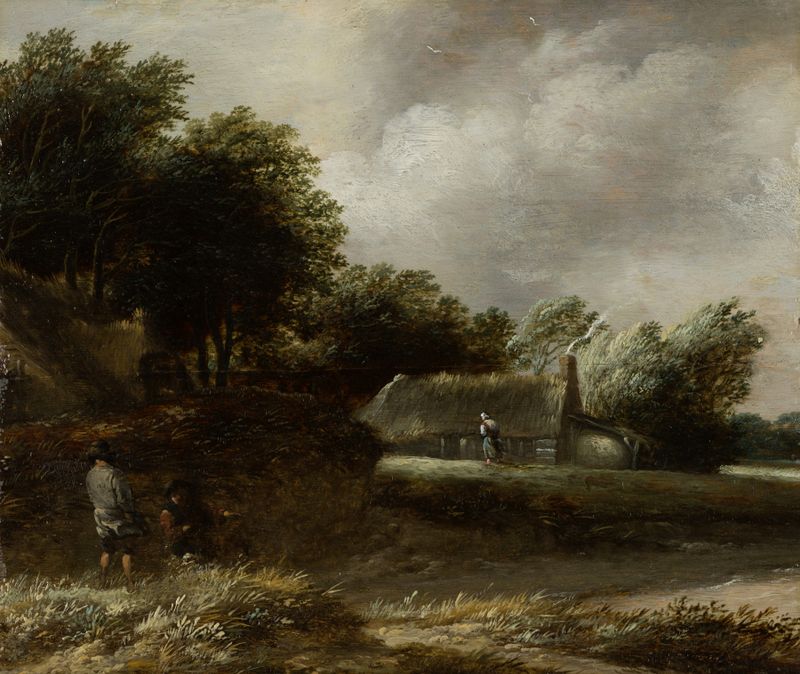
Can beauty exist without sorrow? In the quiet embrace of View of the Town of Haarlem, taken from the Spaarne River, showing the Eendjespoort, a dreamlike panorama unfurls, inviting contemplation of the delicate balance between tranquility and melancholy. Look to the left, where the gentle curve of the Spaarne River guides your gaze toward the bustling town, its gabled houses standing like sentinels against a backdrop of soft, luminous clouds. The artist employs a refined palette of blues and ochres, capturing the serene interplay of light and shadow as it dances across the water’s surface. Notice how the boat, laden with everyday life, juxtaposes the stillness of the architecturally rich skyline, creating a sense of movement that contrasts with the timelessness of the scene. Delve deeper into the details—the Eendjespoort archway framed by verdant trees, offering a gateway to both the town and the soul’s introspection.
The scattered figures, small and seemingly insignificant, echo the human condition, caught in their daily rhythms amid the grandeur of the landscape. Here, beneath the surface of beauty, lies a whisper of longing, a reminder that every idyllic moment carries the weight of life’s unspoken stories and silent sorrows. During the period he painted this work, from approximately 1650 to 1659, Balthasar van der Veen found himself amidst the flourishing Dutch Golden Age, a time marked by prosperity and artistic innovation. Living in Haarlem, he was part of a vibrant community where landscapes became increasingly popular, reflecting both the natural beauty of the environment and the burgeoning sense of identity among its citizens.
The essence of his surroundings and the energy of his contemporaries undoubtedly shaped the vision that materialized before us, a testament to both place and potential.