View of the valley of Zermatt — History & Facts
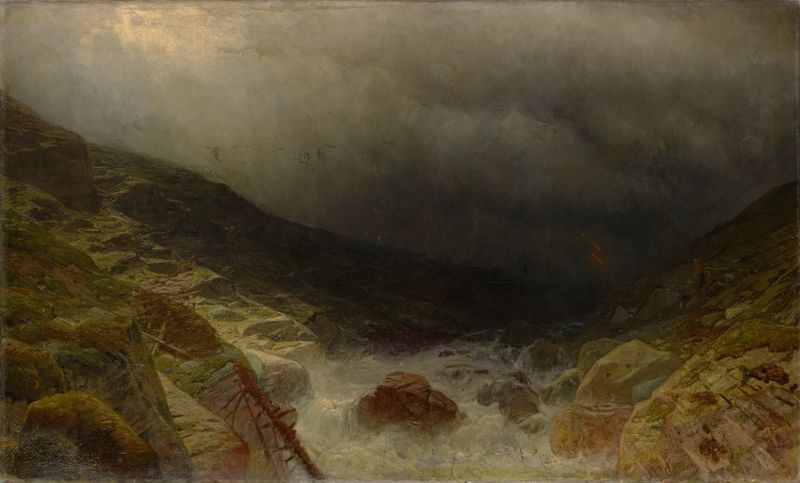
Did the painter know this moment would outlive them? In the tranquil yet commanding landscape of View of the valley of Zermatt, a world unfolds where shadows dance with light, creating a dialogue between permanence and transience. The valley, cradled by majestic mountains, invites contemplation, hinting at ephemerality captured within the strokes of a brush. Focus on the gentle slope of the valley, where the lush greens blend seamlessly into the subtle grays of the looming peaks. Notice how the soft light filters through the clouds, casting delicate shadows that move across the canvas, imbuing the scene with a sense of depth and serenity.
The palette is rich yet harmonious, emphasizing the connection between earth and sky, while the composition draws the eye towards a horizon that seems both inviting and distant. Within this landscape, the interplay of light and shadow evokes contrasting emotions. The shadows suggest mystery and the passage of time, while the illuminated areas symbolize hope and clarity. Each element—be it the rugged mountain tops or the soft foliage—holds its own story, whispering secrets of nature's resilience and fragility alike.
This duality enhances the viewer's awareness of their place within the continuum, pondering the fleeting nature of life against the backdrop of timeless nature. Created during an era marked by the rise of Romanticism, the artist painted this work in the mid-19th century, a time when nature was increasingly seen as a reflection of the human spirit. Living in a post-industrial world, he sought solace in these untouched landscapes, embodying the era's fascination with the sublime and its power to evoke deep emotional responses.