View of Vilnius – Church of St. Raphael — History & Facts
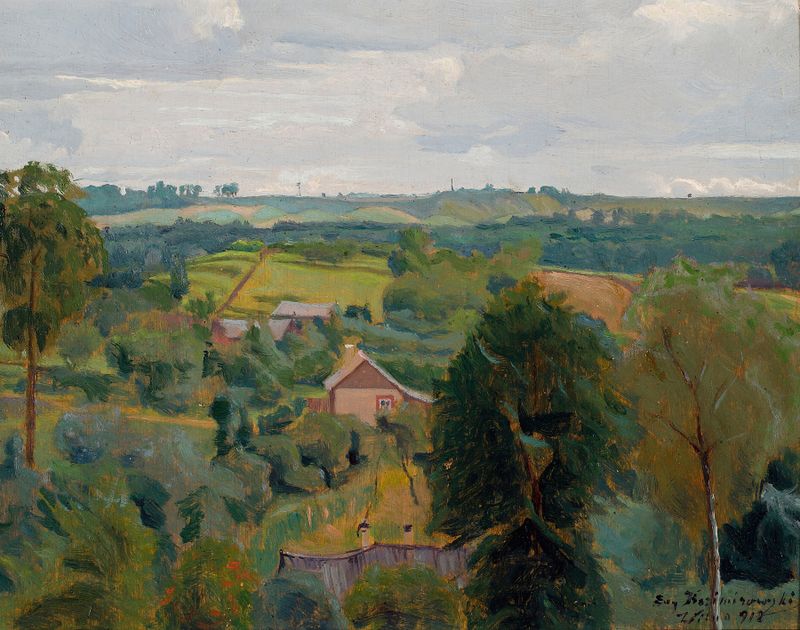
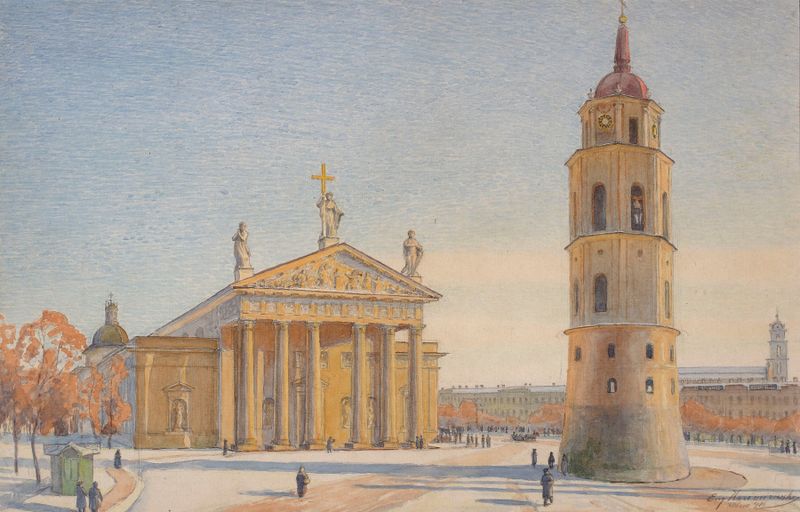
Where does light end, and longing begin? In the delicate brushstrokes of this piece, the boundary blurs, inviting us to explore the depths of memory intertwined with place. Look to the foreground first, where the soft hues of dawn spill over the rooftops of Vilnius. The Church of St. Raphael stands majestically, its outlines both defined and ethereal, a testament to the artist’s meticulous attention to detail.
Focus on the interplay of light and shadow that dances across the facade, revealing the intricacies of baroque architecture. The muted palette of pastels suggests a quietude, evoking a sense of nostalgia that envelops the scene. Beneath the surface lies a poignant contrast between the vibrancy of life and the stillness of this moment. The church, a symbol of faith, seems to absorb the fleeting light, embodying both hope and longing.
Each brushstroke whispers stories of the city’s history, while the gentle curve of the horizon hints at the passage of time, inviting contemplation. The harmony between the natural and the built environment reflects the artist's reverence for his homeland, turning every element into a repository of collective memory. In 1917, Marcin Eugeniusz Kazimirowski captured this scene during a tumultuous period in Eastern Europe, as the world grappled with war and upheaval. Living in Vilnius, he was influenced by the shifts in artistic movements, blending realism with a sense of romanticism that was characteristic of the time.
This piece not only serves as a visual record but also as an emotional response to the challenges faced by his city and its people.