View on the Hudson — History & Facts
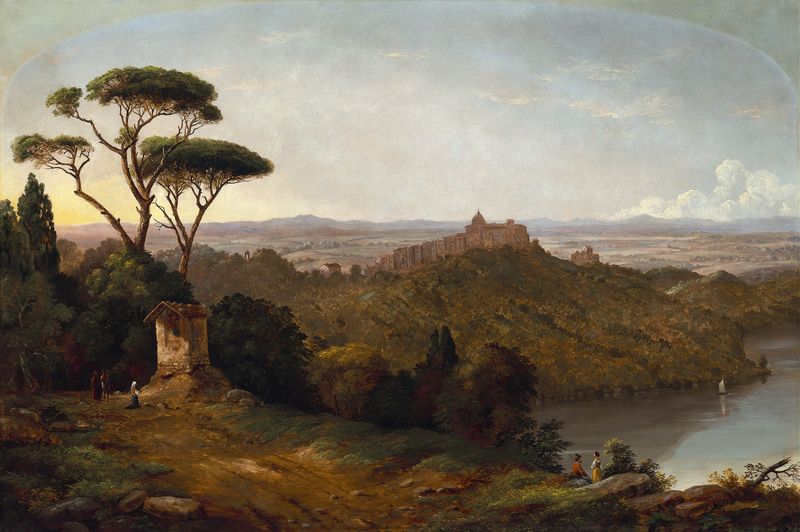
In the delicate world of landscape painting, each stroke speaks to the infinite possibilities of creation. It transforms the mundane into the extraordinary, inviting the viewer into a harmonious embrace of nature's beauty. Focus on the serene interplay of blues and greens that dominate the canvas. Notice how the light dances across the water, reflecting the sky's soft hues, illuminating the riverbanks with a gentle glow.
The composition draws your eye toward the horizon, where the distant mountains stand as silent guardians, framing the tranquil scene. Cranch's meticulous brushwork brings a sense of movement to the foliage, suggesting a gentle breeze that whispers through the trees. As you delve deeper, explore the emotional dichotomy present in the artwork. The calmness of the river belies the tumultuous spirit of the mid-19th century, a time when industrialization was beginning to alter the American landscape.
The juxtaposition of nature’s serenity against the encroaching changes of modernity evokes a longing for preservation, an intimacy with the natural world that feels increasingly fragile. Each detail— from the rippling water to the flowering trees— encapsulates a fleeting moment, urging us to cherish what may soon be lost. In the early 1850s, Cranch was immersed in the vibrant art scene of the Hudson River School, where Romantics sought to capture the sublime qualities of American landscapes. Living in the midst of expanding artistic circles in Massachusetts, he painted View on the Hudson during a period of personal exploration and broader cultural shifts.
The tranquil beauty of this piece stands as a testament to both his skill and the era's complex relationship with nature.