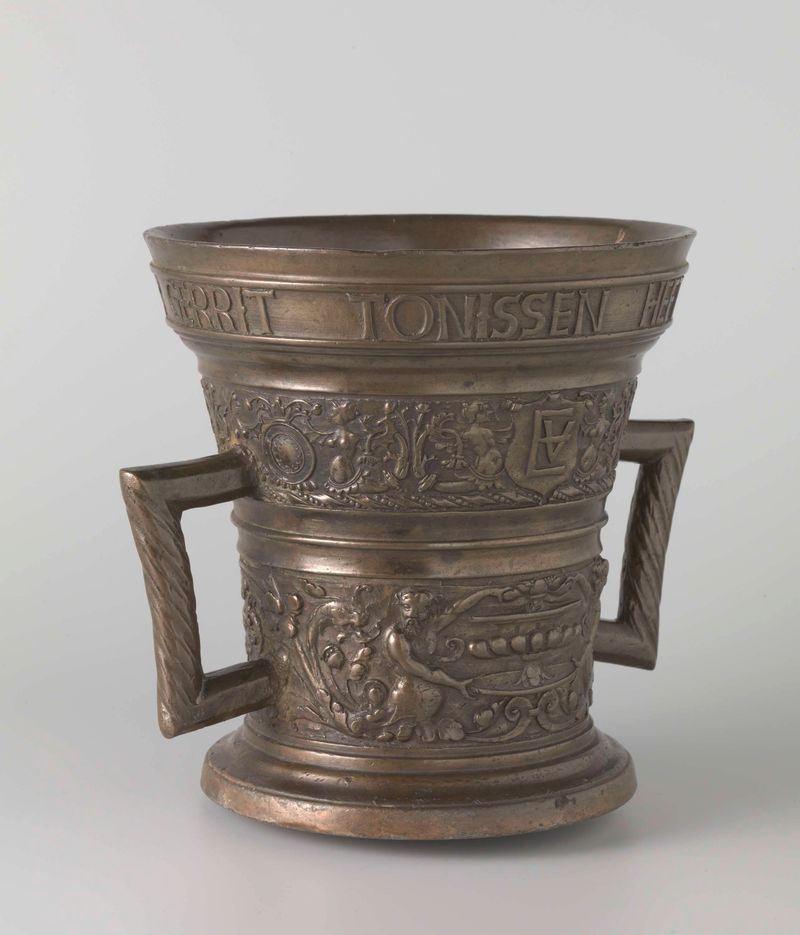
Vijzel met opschrift: AMOR VINCIT OMNIA ANNO 1582 — History & Facts
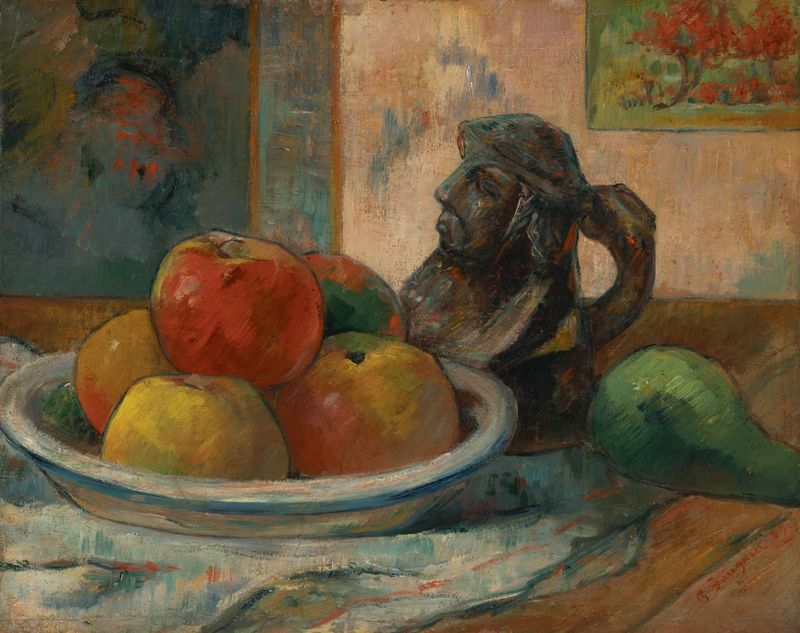
Could beauty survive in a century of chaos? This question lingers in the air as we gaze upon a striking still life, deftly capturing a moment in time that resonates with both fragility and strength. Look at the vase, positioned dominantly in the center, a vessel of rich, earthy tones that contrast with the delicate hues of the flowers nestled within. Notice how the soft light illuminates the surface, creating a gentle glow that seems to breathe life into the petals. The inscription, AMOR VINCIT OMNIA, wraps around the base of the vase, subtly guiding your eyes across the composition and inviting contemplation on the nature of love amidst a turbulent world. Yet beneath its serene surface lies a palpable tension—the juxtaposition of beauty and decay, tranquility and inevitability.
The blooms are vibrant, but their temporary existence serves as a reminder of life’s transience. Each petal whispers of stories untold, while the dark shadows lurking at the edges hint at a world fraught with turmoil, echoing the socio-political unrest of the late 16th century. This duality reflects a deeper, universal struggle: the quest for meaning in a universe that often feels indifferent. Willem Wegewart (I) painted this work in 1582 during a period marked by religious strife and artistic evolution in the Netherlands.
It was a time when the Reformation was advancing, leading to a profound transformation in both society and art. Amidst this backdrop, Wegewart sought to capture the fleeting beauty of life, channeling the era's complexities into his still lifes—an approach that would define his legacy as a master of the genre.