Village and River (Lillån), Orsa — History & Facts
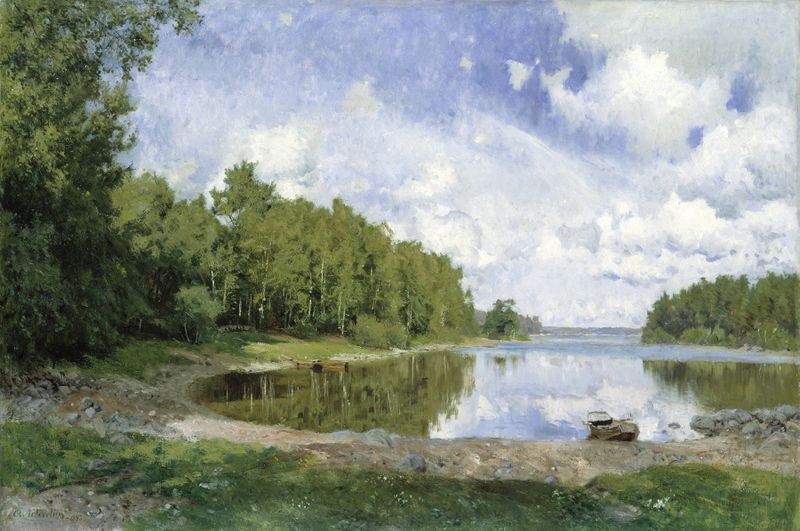
Color becomes the vessel of memory, a bridge between the immediacy of the present and the whispers of the past in Village and River (Lillån), Orsa. Look to the foreground, where a vibrant tapestry of greens and soft earthy hues unfurls, capturing the essence of a tranquil village nestled beside a flowing river. The painter’s brushstrokes breathe life into the gently rippling water, while the idyllic cottages bask in dappled sunlight, their warm colors glowing against the cool shadows of the trees. Notice how the artist employs a palette that shifts subtly, harmonizing the village scene with its natural surroundings, inviting the viewer into a serene moment of reflection. Yet, beneath this harmonious landscape lies an undercurrent of tension.
The juxtaposition of the lively river against the stillness of the village evokes a sense of fleeting time, reminding us that such peace is ephemeral. The varied textures of the foliage contrast sharply with the smooth surface of the water, speaking to the duality of life’s tranquility and turbulence. Each element, from the lazy flow of the river to the steadfast cottages, embodies a narrative of resilience, whispering secrets of a community intertwined with the rhythm of nature. During the time this piece was painted, Olof Arborelius found inspiration in the Norwegian landscapes of his homeland, likely in the late 19th century.
This period was marked by a growing interest in capturing the natural world in a realistic yet expressive manner, as artists sought to convey both the beauty and the transience of everyday life. Arborelius, part of the broader Scandinavian art movement, was immersed in an artistic dialogue that celebrated the profound bond between humanity and nature.