Villeneuve (Vaud) — History & Facts
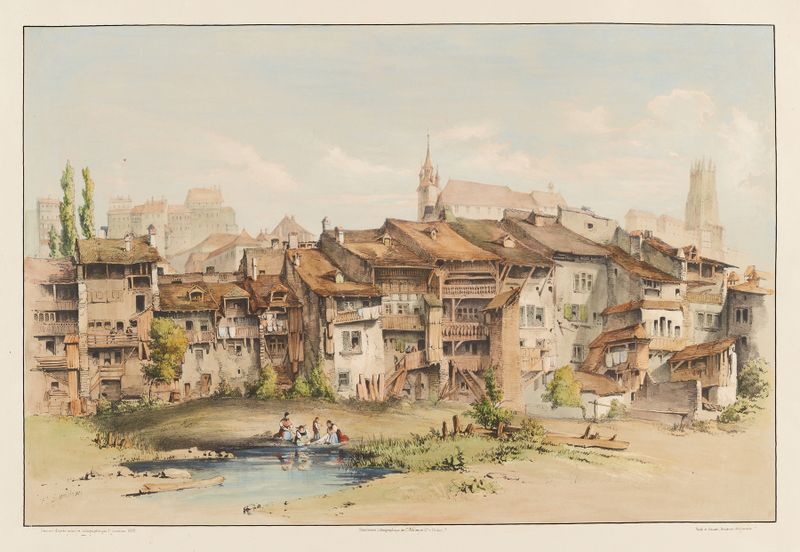
What if beauty was never meant to be finished? In the world of art, some masterpieces linger on the edge of completion, whispering the profound unfinishedness of existence itself. Look closely at the vibrant hues of the landscape, where verdant greens intermingle with the soft blues of the sky. Notice how the brushstrokes dance across the canvas, each stroke a testament to both the artist's hand and the breath of life captured within. The composition draws the eye toward the horizon, as the distant mountains cradle the scene, while ever-changing clouds lend a dynamic quality that speaks of time's fleeting nature.
D' Andiran’s technique shines through the harmonious interplay of color and light, inviting viewers to step into this moment frozen in time. The contrast between the serene village nestled at the foreground and the tumultuous sky above suggests a deeper interplay of calm and chaos—a legacy of beauty that hums with both fragility and resilience. Each element, from the quaint houses to the lush fields, carries the weight of history, evoking a sense of longing for a world that is perpetually in flux. The viewer feels the tension between permanence and impermanence, a message that resonates deeply with the notion of legacy. During the years of 1915-1945, d' Andiran worked in a tumultuous Europe plagued by the shadows of war and change.
It was a time when many artists sought solace in nature and beauty, creating works that encapsulated their emotions while reflecting the shifting tides of society. In capturing Villeneuve (Vaud), he not only documented a location but also crafted a visual legacy—a meditation on the transient yet enduring aspects of the human experience.