Vinteraften ved Susåen — History & Facts
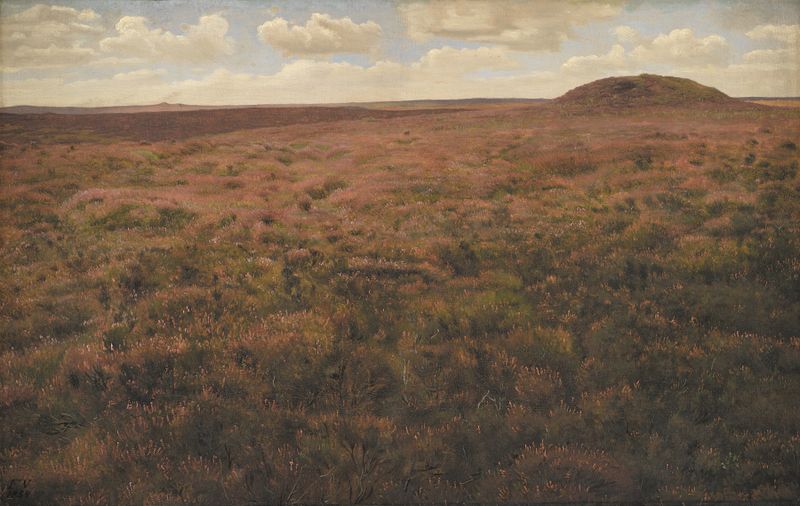
In the stillness of evening, color dances upon the canvas, inviting us to witness both the beauty and fragility of existence. Here, hues are not merely pigments; they are emotions, whispering secrets of nature and humanity intertwined. Look closely at the palette, where cool blues and soft whites cradle the warm touches of earthy browns. Notice how the light gently bathes the foreground, creating a serene contrast against the shadowy depths of the background, hinting at an approaching night.
The brushwork, soft yet deliberate, evokes the tranquility of a winter evening by the Suså River, drawing you into a world both inviting and contemplative. There’s a poignant contrast between the vibrant colors of the landscape and the quiet solitude it suggests. The figures, though distant, seem to be in quiet reflection, perhaps contemplating the passage of time or the beauty of their surroundings. Each gentle stroke reveals layers of meaning—of nature’s splendid isolation, the richness of life, and the deep connection we have with the natural world, even as we stand apart from it. Frederik Vermehren created this piece during a period of personal introspection and artistic evolution in Denmark, between 1837 and 1910.
The late 19th century was an era of burgeoning nationalism in Danish art, with artists exploring themes of landscape and identity. Vermehren, influenced by both the Romantic movement and local folklore, sought to capture the essence of the Danish countryside, reflecting the deeper emotional landscape of his own experiences amid evolving societal changes.