
Virgin Adoring the Child — History & Facts
In Virgin Adoring the Child, the tension between simplicity and complexity manifests as a poignant legacy of devotion and motherhood. The painting invites us to reflect on the myriad ways love shapes our existence, offering a glimpse into the sacred bond that transcends time. Look to the center, where the Virgin, draped in deep, rich hues of blue and red, cradles the Christ Child, their faces mere inches apart. Notice how the warm light bathes the figures, highlighting their serene expressions and creating an intimate atmosphere.
The intricate details of the Virgin's robes, adorned with delicate patterns, contrast sharply with the smooth, soft skin of the child, emphasizing both their connection and the purity of innocence. The background remains a gentle blur, allowing the viewer's focus to rest fully on this moment of adoration. Delve deeper into the expressions of both figures—there lies a profound sense of protection and reverence; the mother’s gaze speaks of unwavering faith, while the child’s innocence embodies hope for the world. The subtle use of color suggests the divine, as the interplay of light and shadow enhances the emotional resonance between them.
This painting becomes a vessel, carrying the legacy of maternal love, inviting the viewer to consider their own experiences of nurture and faith. This work was created between 1474 and 1494 by Pseudo Pier Francesco Fiorentino, a lesser-known artist of the Italian Renaissance. At this time, the world of art was shifting dramatically, as the influence of Humanism began to affect subjects and techniques. While Fiorentino may not have achieved the fame of his contemporaries, Virgin Adoring the Child stands as a testament to the enduring themes of faith and maternal devotion that permeated this transformative era.
More Artworks by Pseudo Pier Francesco Fiorentino
Browse all →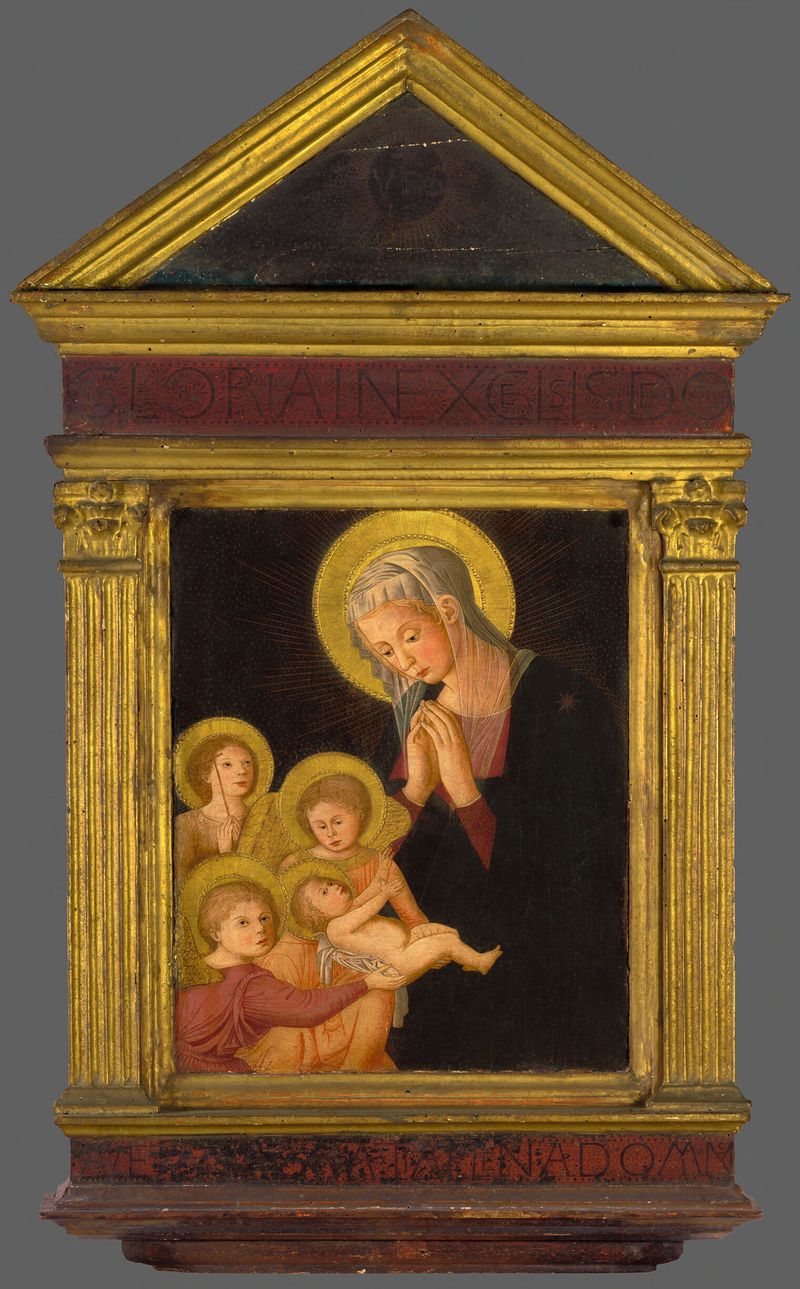

More Religious Art
Browse all →
The Return of the Prodigal Son
Rembrandt van Rijn

The Garden of Earthly Delights
El Bosco

Count Orgaz’ funeral
El Greco

The Hundred Guilder Print: the central piece with Christ preaching, the plate arched
Rembrandt van Rijn

The Descent from the Cross
Rogier van der Weyden

The return of the prodigal son
Rembrandt van Rijn