Vista De Caracas — History & Facts
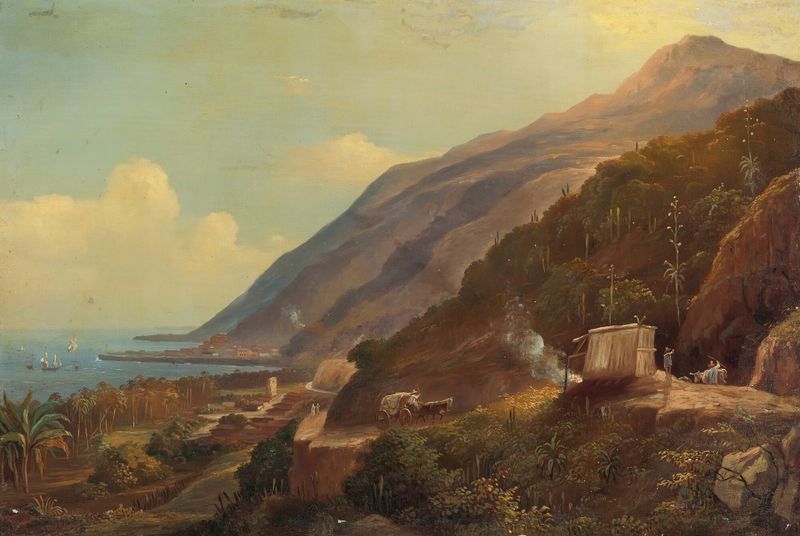
In the embrace of nature, divinity whispers secrets through the rustling leaves and the distant mountains, speaking to the soul of humanity. Focus your gaze on the sweeping vista laid out before you: the undulating hills of Caracas bathed in a soft, golden light that invites contemplation. Notice how the artist deftly employs a palette of greens and blues, blending the tranquility of the landscape with an undercurrent of vitality. The luminous sky, dotted with ethereal clouds, serves as a backdrop that heightens the sense of vastness and possibility. As you delve deeper, consider the interplay between nature and the urban presence.
The gentle curve of the hills cradles the city, suggesting a harmony that belies the bustling life below. There is an emotional tension between the serene landscape and the implied hustle of human existence, evoking a sense of longing for connection with the divine amidst the chaos of life. The subtle details—like the flicker of sunlight on distant rooftops—reveal a world that thrives both in stillness and motion, urging viewers to reflect on their own place within it. Fritz Sigfried Georg Melbye painted Vista De Caracas in 1854 during a period of exploration and romanticism in art.
He was traveling through South America, capturing the essence of its landscapes while grappling with the complexities of cultural exchange. At this time, Melbye was influenced by the Romantic movement, which emphasized the sublime beauty of nature and the emotional experience of the observer, striving to bridge the gap between divinity and humanity through art.