Vorfrühling — History & Facts
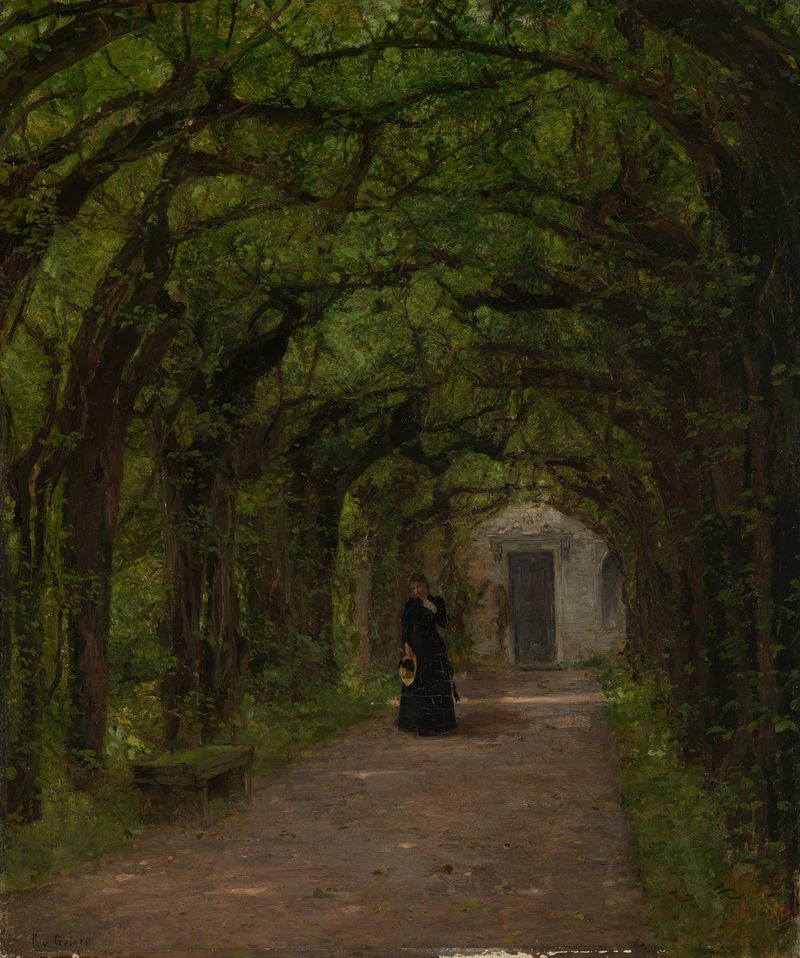
Is this a mirror — or a memory? In the delicate play of light and color, one can almost feel the pulse of a world on the brink of change, where the past mingles with the promise of a vibrant future. Look to the left where a soft, verdant landscape unfolds, a symbol of rebirth. Notice how the gentle strokes of green and gold capture the essence of spring, evoking warmth and hope. The figures, immersed in their surroundings, are subtly placed within the composition, guiding the viewer’s gaze to the blooming flora that almost pulses with life.
Each brushstroke feels deliberate, echoing the emotional undercurrent of the season, suggesting a profound connection between humanity and nature. As you study the scene, consider the contrast between the blossoming flowers and the serene expressions of the figures. This juxtaposition hints at a deeper tension: the revolution of the natural world against the stillness of human life. The light cascading through the branches invites reflection on the cyclical nature of existence, where growth and stillness coexist in a delicate balance, urging us to explore our own moments of awakening. In the early 20th century, Fanny Edle von Geiger-Weishaupt created this piece in a rapidly changing Europe, reflecting the tensions of social upheaval and artistic innovation.
As the Impressionist movement waned, artists were seeking new languages to express their realities. Captured in this moment of artistic experimentation, she channels the essence of revolution, both in her technique and the themes that resonate within Vorfrühling.