Vorstadtlandschaft — History & Facts
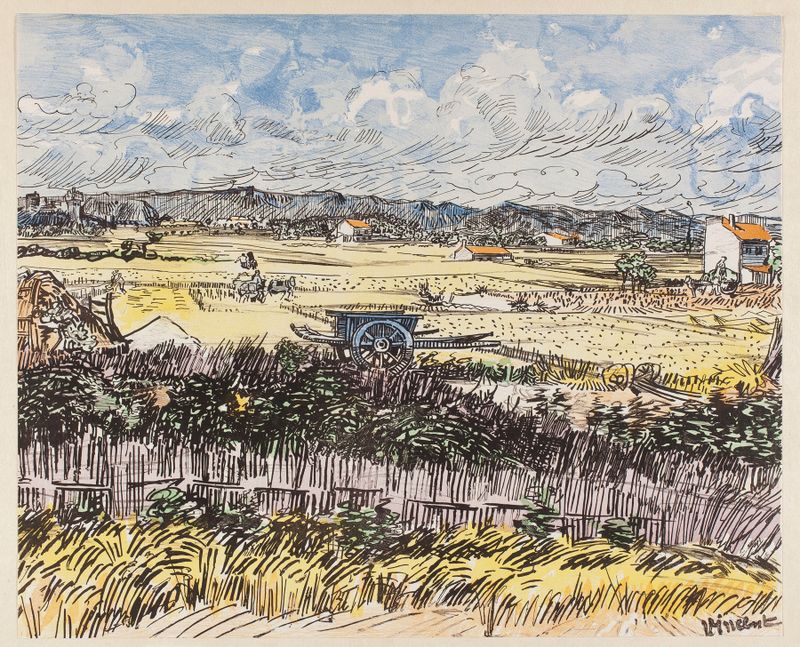
In Vorstadtlandschaft, the brush strokes bear witness to a world caught in the throes of revolution, a testament to the struggle between memory and erasure. Look closely at the foreground, where a winding path disappears into a dense thicket of trees, beckoning the viewer deeper into a landscape shrouded in mystery. The muted palette of greens and browns harmonizes with soft touches of light filtering through the branches, creating a sense of both calm and unease. Notice how the clouds above loom heavy, their shades of gray and white an impending reminder of change, while the gentle brushwork captures the delicate balance between chaos and tranquility. In the distance, a village sits quietly, its structures seemingly untouched by the turbulence surrounding it.
This juxtaposition of the serene landscape against the shadow of revolt evokes a poignant tension. Each element—the path, the trees, the village—whispers of stories untold, inviting reflection on the fragility of peace amidst turmoil, and the inevitability of transformation. The scene resonates with the collective memory of dislocation, hinting at the complexities of human experience. Created before 1942, this work emerged during a period marked by political upheaval and societal shifts across Europe.
Emil Rudolf Weiss was navigating the artistic currents of his time, exploring the intersection of modernism and tradition. His commitment to capturing the essence of change reflects not only his personal journey but also the broader cultural landscape, as artists sought to document a world on the brink of historic transformation.