
Vue de la pension Benoist Catelin au Grand-Montrouge — History & Facts
This notion strikes at the heart of our perceptions, especially when examining the allure of pastoral scenes that mask deeper truths beneath their serene surfaces. Focus first on the warm, inviting hues that flood the canvas — the golds and soft greens of the idyllic landscape. Notice how the artist captures the light as it spills over the rooftops of the pension, bathing everything in a gentle glow. To the left, the meticulous details of the foliage draw you in, while the horizon invites your gaze to wander, suggesting endless possibilities beyond the frame.
Each brushstroke contributes to a sense of harmony, yet a subtle tension lingers, hinting at the fragility of such beauty. Delve deeper, and you'll uncover the emotional resonance embedded within the tranquil scene. The pension, a symbol of refuge and rest, stands in stark contrast to the tumultuous undercurrents of human experience. The delicate balance of light and shadow serves as a metaphor for faith amidst uncertainty; the vibrant colors mask the struggles of its inhabitants, echoing the complexity of hope.
Each element, from the gentle curvature of the path to the cloud-laden sky, resonates with a longing for solace and the ever-present undercurrent of impermanence. In 1883, Félix Brard created this work while residing in a world rapidly changing — the Impressionist movement was in full swing, offering new ways to perceive and depict nature. As he painted Vue de la pension Benoist Catelin au Grand-Montrouge, Brard was likely influenced by both the visual innovations of his contemporaries and the introspective qualities that art could convey during a time of sociopolitical upheaval in France.
More Artworks by Félix Brard
Browse all →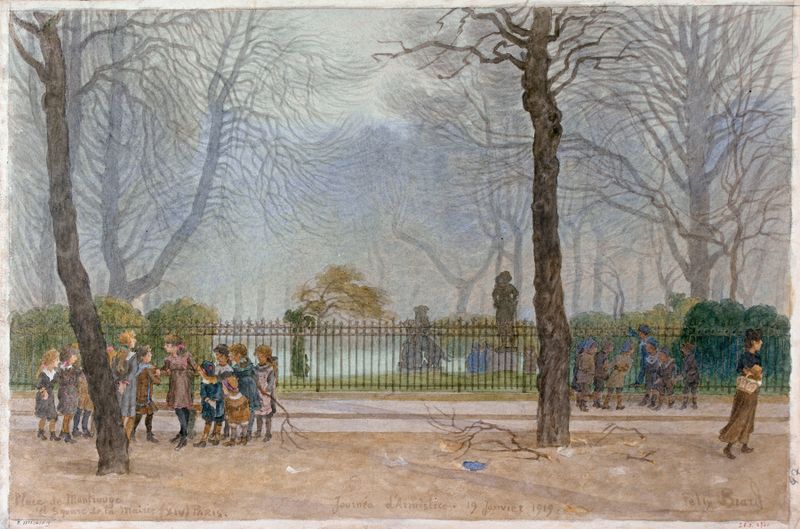
Place de Montrouge et Square de la Mairie (XIV) Paris.
Félix Brard
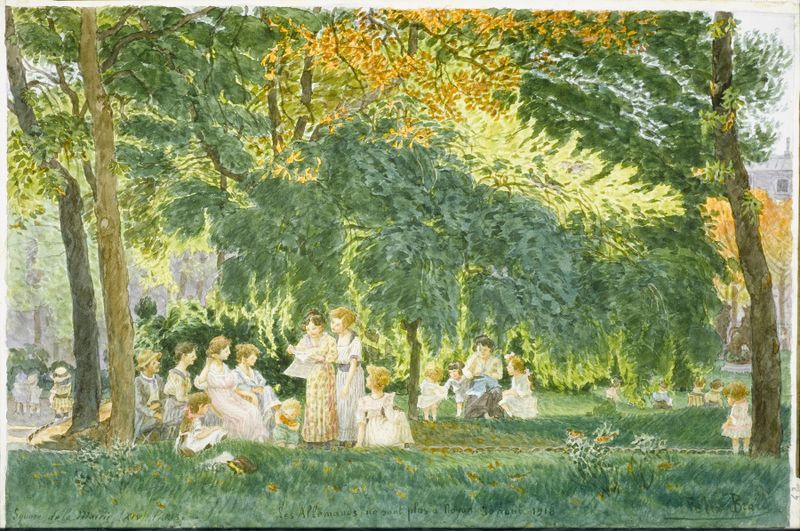
Square de la Mairie (XIV) Paris
Félix Brard
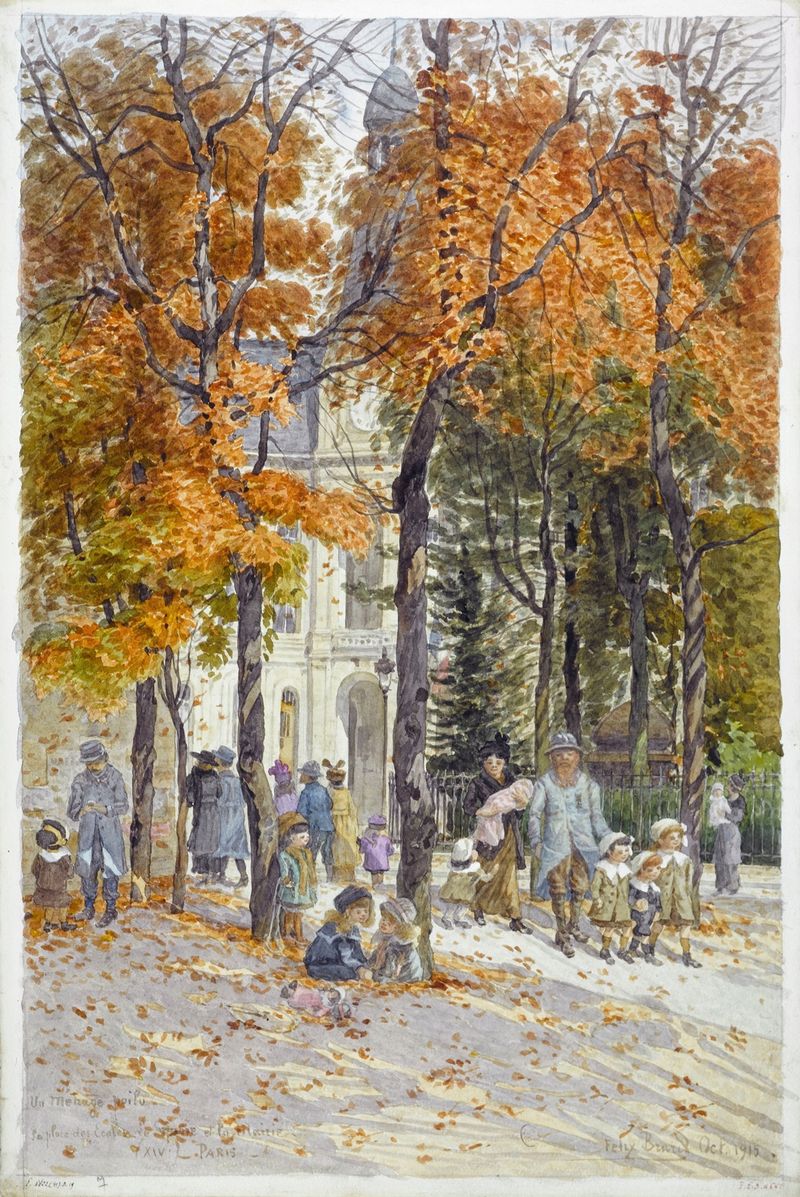
La place des Ecoles et le square de la Mairie du XIVème arrondissement
Félix Brard
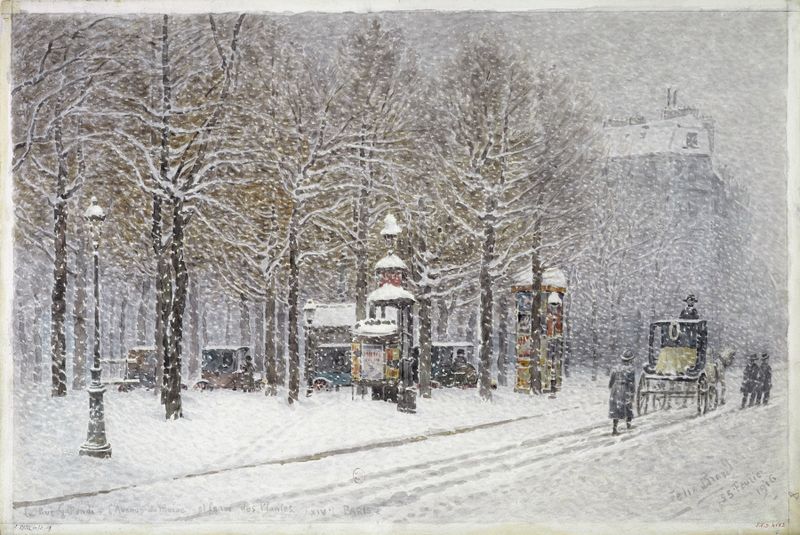
La rue Gassendi, l’avenue du Maine et la rue des Palntes sous la neige en Février 1916
Félix Brard
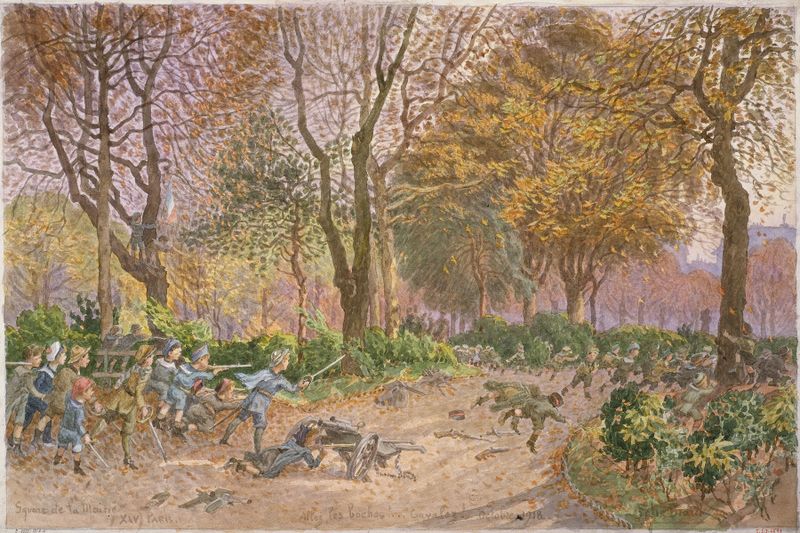
Enfants jouant à la guerre dans le square de la mairie du 14ème arrondissement
Félix Brard
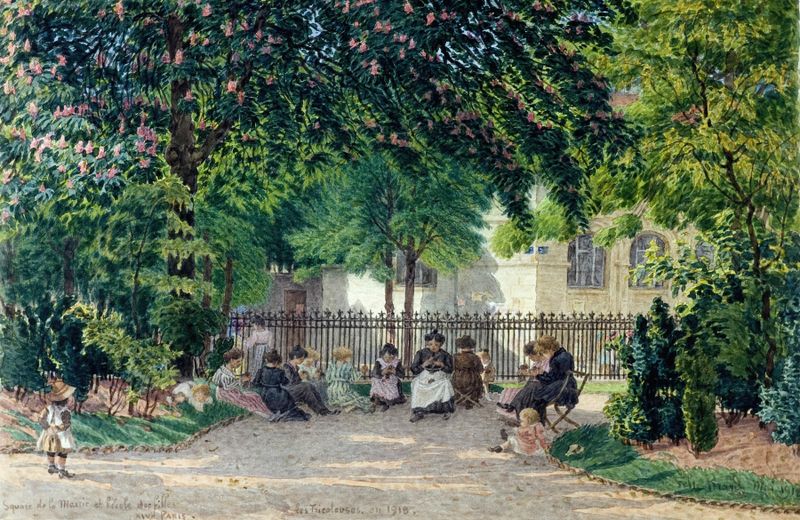
Tricoteuses au square de la mairie 14ème arrondissement en mai 1918
Félix Brard
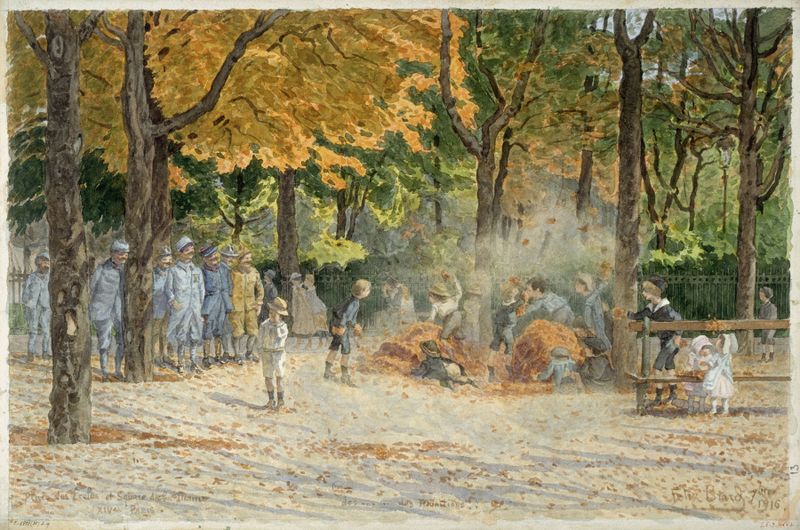
Place des Ecoles de la Mairie du XIVème arrondissement
Félix Brard

Square de la mairie du 14ème arrondissement, rue Mouton Duvernet le 4 juillet 1917
Félix Brard
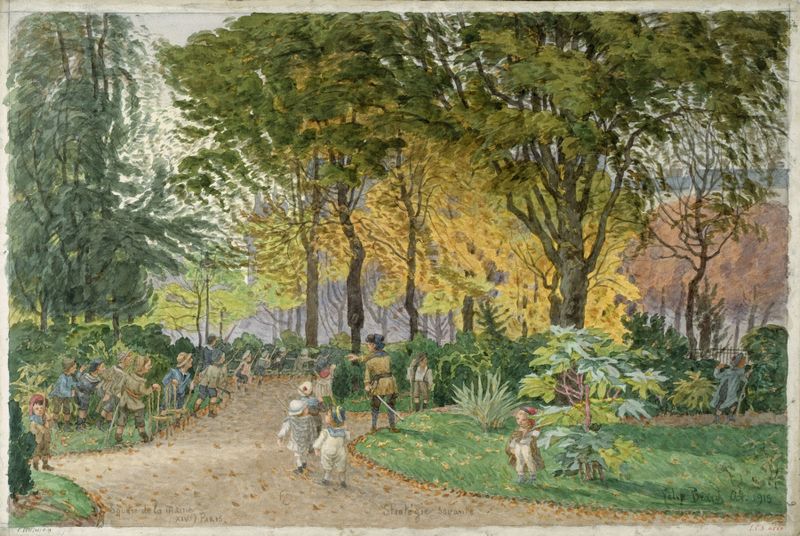
Square de la mairie du XIVème arrondissement
Félix Brard

Place de Montrouge, 14ème arrondissement de Paris, 25-29 Janvier 1918
Félix Brard





