Vue de la promenade de Meiringen à la chute du Reichenbach — History & Facts
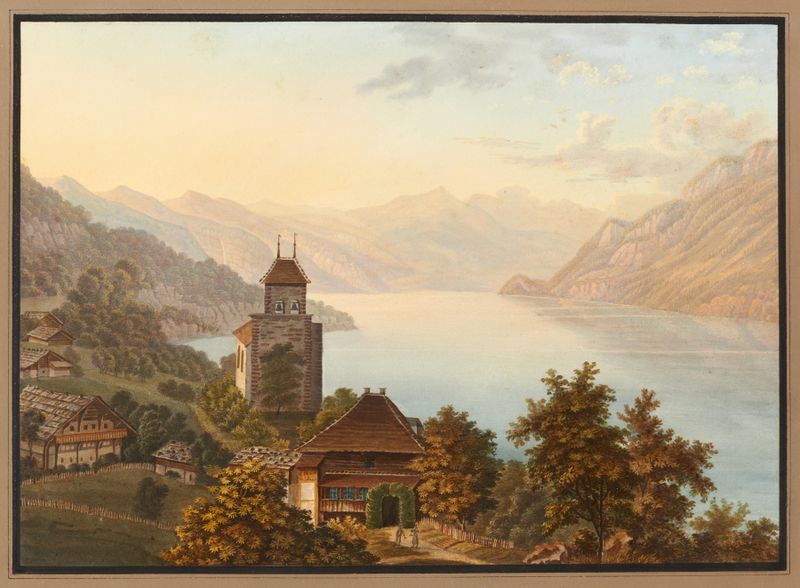
When did color learn to lie? In the interplay between light and shadow, illusions are born and truths obscured, as if the canvas itself whispers secrets about the world beyond its frame. Look to the left, where the verdant greenery meets the rugged slopes; see how the artist uses contrasting hues to evoke a sense of depth and distance. The vibrant greens of the trees capture the eye, while the muted browns and grays of the mountains starkly define the rugged landscape. Notice how the delicate strokes blend harmoniously, creating a tapestry of nature that feels both alive and distant, as if inviting you to step closer while keeping you firmly in place. Yet, beneath this picturesque beauty lies an undercurrent of tension.
The shadows, rich and dark, suggest an impending change, hinting at the struggle between light and obscurity. The cascading waterfall appears almost ethereal, but it is the juxtaposition of the serene landscape and the looming shadows that evokes a sense of melancholy—a reminder of nature's duality, both a sanctuary and a formidable force. The painting captures this delicate balance, compelling viewers to reflect on the transient nature of beauty itself. During the years between 1915 and 1945, the artist created this work amid Europe’s tumultuous socio-political landscape.
Living in the shadow of war and transformation, Heinrich Meichelt sought solace in the tranquility of nature, channeling his experiences into a vibrant yet poignant reflection of the world around him. This period marked a significant evolution within the art community, as artists grappled with new forms of expression, often influenced by the conflicts that loomed large in European consciousness.