
Vue de New York — History & Facts
In the stillness of a city, where echoes of life linger like a ghost, emptiness can speak volumes. It’s in this quiet solitude that we truly confront ourselves, stripped of distractions and the clamor of existence. Look to the center of the composition; the skyline rises majestically, an array of geometric forms casting long shadows against a pale, muted sky. The delicacy of brushwork creates a sense of fragility among the towering structures, emphasizing their dominance yet rendering them vulnerable.
Notice how the subtle gradations of blue and gray envelop the canvas, infusing it with a melancholic air that invites contemplation. The stark absence of figures sharpens the focus on the architecture, allowing the viewer to dwell in the space between the buildings and the contemplation of what lies beyond. Beneath the surface, the painting communicates a tension between progress and isolation. The absence of humanity within the bustling cityscape raises questions about modern life’s duality — the allure of urban advancement juxtaposed against an underlying sense of desolation.
Each building stands as a monument to ambition, yet the emptiness hints at the emotional costs of such pursuits. This interplay invites us to reflect on our own connections within the vastness of the urban environment. In 1928, the artist captured Vue de New York during a transformative period for both the city and his career. Living in Paris, Boutet de Monvel was influenced by the Art Deco movement, seeking to convey modernity through elegance.
This work emerged amidst a booming landscape of architecture and industry, marking an era where art began to grapple with the complexities of urban life, ultimately shaping the iconography of American cities.
More Artworks by Bernard Boutet de Monvel
Browse all →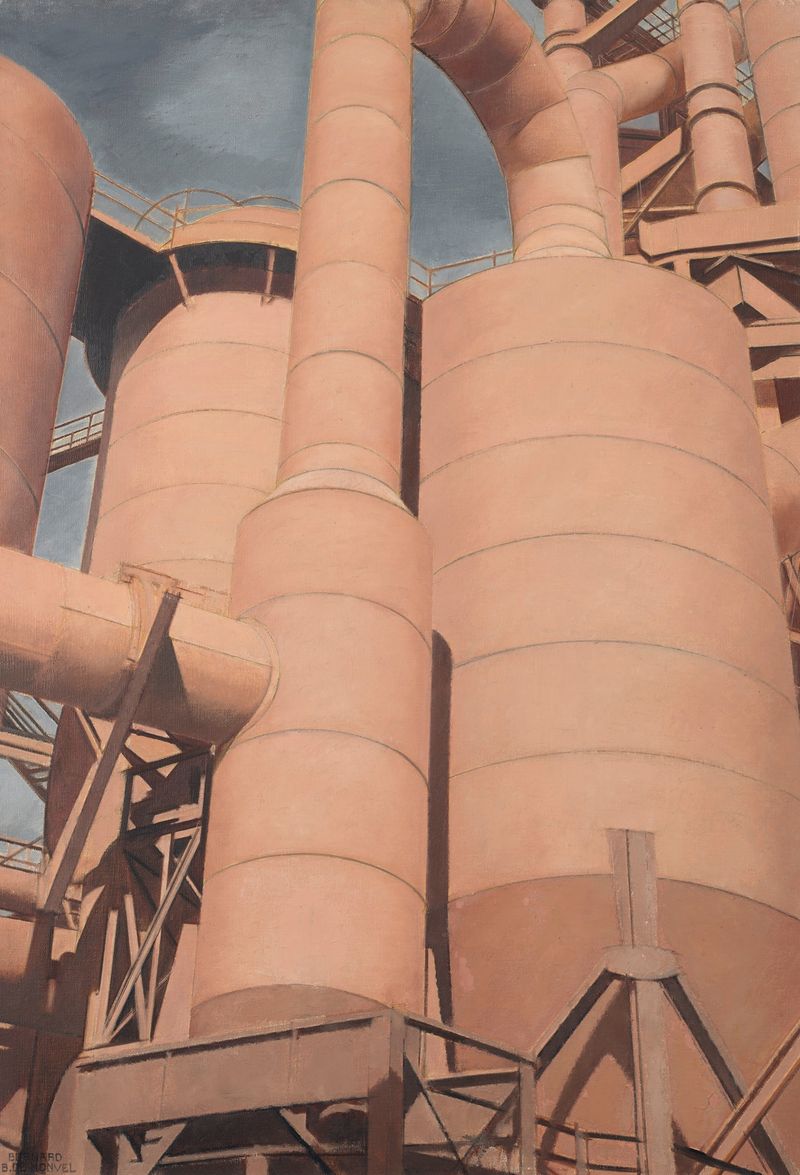
More Architecture Art
Browse all →
The statue of Liberty
Frédéric Auguste Bartholdi

View of Houses in Delft, Known as ‘The Little Street’
Johannes Vermeer

View of Houses in Delft, Known as ‘The Little Street’
Johannes Vermeer

The Cathedral in Rouen. The portal, Grey Weather
Claude Monet

The yellow house
Vincent van Gogh

The Church in Auvers-sur-Oise, View from the Chevet
Vincent van Gogh