Vue de Noisy-le-Sec — History & Facts
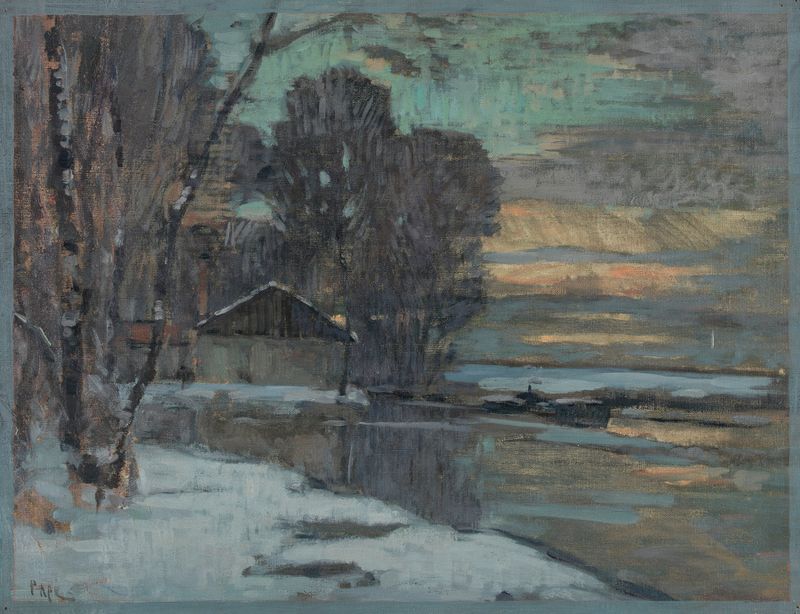
Did the painter know this moment would outlive them? The quiet landscape, draped in the soft embrace of dawn, captures a fleeting instant filled with the promise of both beauty and betrayal. Look to the right at the gently sloping hills, where the lush greenery is pierced by delicate strokes of vibrant color, a testament to the artist's dexterous hand. Notice how the morning light dances on the surface of the stream, reflecting hints of gold and azure, creating a stark contrast with the darkening shadows in the foreground. Each element of this pastoral scene is meticulously composed, inviting the viewer to traverse the painted expanse, from the tranquil water to the horizon kissed by a pale sky. In this serene landscape, a subtle tension simmers beneath the surface.
The juxtaposition of bright foliage against shadowy forms speaks to the duality of nature—its serene facade hiding the unpredictable chaos of life. The intersection between the illuminated stream and the darker earth hints at feelings of betrayal, as beauty can often mask deeper truths. This landscape, while idyllic, may whisper of the artist's own struggles or the ephemeral nature of human existence. Pape painted Vue de Noisy-le-Sec in 1907 during a period marked by his exploration of the Impressionist style, drawing inspiration from the changing French countryside.
At this time, the art world was grappling with new movements and ideas, as artists sought to convey emotion and atmosphere over traditional forms. This painting reflects his journey toward capturing the essence of a moment, intertwining personal and universal themes in a shifting artistic landscape.