
Vue intérieure des ruines de l’ancienne Cour des comptes, quai d’Orsay — History & Facts
What secret hides in the quiet of the canvas? In Vue intérieure des ruines de l’ancienne Cour des comptes, quai d’Orsay, the stillness captures an obsession with both memory and decay, urging us to peer deeper into its silent depths. Look to the left at the crumbling arches, where shadows weave through the intricate play of light, creating a haunting atmosphere. The muted palette of greys and earth tones enhances the sense of loss and nostalgia, while the delicate brushwork reveals the artist's meticulous attention to detail. Focus on the way the light falls upon the weathered stone, illuminating the remnants of a bygone era, beckoning viewers to reflect on the passage of time within these forgotten walls. Beneath its serene surface, the work evokes a tension between beauty and ruin.
Each fractured surface tells a story of grandeur now faded, and the juxtaposition of light and shadow symbolizes the duality of existence — how memory lingers even amidst destruction. The absence of people emphasizes solitude, inviting a contemplative reading that speaks to the artist's desire to preserve history while acknowledging its inevitable decline. Painted in 1888, during a time when Paris was rapidly modernizing, the artist was immersed in an art scene that celebrated both realism and impressionism. Rouard's choice to depict these ruins reflects a personal fascination with the remnants of history, as well as a broader cultural obsession in France with preserving the past against the relentless march of progress.
More Artworks by Georges Rouard
Browse all →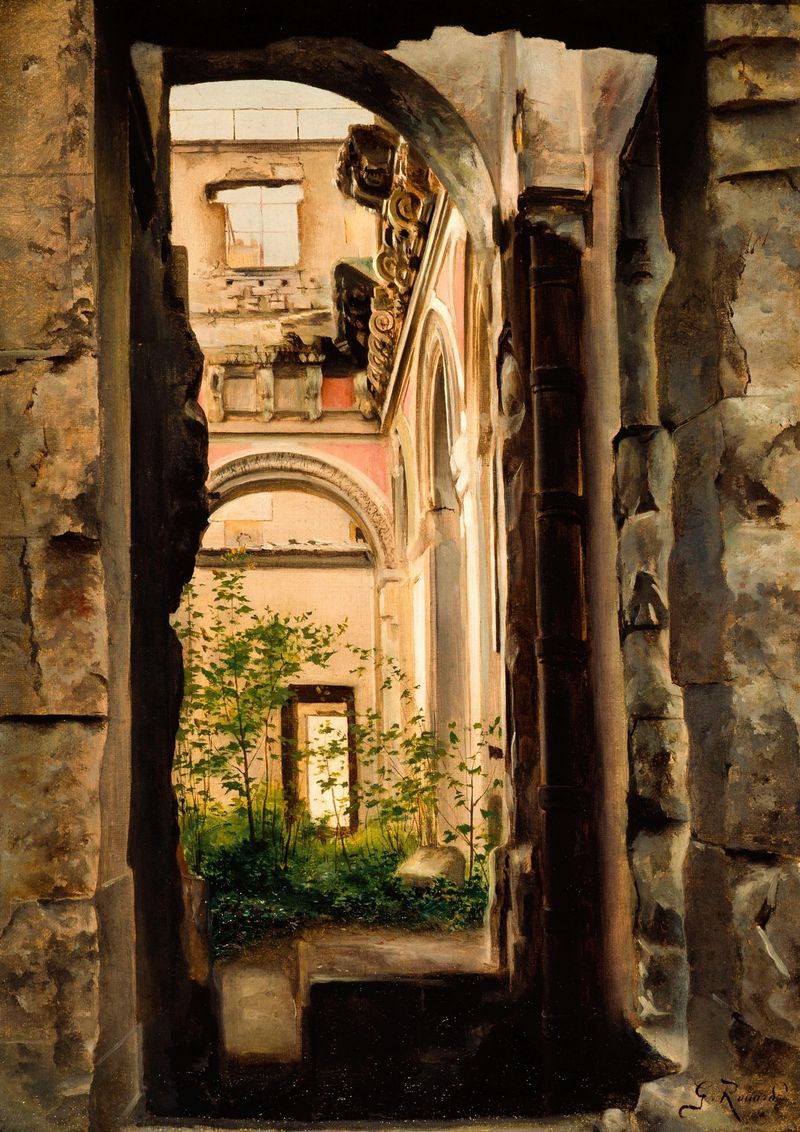
Vue intérieure des ruines de l’ancienne Cour des comptes, quai d’Orsay
Georges Rouard
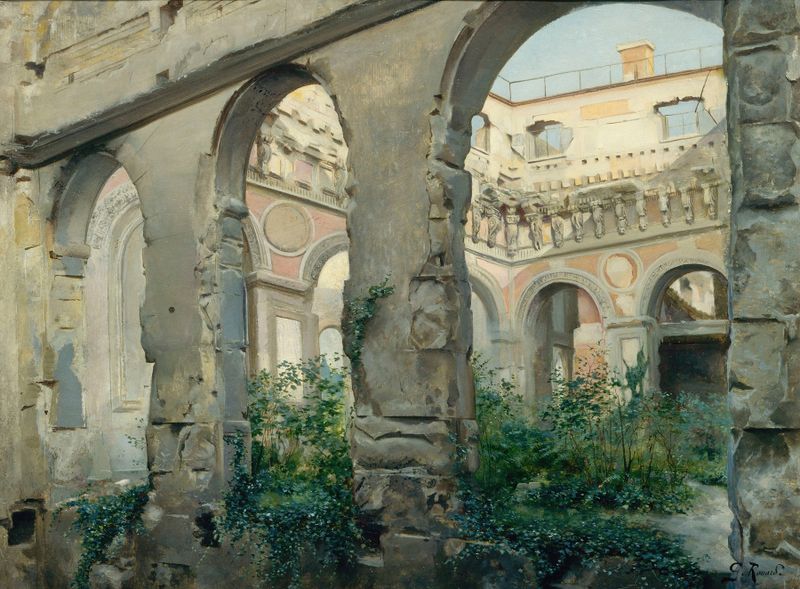
Les Ruines de l’ancienne Cour des comptes, à l’emplacement de l’actuel musée d’Orsay. 7ème arrondissement.
Georges Rouard
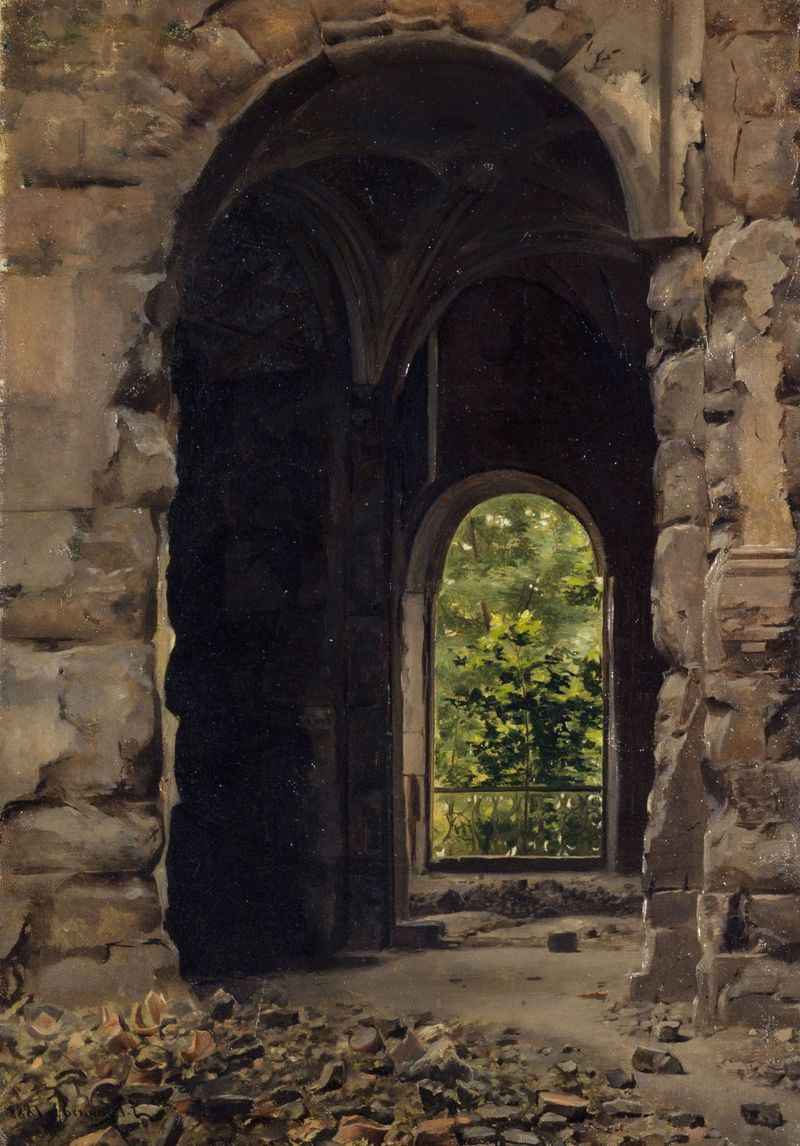
Vue intérieure des ruines de l’ancienne Cour des comptes, quai d’Orsay
Georges Rouard
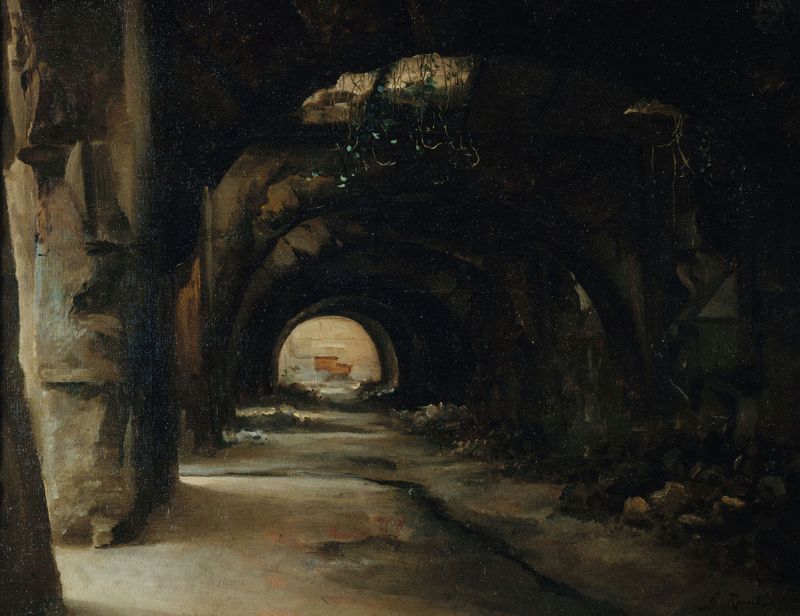
Les Ruines de l’ancienne Cour des comptes, à l’emplacement de l’actuel musée d’Orsay. 7ème arrondissement.
Georges Rouard
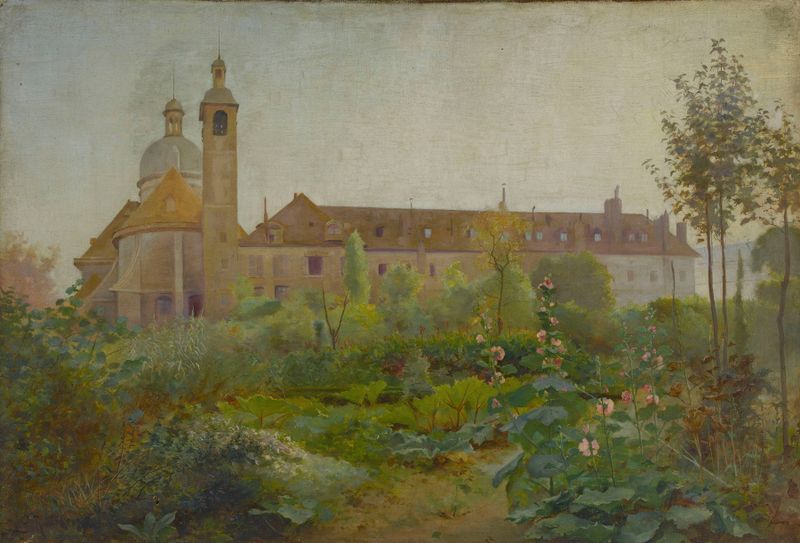
Le Couvent des Carmes de Vaugirard, 15ème arrondissement.
Georges Rouard
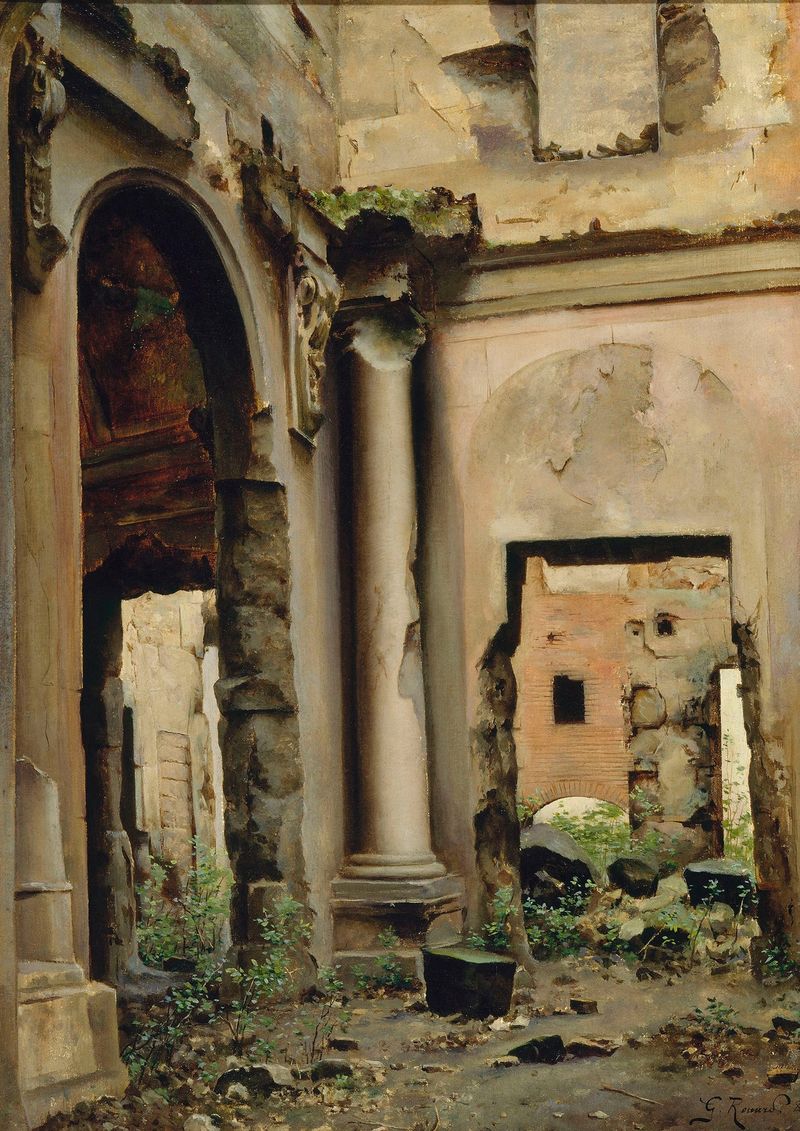
Vue intérieure des ruines de l’ancienne Cour des comptes, quai d’Orsay
Georges Rouard
More Architecture Art
Browse all →
The statue of Liberty
Frédéric Auguste Bartholdi

View of Houses in Delft, Known as ‘The Little Street’
Johannes Vermeer

View of Houses in Delft, Known as ‘The Little Street’
Johannes Vermeer

The Cathedral in Rouen. The portal, Grey Weather
Claude Monet

The yellow house
Vincent van Gogh

The Church in Auvers-sur-Oise, View from the Chevet
Vincent van Gogh