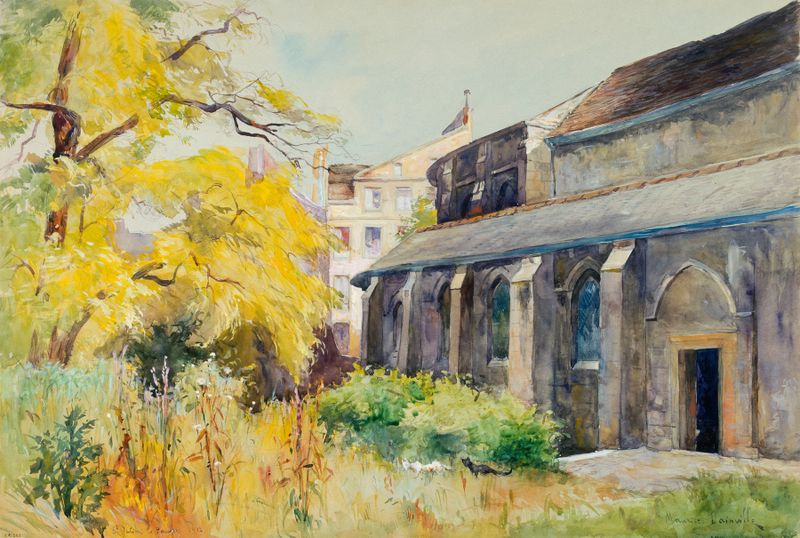
Vue panoramique de Paris, prise de la rue Victor-Massé — History & Facts
What if beauty was never meant to be finished? In its transient splendor, the heart aches as it grasps the fleeting nature of moments captured in time. Look to the left at the sweeping skyline, where delicate strokes of pastel blues and whites construct the soft embrace of Parisian clouds. The juxtaposition of the lively street below and the serene buildings creates a symphony of urban life — notice how the shadows of the structures deepen as they recede into the horizon, echoing the contours of the city itself. The vibrant brushwork invites you to trace the movement of the figures along the bustling Rue Victor-Massé, their gestures frozen in a dance of daily existence. Yet, beneath the allure of the bustling metropolis lies a more profound layer of emotion.
The slight blur of the figures suggests a sense of transience, as if they are merely phantoms roaming the streets, hinting at the inevitable passage of time. The interplay between light and shadow evokes a feeling of nostalgia, a reminder of what once was and can never be reclaimed. Each painted detail seems to whisper of loss, a tribute to the beauty that dances just out of reach, forever mingling with grief. Maurice Dainville painted Vue panoramique de Paris, prise de la rue Victor-Massé in 1886 during a period when the French capital was a hub of artistic innovation and social transformation.
At this time, Impressionism was blossoming, and Dainville, influenced by this movement, sought to capture the vibrancy of urban life while grappling with personal experiences of loss. His work reflects the artistic spirit of the era, where the beauty of the moment often came laced with bittersweet undertones.