Wachau, View of Krems — History & Facts
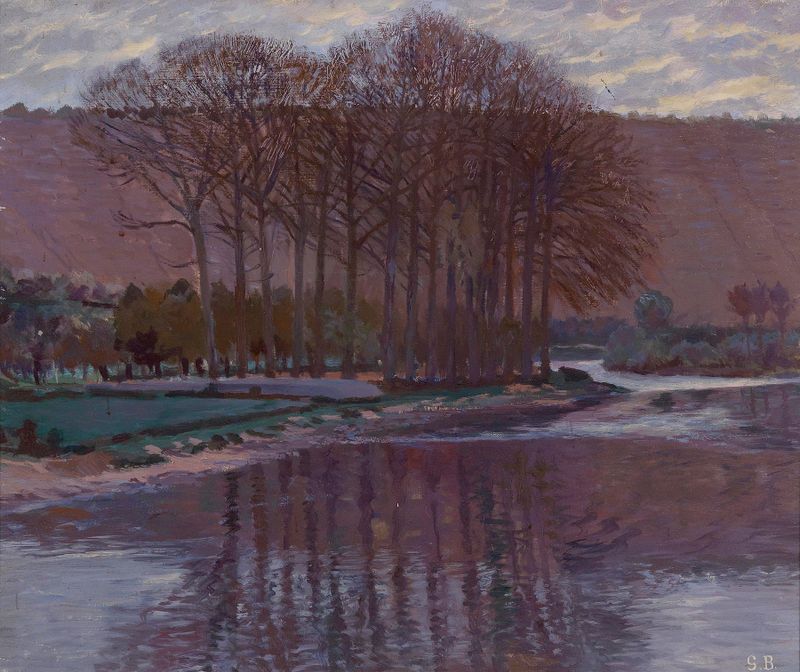
In this vibrant portrayal, equilibrium emerges from the artist's careful hand, inviting us to explore the landscape’s subtle harmonies and contrasts. Focus first on the sweeping curves of the hills that cradle the small town of Krems, where soft greens blend seamlessly into the warm ochres and muted blues. The sky, a gentle wash of light, drapes itself over the scene, while the winding river cuts through the composition like a silver thread, binding the land and sky together. Notice how the strokes convey movement; the trees sway slightly as if caught in a tender breeze, their rhythm echoed by the brushwork that defines the buildings below. Delve deeper into the contrasts present in the piece.
The interplay of light and shadow creates a sense of depth, while the vibrant colors speak to the vitality of nature and life. The human presence is understated, with just a few structures, yet their placement suggests a relationship with the landscape, a conversation between man and environment. The balance between the tranquility of the hills and the vibrancy of the sky evokes a sense of peace, reminding viewers that harmony can be found even amidst complexity. In 1908, Gustav Bamberger painted this work in the Wachau region of Austria, a time when the art world was embracing Impressionism’s emotional palette and expressive brushwork.
Bamberger, influenced by his surroundings and the movement's ideals, sought to capture the interplay of light and color in the natural world. His focus on landscape reflects not only personal exploration but also a broader artistic shift towards celebrating the beauty of everyday scenes.